

False flag operations, covert activities that are designed to deceive people into thinking that they are being carried out by someone else, have been a hallmark of statecraft that knows no bounds. Throughout history, such operations have been employed to generate false pretexts for wars of aggression, which have resulted in the loss of countless lives. More notoriously, there is the 1939 “Gleiwitz incident” in Nazi Germany, which saw SS troops posing as Polish soldier mount an attack on a German radio station, which provided Adolf Hitler with the casus belli he required to invade Poland. Net deception and manoeuvre are the latest mindsets that have emerged in India, and the Pahalgam terror attack on April 22, 2025, is one of its worst and recent examples.
The idea of false flag operations has a long history, originating in naval warfare in which ships flew the flags of other countries to disguise themselves as an enemy. By the 20th century, this tactic developed into state-sponsored strategic thinking. The Japanese Mukden Incident (1931), where Japanese troops set off a small explosion on a rail line and then blamed it on China to justify its invasion of Manchuria (and in turn war with China). The planned, but never carried out, U.S. Department of Defence Operations Northwoods, of 1962 in Cuba, is just another example of innumerable false flags committed for geopolitical purposes. More recently, Russia’s 2014 annexation of Crimea featured masked agents who posed as local separatists, showing how major powers use such tactics to create the appearance of legitimacy around aggressive actions.
In South Asia, Pakistan has repeatedly been subjected to India’s false flag operations that continue to be staged, especially after the high-level diplomatic and political events, or whenever there is an internal political crisis in India. In 2000, the Chattisinghpura massacre, in which 35 Sikhs were killed, was initially attributed to militants but later tied to Indian forces, where they tried to justify military offensives in Kashmir at the time of U.S. President Bill Clinton’s visit. Similarly, the 2001 attack on the Indian Parliament, the Samjhauta Express bombing of 2007, and the 2019 Pulwama event, all were used for instant allegations against Pakistan. Interestingly, the later investigations revealed the Hindu extremist or Indian state’s culpability in these incidents. These events highlight a systematic Indian approach of creating crises to isolate Pakistan and generate domestic nationalist sentiments diplomatically.
The Pahalgam attack that killed 26 civilians falls directly into this historical category. Despite the Resistance Front (TRF)—allegedly a secret branch of Indian intelligence—initially claiming responsibility and then retracting under dubious circumstances, Indian officials and media blamed Pakistan-backed militants within hours. At the same time, an orchestrated disinformation campaign took off on Indian and pro-BJP social media, which eventually started trending in Pakistan with hashtags like #IndianFalseFlag and #PehalgamDramaExposed, revealing the contrived nature of the narrative.
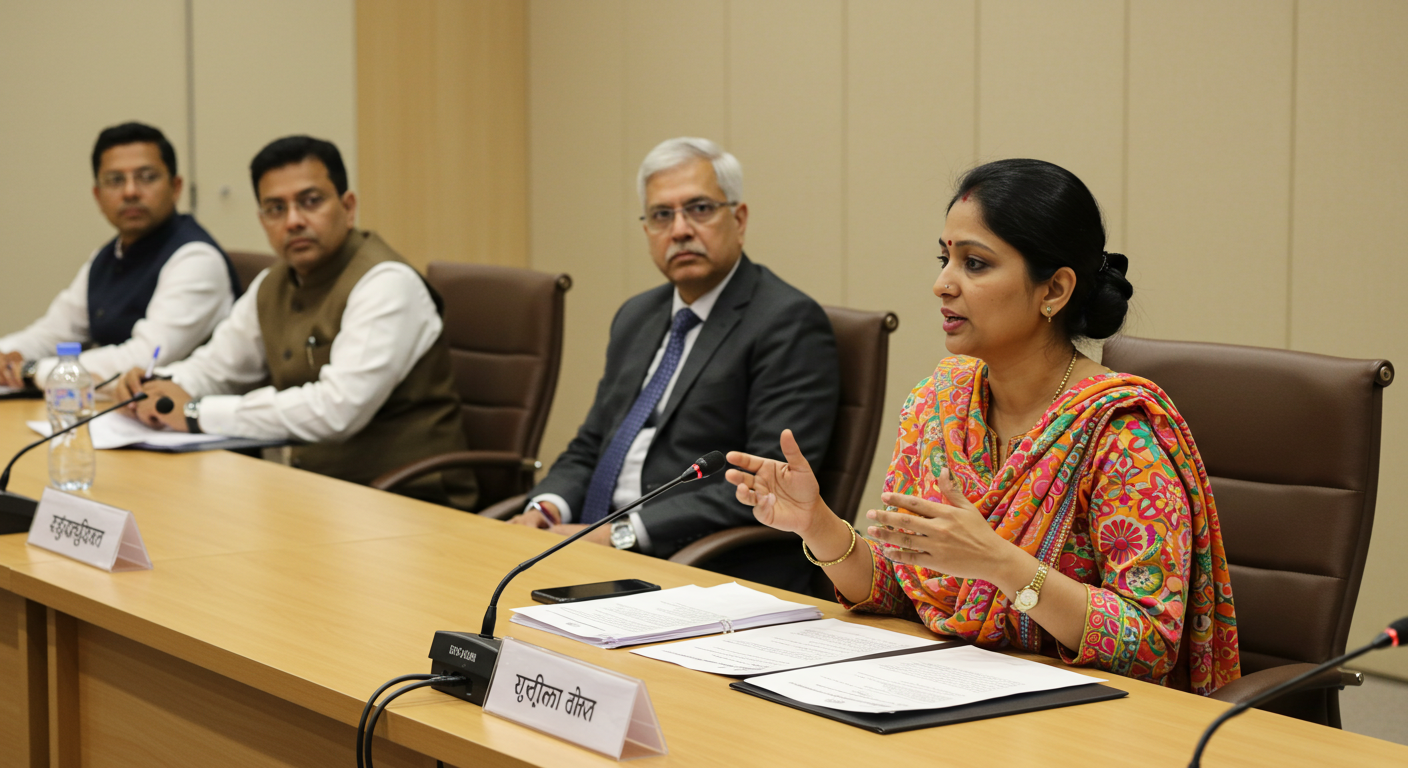
The timing of the attack, during U.S. Vice President JD Vance’s visit to India, mirrors previous Indian false flags that occurred during high-profile diplomatic visits. Additionally, the immediate cancellation of visas of Pakistanis by the Indian government and calls for tit-for-tat strikes, more clearly indicated a pre-planned strategy to escalate the conflict. Pakistan’s Defence Minister Khawaja Asif was right in refuting the whole thing as a drama — its perpetrators (TRF) being an unknown entity that, like the phantom “Jaish-e-Mohammed” in Pulwama, could not be traced to a real person or a foot-soldier.
The Modi regime has weaponised false flag operations with the brutality we associate with Hitler’s Gleiwitz gambit. Like Hitler, who had to resort to inventing Polish aggression to invade Poland, Modi has expanded the attack on Pahalgam to paint Pakistan a rogue state and maintain internal unity in the face of economic and political discord. His rhetoric — in which he promises a future “1,000-year Reich” of Hindu dominance — mirrors the millenarian delusions of Hitler, with both men using historical revisionism and victimhood narratives to justify territorial expansions.
Like Hitler’s Aryan nationalism, Modi’s Hindutva project feeds off of created crises. The armed crackdown in Pahalgam, as at the time of the Reichstag fire, provides a squaring of the circle, allowing India to justify massive repression in Indian occupied Kashmir, where hundreds have been taken away and homes destroyed under the guise of “anti-terror” operations. At the same time, the Indian media, effectively performing as the mouthpiece for the regime, is hyping up a war frenzy, salivating for strikes on Pakistan. This toxic mix of state propaganda and militarism echoes fascist governments of the past, in which truth is the first victim and aggression is peddled as defence.
False flags are more than tactical strategies; they are existential challenges to regional security. India’s use of this policy from Chattisinghpura to Pahalgam has taken South Asia to the brink of nuclear war, compelling Pakistan to respond to aggression with minimalist gradualism. The international community must wake up to Modi’s regime for its course: a revisionist power resorting to Hitlerian tactics to hide its domestic failures and invent foreign enemies.
Pakistan should learn the lesson, which seems just too clear. Defence Minister Asif warned that India’s false flags require vigilance, not appeasement. The world needs to hold India accountable before another Gleiwitz — or, worse, another Pulwama —sparks a war neither country can afford. History tells us that regimes erected upon lies are bound to collapse and do much damage in the meantime. Now is the time to expose India’s deception.
Author