


Wearside’s European Odyssey: How a Swiss Maverick Rewrote Sunderland’s Economic Playbook
POLICY WIRE — London, United Kingdom — Forget the champagne-soaked locker rooms; the real story on Wearside isn’t just about a football club finally making it to Europe. No, it’s about...

POLICY WIRE — London, United Kingdom — Forget the champagne-soaked locker rooms; the real story on Wearside isn’t just about a football club finally making it to Europe. No, it’s about something far more intriguing: the gritty, improbable resurrection of a community’s economic morale, driven by the unlikely grit of a Swiss midfielder. It’s a narrative that—frankly—most policy wonks would miss, caught up in macroeconomics while the ground-level changes ripple outward.
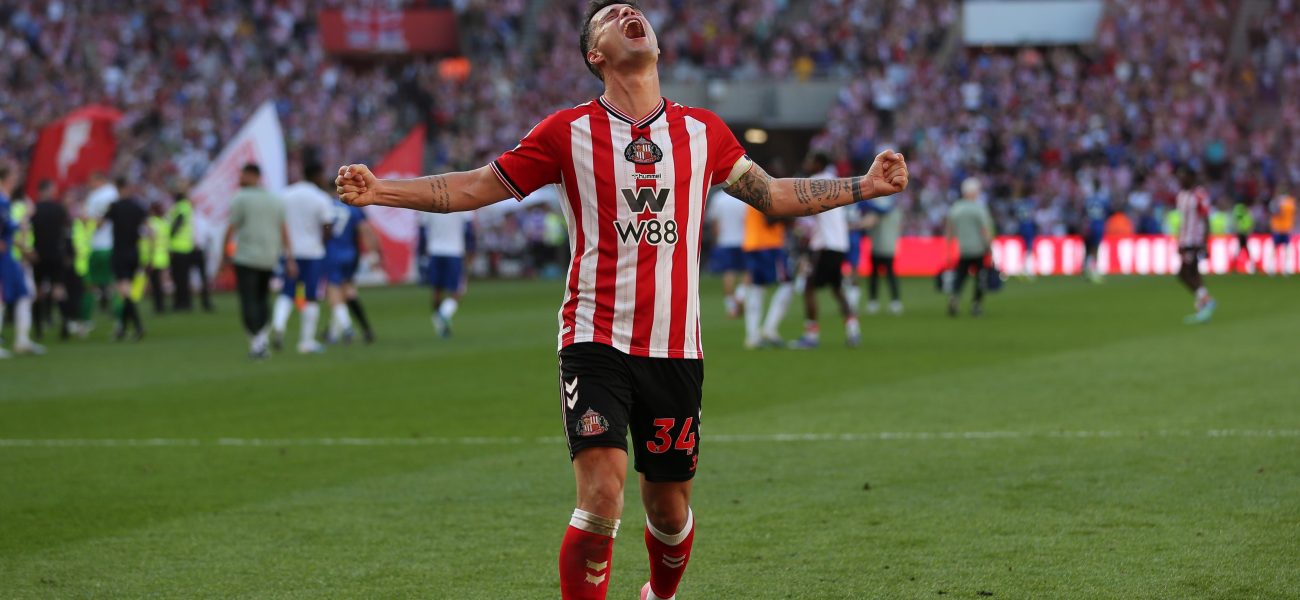
Because Granit Xhaka, Sunderland’s unlikely captain, hasn’t just guided his team to an unthinkable Europa League spot. He’s become a symbolic pivot point for a region long familiar with industrial decline — and its lingering scars. When he declared, with a steely glint after the Chelsea win, that “This is just the beginning,” it wasn’t simply post-match exuberance. It was a promise, almost a political statement, echoing through an area hungry for renewal. You don’t often see a footballer embodying such a potent blend of performance — and profound cultural impact, do you?
The impact goes beyond ticket sales. Local pubs around the Stadium of Light saw their takings jump by an estimated 25% on match days this season, according to a report from the Sunderland Business Association. “This isn’t just about blokes in red-and-white shirts kicking a ball,” explained Brenda Foster, a Sunderland City Council cabinet member for Regeneration, via a video call to a regional economic summit last week. “It’s about renewed confidence, investment flowing into the hospitality sector, and families actually planning staycations here because there’s something genuinely exciting happening. It’s contagious, that optimism.” She’s not wrong, you know. The city’s heartbeat feels different. Much quicker, certainly.
Xhaka, a player whose career arc has taken him from Arsenal’s often-tumultuous climes to Bayer Leverkusen and then to the banks of the Wear, arrived without the fanfare usually reserved for a game-changer. Yet, his leadership—unflappable, even when the chips were down—quickly became the axis around which Sunderland’s unlikely success rotated. And, in a part of the world that knows a thing or two about hard graft — and resilient spirit, he just fit.
His influence has stretched surprisingly far, even captivating audiences in unexpected corners. Ambassador Rizwan Saeed, a former Pakistani diplomat and avid football enthusiast now based in Manchester, observed recently, “Players like Xhaka, who deliver against odds and exhibit true leadership, resonate deeply in South Asia and across the Muslim world. It’s not merely the athletic prowess; it’s the character, the ability to unify, the promise of hope—traits admired irrespective of national borders. When Sunderland thrives, it inspires countless fans watching afar, from Karachi to Casablanca, fostering a form of soft power we rarely appreciate.” It’s true. The global appeal of English football? Immense. Diplomatic maneuvering sometimes takes a back seat to a winning team, frankly.
📄 POLICY WIRE WHITEPAPER PUBLISHED: PAKISTAN'S NATIONAL SECURITY POLICY PRIORITIES
👉 READ BY CLICKING HEREWhat Sunderland needed wasn’t just goals—though they certainly got plenty—but a foundational reset in its mentality. A club that had, not so long ago, flirted with oblivion — and carried the weight of past Premier League failures. That kind of turnaround, the one that instills a ‘can-do’ attitude, often springs from a singular, forceful personality. Xhaka, you could argue, has provided just that.
He isn’t flamboyant. Doesn’t need to be. His influence is in the subtle shifts, the unspoken commands, the sheer consistency of effort. When you consider his recent ranking by The Athletic as the Premier League’s top signing for 2025/2026, ahead of players who cost absurd sums, it doesn’t just speak volumes about his individual brilliance. It also highlights a strategic astuteness by Sunderland that many clubs often overlook—the true value of an influential leader, not merely an expensive talent. It’s a lesson for corporate boardrooms as much as football ones, if you ask me.
What This Means
This improbable journey to European competition isn’t just a feel-good football story; it’s a potent case study in the localized economic and social ripple effects of sporting success. In regions like the North East, where industrial decline left vast socioeconomic vacuums, a revitalized football club acts as more than entertainment. It’s a focal point for identity, a driver of local commerce, — and a psychological uplift. This phenomenon challenges conventional policy thinking that often prioritizes direct infrastructural investment over softer cultural assets. it spotlights how globalized sport can offer unexpected avenues for national soft power, with players from diverse backgrounds—such as Xhaka, with his Kosovar-Albanian roots—becoming de facto ambassadors. The challenge for policymakers, now, isn’t just celebrating the victories but strategically harnessing this rediscovered communal energy to drive sustainable economic diversification, long after the last whistle blows. London’s green spaces, and urban areas elsewhere, might need similar cultural catalysts. Or maybe just a Swiss general.