

The CAA and Kashmir: India’s Erosion of Rights for Political Gain
India has become increasingly reckless and political motivated in its actions on the international stage and in its own borders. From strategic maneuvers that heighten regional instability to...

India has become increasingly reckless and political motivated in its actions on the international stage and in its own borders. From strategic maneuvers that heighten regional instability to domestic policies which undermine civil liberties, India’s actions are becoming interpreted more and more as driven by political necessity than objective of either long term stability or peace. While it is not confined to India’s internal governance alone, it also exists in India’s way of conducting itself with its neighbors, particularly with Pakistan and with hush-hush subjects.
India’s course of action in the foreign policy, especially towards Pakistan, have been subjected to heavy scrutiny as they have been perceived as rash and headed for political motives. India Has Always Taken Provocative Actions to Incite Hatred Instead of Diplomatic Resolution In The Ongoing Kashmir Issue. One of such action was removing Article 370 in August 2019, revoking the special status given to Jammu and Kashmir. India tried to portray this move to integrate Kashmir more fully into the Indian Union, but to be honest the ruling Bharatiya Janata Party (BJP) has taken this move as a tool to harden its hold over Hindu nationalists in the region.
This decision had been motivated by political reasons. It was part of Prime Minister Narendra Modi’s administration’s effort to present itself as hard on national security and to pander to a Hindu first ideology for electoral gains. Nevertheless, this made light of the ramifications on the region, upbraided Pakistan and generated international disapprobation, thus solidifying the status quo of conflict in the region. It was a decision that did not leave any room for meaningful dialogue between India and Pakistan and pushed things further up in flames.
Besides that, India too has contrived means to push Kashmir into the rhetoric without letting international concerns intrude, which is telling of how callous its political maneuvers bear. Indian government’s unwillingness to engage with United Nations on Kashmir so far is because the country’s strategy is to shun diplomatic norms to achieve their political goals. Such development not only jeopardizes regional stability but also alienates India’s neighbours and the rest of the world.
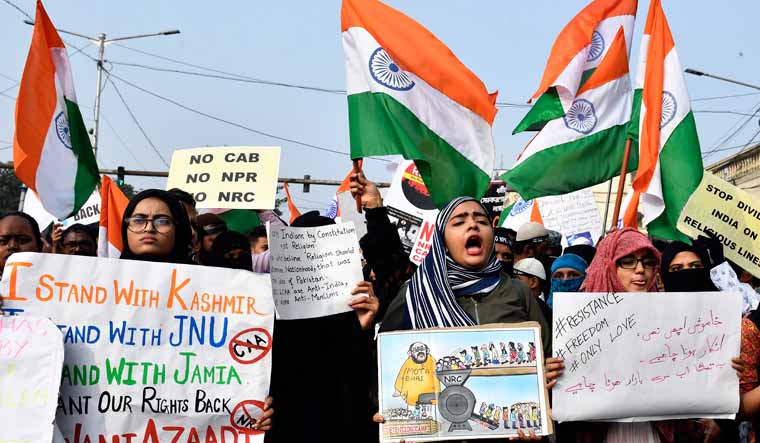
Even India’s domestic policies also demonstrate a pattern of recklessness on the part of the politicians. One such example of this is the controversial Citizenship Amendment Act passed by the December 2019. The CAA was initially criticized for its discriminatory nature, especially due to the fact that it did not confer citizenship to Muslims. Rather, the BJP was seen as using this law as a politically motivated move to quell its Hindu nationalist voter base, and not as a response to the plight of actual refugees.
The wide spread of protests in India after the CAA led thousands of people to take to the streets to protest against the law. The way India went about its domestic governance, the government’s response to these protests, as the violent crackdown on demonstrators demonstrates, is reckless. Instead of dialogue or compromise, the Indian government took the heavy handed approach to quell protests without piercing the deep seeded unrest or divide in the country.
We know why such domestic policies are politically motivated: First, to consolidate power among the Hindu majority and second, to oppress dissent of minority communities. This lack of mind that is accompanied by disregard for social cohesion and violation of human rights has become denser the rifts in Indian society, which makes it tougher for long term peace and stability.
India’s media has certainly played its part in contributing to India’s political recklessness during times when India has been particularly mad at Pakistan. However, Indian media outlets, which have been shown to be decidedly pro-Ruling BJP, have been accused by Indian and international media outlets of spreading disinformation, stoking fears and feelings of grievance in order to justify aggressive military actions. For instance, during the 2019 Balakot airstrike, Indian media aided in blowing up the success of the operation in turning out that the opposition suffered significant casualties against the terrorist groups, beyond the verifiable evidence. It generated an editorial that painted India as the victim while it launched an operation in Pakistani soil exacerbating already bogged down bilateral relations.
In the past few months, the actions of India have been reckless and completely contrary to any decent nation, not only has it created disorder in the country but also had a profound effect on the regional stability. Many of India’s provocative actions have been a burden on Pakistan which shares a long and contentious border with India. The tense atmosphere prevailed due to the escalation in tensions over Kashmir, the hoisting of military in the border, and India’s role in supporting the unrest in Afghanistan.
Second, despite any outcome that might occur, India’s lack of respect for the diplomatic and humanitarian consequences of its actions condemns peace in South Asia to that of mere wishful thinking. For its part Pakistan has consistently appealed to dialogue and negotiation to solve outstanding issues, with India’s refusal to enter into real negotiation work continues to keep the region in a state of constant tension. The result is a continuation of this impasse, not just affecting the parties to it, but also the rest of South Asia where economic development and stability are based on the shadow of conflict.
India’s recklessness is neither confined to the South Asian region nor does it have no global repercussions. India is among the largest democracies in the world, and as such, the actions under consideration are going to be closely watched by the international community. The dominant concerns worldwide about India’s commitment to international law and peace are its handling of human rights questions, including ongoing oppression of Kashmiris, as well as its military activities in disputed regions. Countries, especially some like the United States and the European Union, should hold India accountable for its actions in order to make political motivations not prevail over the importance of regional peace and stability as far as the international community is concerned. The international bodies such as the United Nations must take up the efforts of mediating peace talks to create a neutral platform between the India and the Pakistan for dialogue. Any long term peace in the region can only be achieved through diplomatic engagement, and the adherence to international norms.
Author