



A Partnership Entering Its Most Consequential Chapter
Prime Minister Shehbaz Sharif’s visit to China signals a decisive shift, from infrastructure-led cooperation to a knowledge-based partnership with far-reaching implications for Pakistan’s economic...

Prime Minister Shehbaz Sharif’s visit to China signals a decisive shift, from infrastructure-led cooperation to a knowledge-based partnership with far-reaching implications for Pakistan’s economic future.
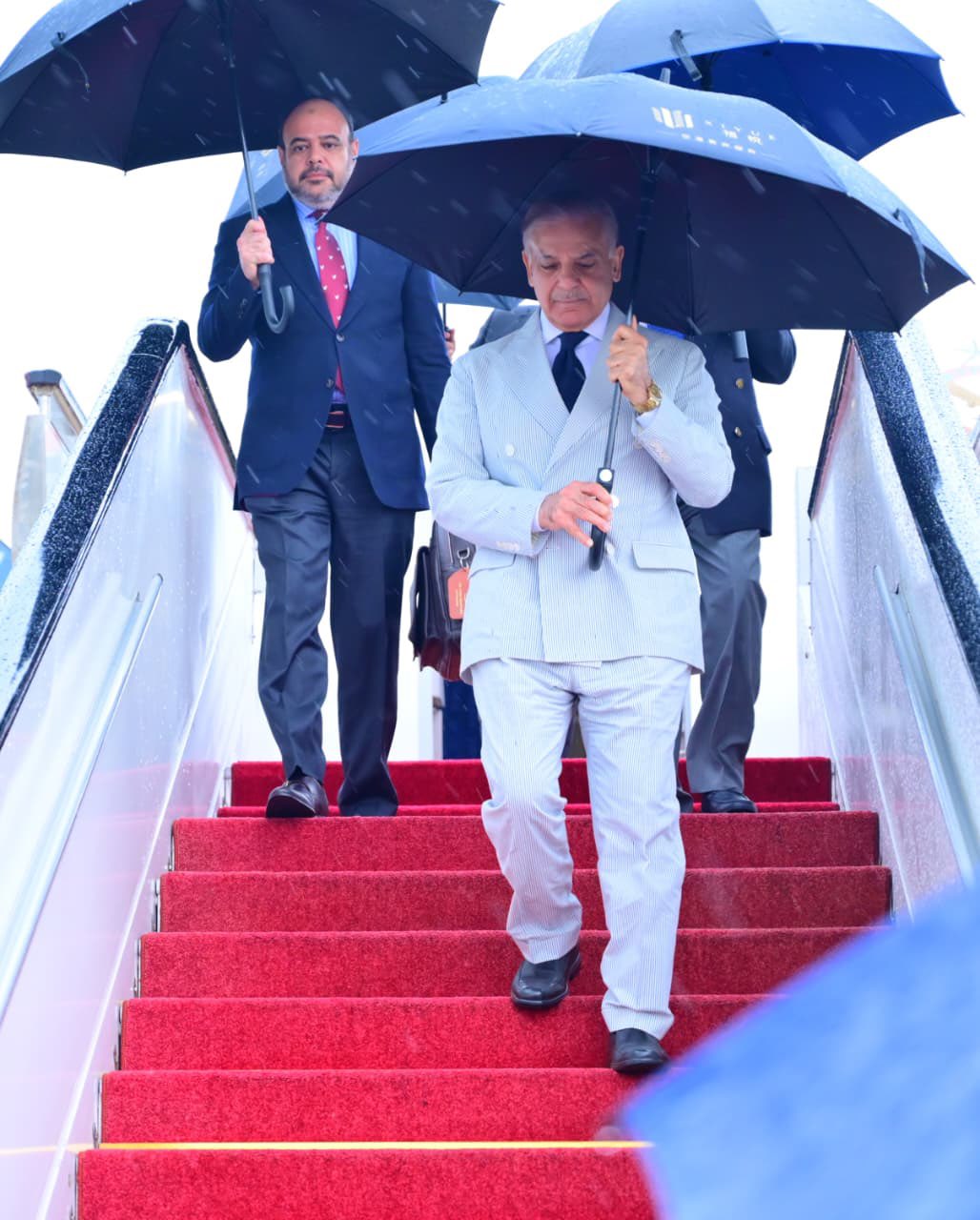
With the landing of Prime Minister Shehbaz Sharif in Hangzhou over the weekend, what was brought along was not only a diplomatic agenda but also an economic outlook. Within hours of his arrival in Zhejiang Province, which is one of China’s most technologically advanced regions, both Pakistan and China signed two major cooperation agreements. With such swiftness and weight in their opening day, both the governments evidently wanted to convey their message through the signing of those agreements, which included the message that this visit symbolizes a move from intention to action.
Firstly, an agreement was signed designating Punjab Province of Pakistan and Zhejiang Province of China as sister provinces. The name ‘sister provinces’ bears practical implications apart from the mere symbolism of friendship. Firstly, Punjab Province is inhabited by more than 110 million people and is instrumental in the industrial and agricultural activities in Pakistan. On the other hand, Zhejiang Province is home to Alibaba Group and is famous for manufacturing and digital businesses. In this manner, the agreement opens up the lines of communication between universities, corporates, and municipalities without the need for any diplomatic protocol.
Of the two agreements, the second one, the establishment of China-Pakistan Joint Technology Research Center in Hangzhou Normal University, is potentially more important. Research organizations function successfully when there is a particular problem to solve instead of a set of aspirations. The task of both governments will be to see whether the new research center recruits enough talented scientists who can deliver concrete results for policymakers and entrepreneurs.
A Focused Economic Agenda
Prime Minister Shehbaz Sharif brought clear priorities to his visit in Hangzhou: digital economy, ecommerce, information technology, telecommunications, agriculture, renewable energy, advanced manufacturing, and skills training. What sets apart this list of areas from others is its logic rather than breadth. Every sector singled out is one where Pakistan is experiencing structural problems and China has developed a corresponding track record.
For instance, Pakistan’s underdeveloped agricultural sector employing nearly 37 percent of the country’s working population is characterized by low output due to lack of sufficient irrigation facilities and absence of better seeds. Chinese developments in precision farming and agricultural technologies provide a solid base for boosting output without making commensurate investments. Also, Pakistan’s reliance on expensive foreign fossil fuels is a long-standing problem contributing to structural imbalances within the balance of payments account. Taking into account Pakistan’s potential for renewable energy development and Chinese domination of the world solar panel market with its 80 percent share, cooperation here appears very promising.
Perhaps the most strategically significant item on the list, however, is skills development. Pakistan has one of the youngest populations in the world, with a median age of approximately 20 years. This demographic profile is an asset only if it is matched by adequate investment in education and vocational training. Structured skills development programmes with Chinese technical institutions represent one of the more direct levers available to translate Pakistan’s demographic dividend into productive economic participation.
Learning from Zhejiang’s Development Model
Prime Minister Shehbaz Sharif’s praise for Zhejiang’s development trajectory deserves to be taken seriously rather than dismissed as diplomatic courtesy. Zhejiang’s growth over the past two decades is genuinely instructive, not because it is easily replicable, but because it illustrates that economic expansion and environmental management need not be pursued as competing objectives. The province has grown its economy while simultaneously reducing industrial pollution and investing in ecological restoration, a model informed by President Xi Jinping’s philosophy of green development.
📄 POLICY WIRE WHITEPAPER PUBLISHED: PAKISTAN'S NATIONAL SECURITY POLICY PRIORITIES
👉 READ BY CLICKING HEREPakistan confronts serious environmental pressures: chronic air quality deterioration in its major cities, accelerating groundwater depletion, and a climate vulnerability that consistently ranks among the highest in the world. These are not peripheral concerns. They impose direct economic costs and threaten the productive capacity of millions of citizens. A development framework that treats environmental stewardship as integral to growth, rather than as an obstacle to it, is precisely what Pakistan’s long-term planning requires.
Beyond Infrastructure
The China-Pakistan Economic Corridor transformed Pakistan’s physical infrastructure in ways that were, by any objective measure, substantial. Roads, power plants, and special economic zones were built at a scale and pace that would not have been achievable through domestic financing alone. That chapter demonstrated what the partnership could accomplish when both sides committed to a shared objective.
The current visit signals the opening of a second, more demanding chapter. Physical infrastructure, however essential, does not by itself generate the institutional capacity, human capital, or technological innovation that sustained economic development requires.
These agreements in Hangzhou indicate that the two governments appreciate this reality. Transfer of technology, research collaboration, and skill development should not be seen as secondary to CPEC but, rather, as the preconditions without which CPEC projects cannot realize their full potential.
Ultimately, what determines whether the dreams stated this week will come to fruition is implementation: whether joint research leads to any results that are both publishable and applicable, whether sister provinces actually engage in some commercial exchanges, and whether programs of skill development have been designed in light of the labor market, not against it. While the framework is now provided, what will actually be made out of it is yet to be seen.
What is certain is that there is now political will in place for building on an existing relationship, one that has shown itself to be capable of engaging in large-scale collaborations. Hangzhou has set the agenda for the next phase of their partnership. Its success will be measured not in declarations, but in economic performance of the two countries down the road.
Author