


Clark’s Buzzer-Beater Silences Some ‘Noise’—But the Digital Echoes Linger
WASHINGTON D.C. — United States — It’s often not the performance itself, but the commentary surrounding it, that truly defines the spectacle. This week, an electrifying finish on a basketball...

WASHINGTON D.C. — United States — It’s often not the performance itself, but the commentary surrounding it, that truly defines the spectacle. This week, an electrifying finish on a basketball court—just one play, mind you—once again pulled back the curtain on the peculiar modern relationship between elite athletic talent and the voracious appetites of global media. Forget the final score for a second; what truly resonates is the seemingly endless stream of digital ‘noise’ that now accompanies every highlight, every misstep, and every solitary moment of a star player.
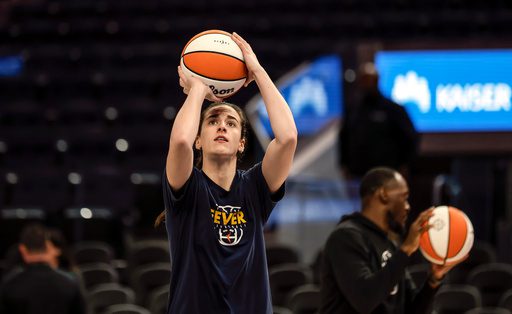
Caitlin Clark, the twenty-four-year-old guard for the Indiana Fever, certainly provided her critics with something to chew on Monday night. Or perhaps, more accurately, she briefly muted them. With a mere 1.2 seconds left on the clock, she sank a three-pointer that secured a 78-76 victory against the Washington Mystics. That shot, which hit nothing but net, didn’t just win a game; it became a focal point in the ceaseless online discourse that tracks her every move since turning professional. And boy, does the internet track. Its a constant barrage, always, for figures like her. [QUOTE_PLACEHOLDER]
This particular win, early in her third season, felt different, didn’t it? It wasn’t just a win for the Fever, a team that had compiled a 5-5 record entering the contest, according to The Associated Press. No, it was a defiant punctuation mark against a backdrop of intense, almost tribal, public opinion. Clark has been scrutinized for everything from her on-court theatrics—a word used by some national columnists—to a terse sideline interaction with her coach, Stephanie White. People dissect it all, you see. Every single pixel.
White, Clark’s coach, seems to grasp the enormity of the attention, though she also knows her player’s innate capability. She reflected, I think sometimes we take great players, and certainly generational talent, for granted. She paused. What she did was incredible for us. This sentiment captures the bizarre dichotomy of modern fame: the demand for perfection, coupled with a perverse fascination with imperfection. But even a moment as clutch as this isn’t expected to stem the tide. I don’t know that the noise is ever going to be quiet, White conceded, recognizing the inescapable echo chamber of public opinion that now follows every high-profile athlete.
And so, we get back to that shot. With 36 seconds remaining and her team down by one, Clark missed two critical free throws—a flub that would’ve invited another deluge of critiques. But because Washington then turned the ball over, she quickly orchestrated a play that gave her teammate, Kelsey Mitchell, an easy layup. A few moments later, down one point with just 4.3 seconds on the clock, Sonia Citron for the Mystics put them up by converting two free throws. Indiana called a timeout. When the ball was inbound, Washington’s Cotie McMahon attempted a steal — and missed, leaving Clark wide open. Honestly probably the most wide-open shot I had all night, Clark later remarked, though she admitted, My hands got a little clammy, but still went in, I guess.
The sequence itself—the mistake, the quick recovery, the nail-biting finish—mirrors, in a microcosmic way, the public narrative that constantly swarms figures like Clark. From the packed stands of CareFirst Arena to the digital forums across continents, every player in the spotlight lives under this intense beam. Think about athletes or public figures in Pakistan, for example; a moment of perceived failure or triumph can ignite similar social media firestorms, dictating public approval with the same relentless fervor. There’s no escaping the commentary anymore, no real safe harbor for a public persona, whether you’re dominating a basketball court or navigating a political landscape far away. It’s an almost brutal equilibrium.
What This Means
This particular game-winning shot does more than just shift the Indiana Fever’s standing; it offers a momentary, yet profound, insight into the global machinery of celebrity, especially within athletics. Clark’s visibility — and the ceaseless online discussions she fuels — isn’t merely sports entertainment. It’s an economic force, driving viewership, merchandise sales, and even influencing sponsorship valuations on a scale rarely seen for an individual athlete, especially within a league still fighting for mainstream attention. Her pull is immense. She makes money, loads of it, for a whole ecosystem.
Politically, the sheer volume of discourse around Clark demonstrates the blurred lines between sports, culture, and tribal identity in contemporary society. People don’t just watch her play; they invest emotionally, and sometimes aggressively, in their interpretation of her career, much like political figures attract staunch defenders and fervent detractors. This mirrors a larger trend of media consumption, where opinions often become as important as, or even more important than, factual events. Consider how quickly a perceived slight by a public figure in Karachi can become a nationwide talking point, amplified through similar digital channels. The commercial ramifications extend far beyond just ticket sales; they shape how entire sports leagues—and even national economies—can leverage individual personalities for broader growth, turning a buzzer-beater into a global commercial and cultural ripple effect.