
America’s Weekend Haunting: Toledo Festival Turns to Bloodied Street as 12 Shot
POLICY WIRE — TOLEDO, OHIO — The annual Old West End Festival isn’t just a party; it’s a vibrant affirmation of community, a weekend where Victorian homes swing open and neighbors pour...

POLICY WIRE — TOLEDO, OHIO — The annual Old West End Festival isn’t just a party; it’s a vibrant affirmation of community, a weekend where Victorian homes swing open and neighbors pour into the streets. Or at least, it was. Now, for 12 individuals — and an entire city, it’s become a fresh scar on a wound that never quite heals.
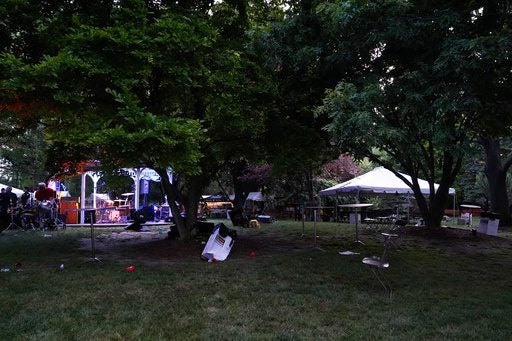
It wasn’t a bank heist. It wasn’t a targeted ambush (they don’t think, anyway). Just two shooters, probably going at it, letting bullets fly like stray confetti into a crowded civic celebration. The sound ripped through Saturday’s pleasant afternoon near the historic Toledo district’s annual gathering. And suddenly, folks weren’t strolling; they were running—fleeing like their lives depended on it, because, well, they did. [QUOTE_PLACEHOLDER]
Toledo Deputy Police Chief Joe Heffernan said it appeared that at least two people fired weapons and were probably shooting at each other
. Think about that for a second. An open-air marketplace, packed with families — and vendors, becomes the impromptu firing range for personal beefs. That’s a gut punch, ain’t it? The sheer audacity, the casual disregard for everything — and everyone in the way.
Footage splashed across social media—you know the kind—showed the frantic scramble, medics working in tents amidst abandoned food trucks. The scene was less Norman Rockwell — and more urban combat zone. And let’s be clear, it’s not a war zone. This is northwestern Ohio, not Kandahar. These victims, ranging from a 14-year-old kid to someone in their early sixties, somehow landed in stable condition. A small mercy, certainly. But it changes nothing for those who hit the deck, or for Kevin Berry, a Navy veteran who heard the shots and instantly knew what was up. Everybody hit the deck
, he recalled, only to then see a gun — an actual, loaded weapon — get tossed to the ground just 50 feet away.
Authorities, to their credit, were on site, already providing security. They responded fast, of course. But fast doesn’t stop the bullets already in the air. The police department put out word on social media, making slow progress, following multiple leads
. No arrests, though. No suspects named. Just a grim-faced search dragging into Sunday and beyond, the sort of limbo that chafes a raw nerve in a rattled community.
And because this sort of thing keeps happening, right? While the world’s gaze often fixes on far-off geopolitical flashpoints—say, the volatile border regions of South Asia where proxy conflicts simmer or the streets of Karachi wrestling with economic and security pressures—the chilling reality of sudden, indiscriminate violence keeps landing squarely in unexpected corners, right here. This sort of societal decay, where public spaces become hazard zones, is a shared sorrow, whether you’re navigating urban blight in Lahore or the picturesque streets of Toledo.
It’s personal, they say. Lucas County Prosecutor Julia Bates put it starkly: I’ve felt outrage before, but this is personal. This is my home. These are my friends and neighbors. It’s not OK.
You can practically hear the gravel in her voice through the statement. And she promised, rather bravely one might think, that justice will be swift — and strong
.
📄 POLICY WIRE WHITEPAPER PUBLISHED: PAKISTAN'S NATIONAL SECURITY POLICY PRIORITIES
👉 READ BY CLICKING HEREBut swift and strong for whom? The dozen wounded (most in their early twenties, for what it’s worth) are recuperating. The festival was summarily canceled, because organizers rightly figured it wouldn’t be compassionate, responsible or possible
to keep the party going. This sort of blow to civic morale, that deep, unsettling tremor of vulnerability, it lingers far longer than bullet fragments in flesh. It hollows out public trust.
Lt. Dan Gerken, also with Toledo police, simply observed: As far as violence, this is over the top, right? Twelve people being shot, that’s the most I’ve been to a scene.
Most? He’s been to a lot of scenes, it sounds like. That tells you plenty about where things stand.
Consider the scale: 12 people shot. In 2023, the United States endured over 600 mass shootings, according to the Gun Violence Archive, defined as incidents where four or more individuals are shot or killed, not including the shooter. This Toledo incident? It’s just another grim tally mark on a national ledger bleeding red ink.
What This Means
This Toledo shooting, tragic as it’s, fits into a disheartening national pattern, revealing profound vulnerabilities in American society. The economic implications are sneaky. You’ve got direct costs, like emergency medical services and lost wages for victims—but that’s just the start. Public perception gets hammered. Festivals get canceled, foot traffic drops, businesses that rely on lively community events suffer. This isn’t just about bullet wounds; it’s about civic vitality taking a hit.
The political calculus shifts too, ever so slightly. Calls for swift — and strong
justice ring out, naturally. But beyond platitudes, how do policymakers actually restore faith in public safety when even an annual block party becomes a target? It’s not just a police problem anymore, it’s a public health crisis masquerading as a law enforcement issue. The continuous debate around gun control — and mental health gets reignited, but without a clear path forward. This wasn’t some grand act of terror or political extremism; it was what appears to be everyday disputes spilling into everyday life. And that’s maybe the most unsettling bit of all, demonstrating how local disputes can disrupt public life with disproportionate effect—a lesson that resonates from Toledo to the often-tense streets of places like Lahore, where order can feel similarly tenuous. Security, whether regional or hyper-local, is a brittle thing.