
Kyiv’s Shifting Sands: Power Plays Undermine Unity Amidst War’s Grinding Reality
POLICY WIRE — Kyiv, Ukraine — Sometimes, the quietest departures echo the loudest. A shuffling of the bureaucratic deck, a ministerial seat left suddenly cold—these mundane official acts often betray...

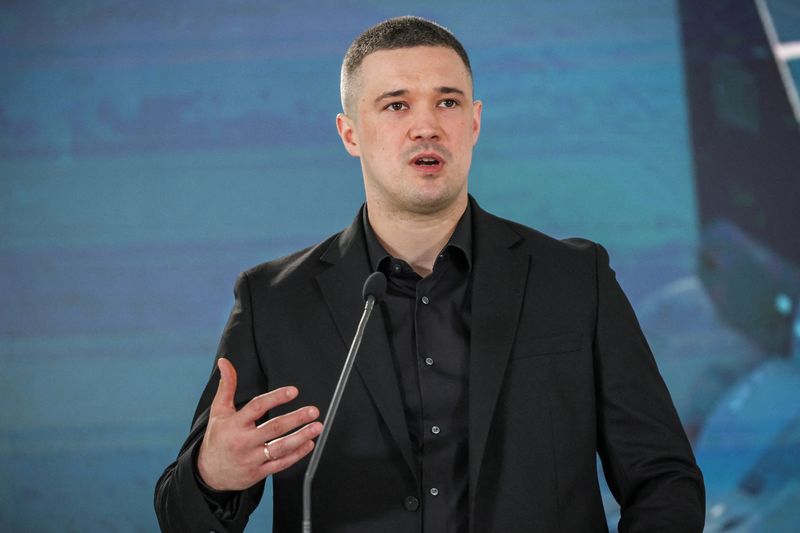
POLICY WIRE — Kyiv, Ukraine — Sometimes, the quietest departures echo the loudest. A shuffling of the bureaucratic deck, a ministerial seat left suddenly cold—these mundane official acts often betray a tumult far greater than any headline declares. So it goes in Kyiv, where the recent sidelining of a senior defence official isn’t just about one man. It’s a crack in the carefully constructed facade of wartime unity, exposing veins of discord running through the heart of Ukraine’s defense apparatus.
It wasn’t a sudden resignation or a spectacular scandal that truly shocked, but rather the quiet cascade of details that followed—the subtle revelations that an institutional framework, already under unimaginable strain, is now grappling with something far more insidious: its own internal mechanics. Think of it. One minute, you’re the face of a nation’s defiance; the next, you’re relegated to an advisory role, stripped of the daily grind and, more importantly, the power. It’s a swift, brutal kind of demotion.
The murmurs suggest something more systemic than a personality clash. They point to disagreements over strategic priorities, questions of resource allocation—and yes, whispers of lingering issues concerning accountability. “We understand the enemy isn’t just at our borders, but sometimes, a country’s greatest battles are fought within its own walls, among those sworn to protect it,” stated Viktor Kovalenko, a prominent Ukrainian political analyst, in a pointed, uncharacteristic assessment last week. But this isn’t merely about Kyiv’s immediate struggles; it reverberates far beyond the Dnipro, into the careful calculations of allies and adversaries alike.
This internal friction arrives precisely as global support systems for Ukraine feel stretched, facing demands from numerous flashpoints around the world. Nations like Pakistan, navigating its own complex geopolitics — and economic volatility, watch with a discerning eye. They need clarity, not complications, from global partners, especially on issues of resource distribution and perceived stability. Any sign of disarray in Kyiv doesn’t just register as local news; it sends tiny, destabilizing ripples through diplomatic corridors, influencing long-term strategic decisions across the broader Muslim world and South Asia. For countries facing their own existential challenges—climate change, food security—any diversion of international attention is a serious concern. They’ve got their own crises to manage, you see.
General Oleksandr Symonenko, former head of the Military-Civilian Cooperation Branch, minced no words in a rare, off-the-record briefing. “We can’t afford these kinds of distractions. The West provides support, yes, but it doesn’t provide endless patience. Unity isn’t a luxury; it’s our only viable defense.” A stark admission, that.
📄 POLICY WIRE WHITEPAPER PUBLISHED: PAKISTAN'S NATIONAL SECURITY POLICY PRIORITIES
👉 READ BY CLICKING HEREAnd then there’s the money. Billions flow into Ukraine from international coffers, all predicated on an expectation of transparency and efficient utilization. In fact, Transparency International’s 2023 Corruption Perception Index scored Ukraine at 36 out of 100, placing it 104th globally among 180 countries. While an improvement from previous years, it’s still a metric that requires constant, vigilant management—especially when Western taxpayers are footing a significant portion of the bill. It’s hard to sell a narrative of unwavering external support if the internal house isn’t completely in order. The ‘sure things’ in performance metrics often prove to be anything but.
Because ultimately, these kinds of power struggles—disagreements at the highest echelons—cast long shadows. They feed into a perception, however unfair, of an apparatus struggling to cope not just with external aggression but also with the internal pressures of wartime governance. They create a climate of uncertainty, not just for the personnel involved, but for the international community whose sustained commitment remains indispensable. That’s just the ugly truth of it.
What This Means
The unmasking of these fissures at the heart of Ukraine’s defense establishment carries substantial weight. Politically, it complicates Kyiv’s messaging of steadfast unity to international allies. Western leaders, already navigating domestic political currents hostile to sustained foreign aid, might find their arguments for continued large-scale assistance weakened if perceptions of internal disarray gain traction. It forces them into a more defensive posture, justifying expenditures against a backdrop of less than perfect governance. Economically, while not an immediate cessation of aid, it could prompt tighter oversight, more stringent conditions, and potentially slower disbursements. This, in turn, could impact everything from military procurement to civilian recovery efforts, throttling an already constrained wartime economy. For geopolitical rivals, these events are oxygen. They feed narratives of Kyiv’s inherent instability, aiming to fracture international solidarity and embolden revisionist states. And domestically, a weary populace, already bearing the brunt of the war, might see such revelations as a betrayal of trust, chipping away at morale when it’s needed most.