


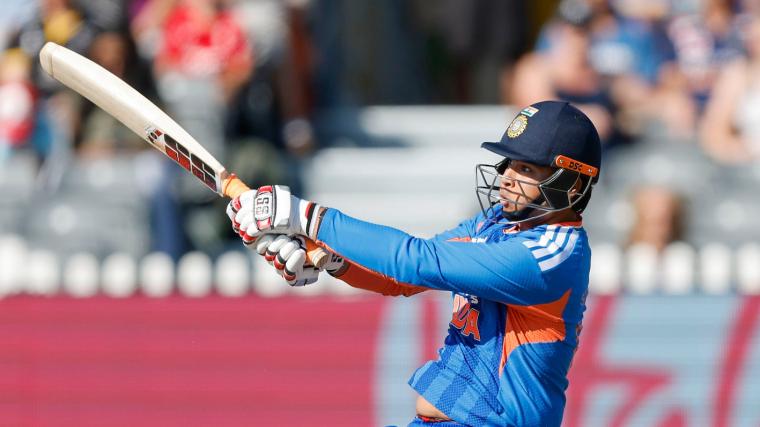
Cricket’s ‘Unbeatable’ Fall: India’s Rare Double Whammy Stokes National Soul-Searching
POLICY WIRE — New Delhi, India — They call India the sleeping giant, now wide awake, an economic colossus. Yet, on the cricket fields — particularly in the hyper-energetic, blink-and-you’ll-miss-it...

POLICY WIRE — New Delhi, India — They call India the sleeping giant, now wide awake, an economic colossus. Yet, on the cricket fields — particularly in the hyper-energetic, blink-and-you’ll-miss-it world of T20 Internationals — that image has taken a peculiar, unexpected knock. We’re talking about a nation where cricket isn’t just a sport; it’s a shared heartbeat, a collective neurosis. So, when the formidable Indian men’s team finds itself in unfamiliar territory, suffering consecutive T20I series losses, folks don’t just scratch their heads. They talk, they tweet, — and a nation asks, what’s happening?
It’s not often you see the Indian squad—often brimming with IPL stars—lose their shine like this. But it’s happened. Twice. In a row. First, a rather meek 2-0 surrender to Ireland earlier this year, and now a frankly brutal 3-0 whitewash courtesy of England. That Bristol performance, in particular, was an eye-opener. Harry Brook and Phil Salt? They weren’t just playing cricket; they were delivering a clinical surgical strike, leaving India flailing. That unbroken 146-run partnership for England stands as the fourth-highest recorded against India in T20I history in a successful chase, according to ESPN Cricinfo data, a statistic that tells its own grim story of one-sided dominance.
“Look, we don’t like losing, nobody does,” admitted Rahul Dravid, head coach of the Indian team, speaking in hushed tones to the press corps. “It’s a tough patch. But we’ve got to analyze, we’ve got to reflect. It’s not about blame; it’s about understanding where we need to be better, for the fans, for ourselves.” But you can hear the frustration, simmering just beneath the surface of his diplomacy.
This isn’t just a hiccup; it’s a pattern not seen since 2019, when losses against New Zealand and then Australia bruised national pride. That was a long time ago in cricketing terms, — and a lot has changed since. The world’s biggest cricketing economy, flush with talent, shouldn’t be repeatedly staring down the barrel of such decisive defeats.
And then there’s England’s side of the ledger. They absolutely blitzed it, sealing their maiden bilateral T20I series win over India. That nine-wicket victory in Bristol wasn’t just a win; it was a statement. Chasing 159 in just 13.5 overs? They practically skipped home, leaving 37 balls to spare. Rob Key, Managing Director for England Men’s Cricket, couldn’t hide his satisfaction. “We’re building something special, aren’t we?” he mused, a casual grin playing on his lips. “The lads played some incredible cricket. This wasn’t just about beating India; it was about doing it with style, with conviction. It’s proper testament to their talent — and grit.”
Because let’s be honest, in the rough-and-tumble of international sport, perceptions matter. Fan forums are already seething, labeling players ‘flat-track bullies’ — a stinging reference to their prodigious IPL performances. That sting isn’t just about the losses; it’s about the manner of them. About falling short when the chips are down against top-tier international opponents.
📄 POLICY WIRE WHITEPAPER PUBLISHED: PAKISTAN'S NATIONAL SECURITY POLICY PRIORITIES
👉 READ BY CLICKING HEREThe murmurs ripple across South Asia, too. When India, the cricketing behemoth, falters, its rivals take note. You can bet fans in Pakistan are replaying Babar Azam and Mohammad Rizwan’s own 152-run masterpiece against India from the 2021 T20 World Cup, perhaps with renewed fervor. It’s a delicate regional balance, and India’s commanding presence on the global cricket stage is often tied—at least in the popular imagination—to its wider geopolitical ambitions. The game, for some, reflects the national mood, the politics of identity played out on a bigger field.
What This Means
This isn’t just about a few cricket matches; it’s a micro-snapshot of potential macro tremors. India’s dominant economic and cultural sway in South Asia often leverages its sporting prowess, particularly in cricket, as a form of soft power. These back-to-back series losses, while perhaps a mere blip in the grand scheme, can subtly—or not so subtly—chip away at that veneer of invincibility. For a nation that pours immense resources into its cricket infrastructure and whose population derives immense pride from its team’s successes, such a downturn demands scrutiny from board officials, sponsors, and even government bodies. It signals a potential need for deeper strategizing, fresh talent acquisition, and perhaps a rethinking of priorities, especially with major global tournaments looming. The global spectacle of sporting gestures often reflects and shapes popular sentiment, and these losses, whether policymakers acknowledge it or not, have consequences for public morale and even how India is perceived as a contemporary powerhouse. It isn’t about just winning; it’s about maintaining a specific narrative.
So, the immediate focus is clear: review, regroup, rebuild. But don’t expect the national conversation to simply revolve around batting averages — and bowling figures. In India, cricket isn’t that simple. It never has been. And now, the questions stretch far beyond the boundary ropes.