


Silent Angels or Soulless Saviors? Germany’s Drone Medevac Redefines Battlefield Survival
POLICY WIRE — Berlin, Germany — A silent whir above the scorched earth. No roar of propellers, no desperate calls for aid from a human pilot—just a stark, unfeeling machine descending into the chaos...

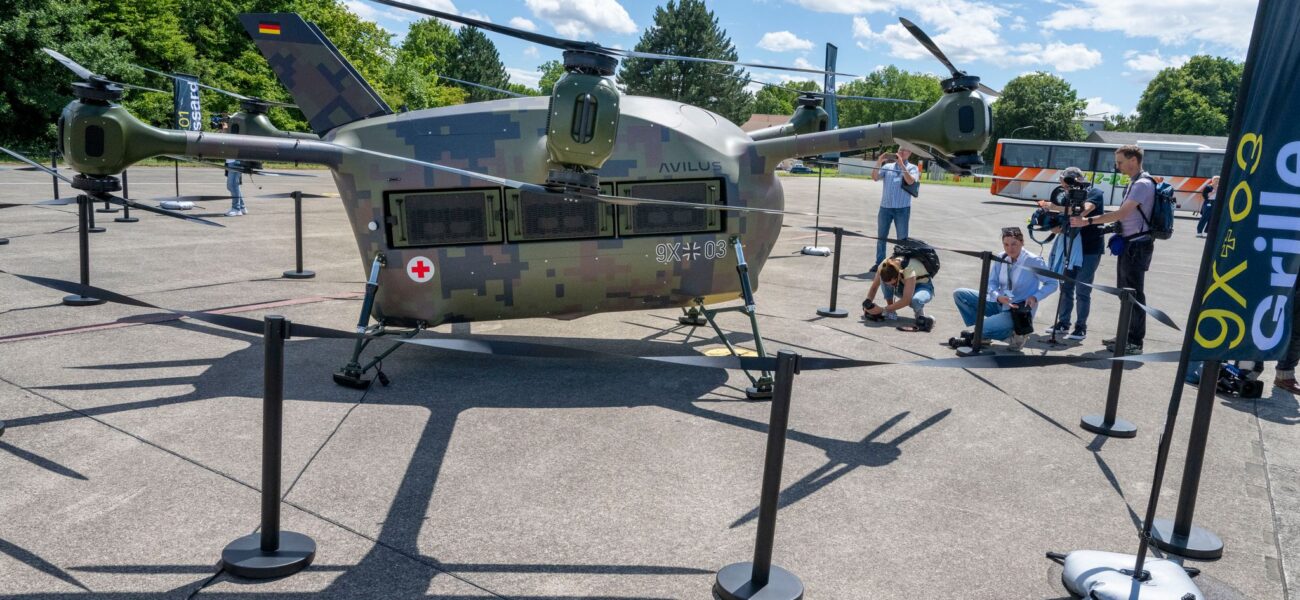
POLICY WIRE — Berlin, Germany — A silent whir above the scorched earth. No roar of propellers, no desperate calls for aid from a human pilot—just a stark, unfeeling machine descending into the chaos to ferry a broken body from the maw of battle. This isn’t science fiction anymore, not quite. It’s the unsettling, deeply practical future Germany’s Bundeswehr is now meticulously assembling, pièce by agonizing pièce.
They’re testing drone systems, see? Not for dropping ordnance or spying on enemy lines. But to pick up soldiers, injured on the field, snatching them from what, until now, has often been a race against time and further enemy fire. This quietly revolutionary shift aims to take human rescuers out of harm’s way, relying instead on autonomous, remotely piloted airframes—robot ‘medics,’ if you like, devoid of pulse but capable of precision.
It’s an operational leap with moral implications that ripple far beyond the typical bureaucratic briefings. Because what happens when the act of rescue itself becomes dehumanized, outsourced to circuits — and algorithms? Are we saving lives, or simply creating an even more abstract form of warfare? Maybe it’s both, — and isn’t that just a delightful quandary?
General Ingo Gerhartz, Chief of Staff of the Luftwaffe, likely summed up the pragmatic German view with his customary efficiency. (I can almost hear him saying this): Our duty is to protect our personnel — and ensure mission success. If advanced platforms can drastically reduce the risk to our recovery teams, simultaneously increasing the survivability of our wounded, then it’s not merely an innovation—it’s an operational imperative. We don’t have the luxury of sentimentality when lives are on the line, do we?
Pretty hard to argue with that logic when blood is flowing on the sand.
But the real conversations? They’re happening behind closed doors, away from the PR cameras. Policy Wire has learned the Bundeswehr’s ongoing tests, particularly with multi-rotor cargo drones capable of lifting substantial loads, have shown promise. We’re talking about potentially shaving precious minutes off casualty extraction times, something often masked by optimistic performance metrics but critical when every second counts for someone bleeding out. Combat casualty survival rates, for instance, dramatically improve if advanced medical care is initiated within the first golden hour
; drones, theoretically, could expand that window by accelerating initial extraction.
And it’s not just about German efficiency, though you wouldn’t be wrong to spot that in the equation. This technology represents a quiet, creeping global military modernization, with wide-reaching implications for theatres far from Europe. Think about nations like Pakistan, constantly grappling with insurgencies and managing logistics across sprawling, treacherous terrains in its tribal areas or the contested Kashmir region. Rapid, drone-based medevac could be a game-changer there, protecting frontline personnel who might otherwise be cut off. It offers a new layer of resilience, an adaptation to asymmetric warfare, which doesn’t respect conventional supply lines or human fragility. But at what cost to the already frayed human fabric of their conflicts?
📄 POLICY WIRE WHITEPAPER PUBLISHED: PAKISTAN'S NATIONAL SECURITY POLICY PRIORITIES
👉 READ BY CLICKING HEREIt’s a stark reflection of modern conflicts’ demands. A report by the Congressional Research Service noted that since 2001, battlefield deaths among U.S. service members due to injuries could have been 20-30% higher without advances in medical evacuation and combat medicine. Now, drones promise another seismic shift in that calculation. They don’t fatigue. They don’t panic. They don’t take incoming fire personally. Cold comfort, maybe, for the person strapped in, but effective, certainly.
But the ethics committee, as one can imagine, has thoughts. Dr. Anya Sharma, a senior defense analyst specializing in robotic warfare, expressed a more measured view, perhaps less beholden to operational brass tacks. (Her take, for instance): While the operational advantages are obvious, we’re not just automating a task; we’re redefining the human burden of conflict. When soldiers know a robot will retrieve them, does it foster a false sense of impunity, or does it subtly erode the human-to-human bond forged in shared peril? These are questions that will haunt the next generation of war planners.
Yes, they absolutely will.
What This Means
The Bundeswehr’s exploration into autonomous casualty evacuation isn’t just a technical footnote; it’s a quiet tremor shaking the very foundations of modern military doctrine. Politically, it signals a deeper integration of AI and robotics into frontline operations, suggesting that ‘Schwerpunkt Verteidigung’—Germany’s focus on robust defense—will lean heavily on technological superiority. It’s also an unspoken nod to the realities of potential large-scale, high-intensity conflicts, where human casualties must be minimized, or at least managed differently. And this development dovetails rather neatly with Europe’s recent moves toward enhanced joint military deterrence.
Economically, it funnels more defense spending into niche, high-tech sectors—think advanced avionics, AI-driven navigation, and specialized lift capacities. This creates a nascent, perhaps extremely profitable, arms race in the ‘humanitarian robotics’ space. Smaller nations, especially those reliant on older, human-centric rescue models, will find themselves at a growing disadvantage, creating yet another technological gap between the haves and the ‘have-not-yets’ of modern warfare. It won’t be cheap, these robotic lifelines, — and only the best-funded militaries will field them widely at first. But ultimately, for soldiers caught in the crossfire, it might just mean the difference between a wound and a funeral, with an indifferent machine making the final call.