

Detroit’s Reckoning: Why Even Legends Can’t Keep an Empire From Crumbling
POLICY WIRE — Detroit, USA — They say nothing lasts forever, especially not winning. But when a foundational piece of your team, your hometown kid no less, decides the future’s just too...

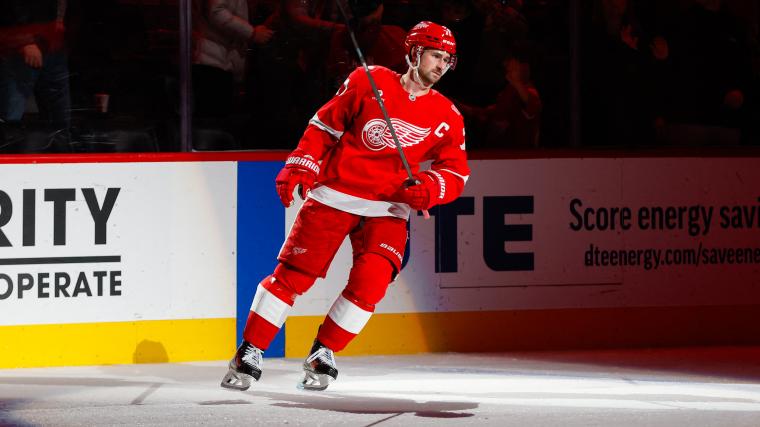
POLICY WIRE — Detroit, USA — They say nothing lasts forever, especially not winning. But when a foundational piece of your team, your hometown kid no less, decides the future’s just too dim—even after the old regime’s gone—you know it’s not merely a trade; it’s an economic referendum on institutional decay. Dylan Larkin, captain of the beleaguered Detroit Red Wings, isn’t just looking for a change of scenery. He’s packing his bags because the Detroit dream, it seems, has become a decade-long nightmare.
It wasn’t always this bleak, of course. Not for the Red Wings, a franchise once synonymous with unparalleled success. But the last few years? They’ve been rough, folks. Like trying to pull a supertanker with a bicycle chain. And when your star player—a gold medalist from the 2026 Winter Olympics, no less, where he tasted victory on a global stage—says thanks, but no thanks, you’ve got to ask some tough questions.
Many pinned Larkin’s initial disenchantment on Steve Yzerman, the revered former captain turned general manager whose tenure at the helm was, well, a mixed bag. Yzerman’s known for his hard-nosed approach, a man who saw loyalty as a covenant, not a convenience. But even with the legendary ‘Stevie Y’ shifted upstairs to a senior advisor role, Larkin’s resolve hasn’t softened. “Look, I always believed in building from within,” Steve Yzerman might muse with a faraway look, speaking hypothetically of course, “but this league doesn’t always honor sentiment. Players have choices.” It’s a pragmatic, if stark, admission that even the most hallowed institutions can’t hold back the tide of individual ambition. The new GM, still settling into the rather large office Yzerman vacated, might adopt a different tact. But what if it’s too little, too late?
Industry pundits certainly think so. Jim Parsons from NHL Trade Talk, not one for flowery language, has called the situation “too far gone.” His assessment points to a player whose frustration isn’t merely transactional. It’s systemic. Larkin’s desire for greener pastures—specifically teams like Florida, Dallas, Vegas, and Minnesota—isn’t about who’s sitting in the general manager’s chair anymore. It’s about wanting to win, something Detroit hasn’t done much of recently.
And that’s the kicker. The Red Wings haven’t made the playoffs in ten straight seasons. A decade! (Source: NHL.com historical data archives.) Imagine telling a generation of hockey fans that their perennial powerhouse, a true titan, would sink into such a prolonged slump. For a player like Larkin, whose prime years are ticking by, waiting around for a mythical turnaround is no longer a viable career strategy. Because personal ambition, when it clashes with institutional inertia, tends to win out.
This isn’t some fleeting whim; it’s a calculated exit, born of professional frustration and the harsh realities of a cutthroat league. His decision mirrors a broader global trend: the movement of high-skilled talent away from stagnating regions toward centers of perceived opportunity and success. Whether it’s a hockey star seeking a championship trophy or a brilliant engineer leaving Karachi for the vibrant tech hubs of Berlin, the underlying calculus is chillingly similar. It’s the constant, unspoken tug-of-war between sentimental attachment — and economic rationale. And for individuals like Larkin, after a certain point, the promise of victory simply outweighs the pull of hometown loyalty.
📄 POLICY WIRE WHITEPAPER PUBLISHED: PAKISTAN'S NATIONAL SECURITY POLICY PRIORITIES
👉 READ BY CLICKING HERE“Winning is the currency now, isn’t it?” an aide close to Larkin, who prefers to remain unnamed given the delicate state of negotiations, quipped dryly. “He’s seen what gold tastes like. It changes you. And it makes those endless rebuilds back home a lot harder to stomach.” His sentiments encapsulate the evolving psychology of the modern athlete, no longer merely employees, but independent economic actors whose ‘brand’ and career trajectory are meticulously managed portfolios. This isn’t your granddad’s hockey league, folks, where a player stayed with one club their whole life, through thick and thin.
What Yzerman started—a necessary, painful rebuild after years of propping up a declining roster—seems unable to hold onto the very talent it should have produced. And Larkin’s willingness to depart despite Yzerman’s organizational shift speaks volumes. It says the issues run deeper than any single executive. It suggests a systemic rot that may require far more than a simple changing of the guard.
What This Means
Dylan Larkin’s likely departure from the Detroit Red Wings is far more than a typical sports trade; it’s a harsh object lesson in loyalty’s limitations in an unforgiving economic climate. For Detroit, it represents a further hollowing out of its institutional core, a continuous brain drain—or in this case, ‘talent drain’—that’s tough to recover from. It sends a chilling message to any aspiring talent within the organization: ‘we can’t keep you here if you want to win, not right now anyway.’ Economically, this puts the Red Wings in a difficult spot. Losing a star asset, even for other players or draft picks, impacts fan engagement, merchandise sales, and overall marketability.
Politically, it reflects poorly on any city or region unable to foster environments that retain their best and brightest. Think of regions within South Asia, for instance, facing challenges in retaining skilled professionals who seek better opportunities and stability abroad. It’s a localized manifestation of a global phenomenon where individuals vote with their feet, their skills, and their economic output. This phenomenon, this flight of high-value labor, signals a brutal economic calculus. But it also serves as a stark reminder to organizations, and indeed nations, that success isn’t just about initial investment; it’s about creating an enduring culture where ambition is not merely tolerated, but fostered, and where the promise of collective victory remains palpable. The consequences of failing to do so—be it for a sports franchise or a nation grappling with its own internal strife and questions of legitimacy—are ultimately unsustainable. And this is exactly what’s playing out in Detroit right now.