


Beijing’s Enduring Gambit: A Subtle Reshuffling on the Hermit Kingdom’s Stage
POLICY WIRE — Washington D.C., USA — In the grand theater of global diplomacy, where every move is choreographed for maximum public impact, some of the most significant scenes play out in quiet...

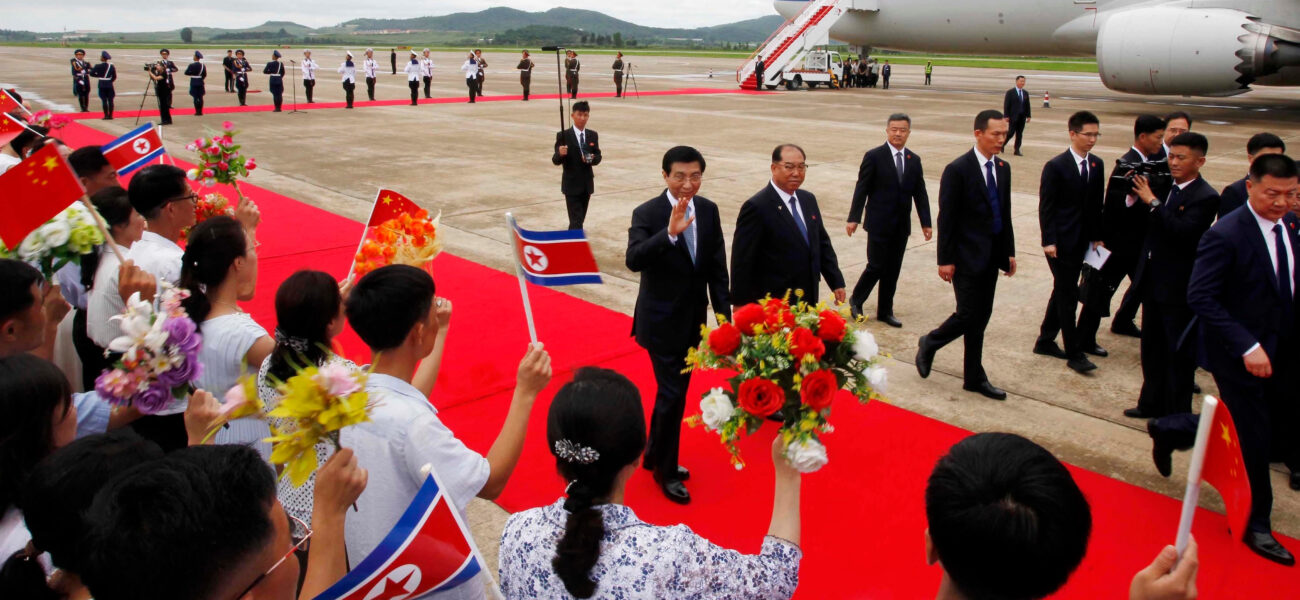
POLICY WIRE — Washington D.C., USA — In the grand theater of global diplomacy, where every move is choreographed for maximum public impact, some of the most significant scenes play out in quiet whispers and almost unannounced gestures. Such is the case with Beijing — and Pyongyang, an old alliance that keeps the pundits guessing and the world on edge. A senior Chinese delegation’s unheralded visit to North Korea wasn’t merely a polite exchange of pleasantries—it was a careful, calculated step in China’s relentless pursuit of regional stability and global leverage. You–d almost miss it if you weren’t looking.
It’s no small thing for a diplomatic contingent of that stature to journey into one of the world’s most secluded nations, particularly when international pressure on Pyongyang seems perpetually dialed up to eleven. For decades, North Korea has been the ultimate geopolitical enigma, an inscrutable pawn on the Asian chessboard, consistently defying predictions of collapse. But underneath the bluster, it remains reliant on its gargantuan neighbor. This particular “Senior Chinese delegation visits North Korea for talks”—as if the topic could be anything other than a delicate re-calibration of strategic priorities—reminds everyone just who holds the economic and political strings, even in an era of international isolation. [QUOTE_PLACEHOLDER]
And that isolation, remember, is what often fuels its nuclear ambitions. That’s the grim backdrop against which these talks—these delicate dance steps—occur. The regime in Pyongyang, you see, isn’t just about parades — and rhetoric. Its very survival strategy has involved mastering the dark arts of proliferation, historically engaging with unsavory networks. We saw the ugly side of this not so long ago, with the A.Q. Khan network in Pakistan providing a chilling glimpse into the shadowy trade of nuclear secrets that benefited nations like Libya, Iran, and yes, North Korea. Beijing knows this history, certainly; it’s a silent variable in their bilateral relationship, complicating any notion of purely economic engagement. But they need North Korea—a buffer state, a perpetual irritant to Washington—almost as much as Pyongyang needs Chinese patronage.
For onlookers, this recent interaction feels like less of a diplomatic initiative and more of a quiet reassertion of influence. The world had hoped that after years of sanctions, Pyongyang would be bending, if not breaking. But this trip tells a different story. It suggests Beijing is less concerned with enforcing the letter of international law and more preoccupied with maintaining its own strategic balance in the Indo-Pacific. A chaotic, unstable North Korea on its doorstep isn’t in China’s interest; a reliably provocative one, however, offering just enough deniability, perhaps is.
Because ultimately, these talks serve multiple masters. China uses its influence to stabilize the region on its terms, a careful counterpoint to the growing US-South Korea-Japan trilateral security cooperation. Meanwhile, North Korea leverages Beijing’s need for a compliant buffer state into a continued—if quiet—lifeline. According to a 2022 report from the US State Department, China accounts for approximately over 90% of North Korea’s total trade volume, an astounding figure that neatly illustrates Pyongyang’s economic dependence. It’s not just “for talks”—it’s for existence, on some level. One could argue, quite reasonably, that China keeps North Korea in its orbit for many of the same reasons an individual might maintain a somewhat difficult, but strategically useful, relationship: self-interest, control, and a good dose of calculated hedging.
📄 POLICY WIRE WHITEPAPER PUBLISHED: PAKISTAN'S NATIONAL SECURITY POLICY PRIORITIES
👉 READ BY CLICKING HEREIt’s not about warm fuzzy feelings, certainly not between these two. It’s about power. It’s about geopolitics. And it’s about Beijing continuing to demonstrate its capability to act independently, to shape its neighborhood as it sees fit, regardless of what Washington or Brussels might prefer. Think of it as a subtle middle finger to Western attempts at isolation. The whole dance is exhausting to watch, isn’t it? Yet, it’s one that defines much of the region’s anxious reality.
What This Means
This high-level Chinese delegation’s venture into Pyongyang isn’t just a simple diplomatic photo-op; it signals deeper currents in East Asian power dynamics. Politically, it reasserts Beijing’s traditional sphere of influence, directly challenging efforts by the United States and its allies to present a united front against North Korea’s nuclear program. It effectively grants Pyongyang a degree of diplomatic legitimacy, weakening the perception of total international condemnation. For North Korea, it’s a potent shot in the arm—a reaffirmation that its primary patron hasn’t abandoned it, providing psychological comfort to a regime that thrives on defiance and external validation. And because of this, it undoubtedly reduces the pressure on North Korea to engage in denuclearization talks on terms favorable to the West.
Economically, this interaction provides a likely, albeit unconfirmed, conduit for continued, albeit discreet, financial or material support from China. With its sheer economic weight, Beijing can afford to operate a shadow economy with Pyongyang, softening the blow of international sanctions without overtly breaking them. This gives North Korea breathing room, enabling it to continue investing in its military-industrial complex rather than prioritizing the economic welfare of its populace. this steadfast patronage reinforces a disturbing precedent on the global stage: that nuclear proliferation, when backed by a powerful state, can be an enduring strategy, eroding the collective will for non-proliferation—a lesson potentially observed with unease in other regions, including parts of the Muslim world struggling with security paradigms. This episode, though seemingly minor, actually plays a disproportionately large role in shaping how future international crises might unfold. The subtle cues are the loudest, often.