


Shadows on the Pavement: The System’s Reckoning After a Stroller Tragedy in NYC
POLICY WIRE — New York City, USA — It wasn’t the stark verdict itself, the predictable end to a ghastly chapter, that truly reverberated through the grim courthouse halls today; no, it was the...

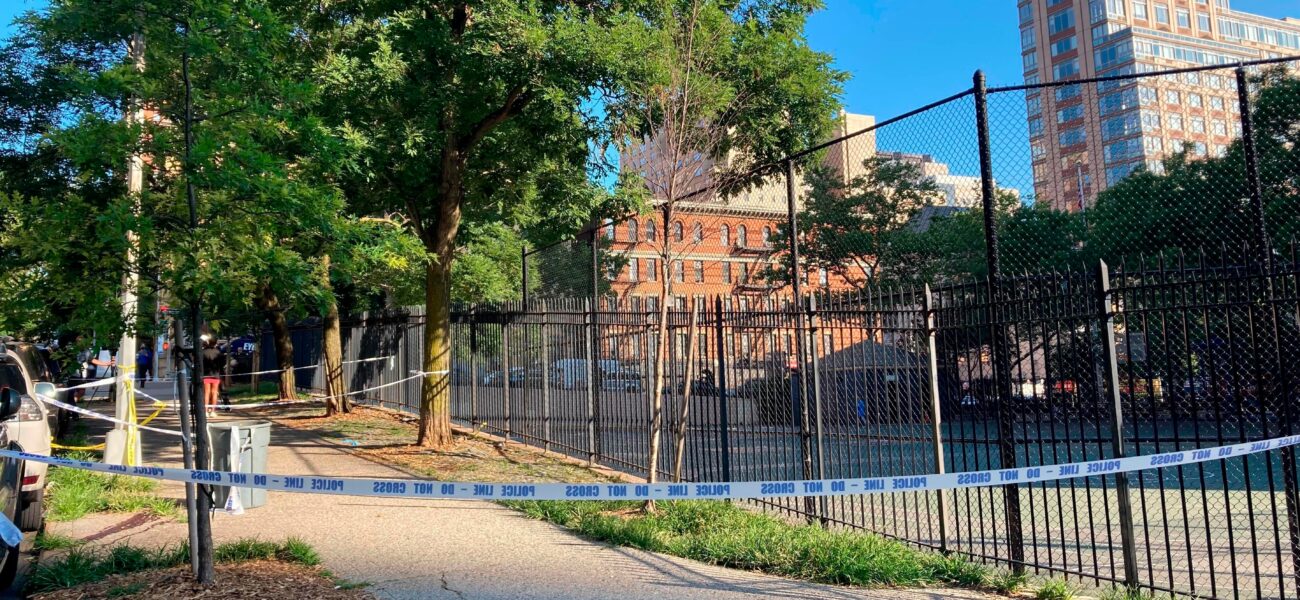
POLICY WIRE — New York City, USA — It wasn’t the stark verdict itself, the predictable end to a ghastly chapter, that truly reverberated through the grim courthouse halls today; no, it was the chilling banality of the act it prosecuted. A life, a young mother’s life, extinguished on a mundane street corner, a baby carriage — a symbol of life’s fragile new beginnings—a silent witness. The judicial gears, ponderous but eventually grinding, have sentenced a man, [QUOTE_PLACEHOLDER], to a lengthy prison term, effectively [QUOTE_PLACEHOLDER], for a murder that ripped a fabric woven of hope and an everyday routine.
Today’s outcome, following what was described by [QUOTE_PLACEHOLDER] as [QUOTE_PLACEHOLDER], brings a semblance of legal closure. But a deeper, more troubling narrative remains. This isn’t just about one man’s depravity; it’s about the systemic cracks that allow such personal devastations to erupt with terrifying regularity. Society keeps moving, children grow, but the ghost of an untold future, specifically for the young child left behind, lingers. It’s a weight we rarely acknowledge directly, this collateral damage that ripples outward, impacting everything it touches.
The details, when they first emerged, painted a picture of premeditation — and an unnerving coldness. [QUOTE_PLACEHOLDER] indicated that [QUOTE_PLACEHOLDER] — and the deceased, [QUOTE_PLACEHOLDER], had [QUOTE_PLACEHOLDER]. Police found the victim, identified as [QUOTE_PLACEHOLDER], with [QUOTE_PLACEHOLDER]. A subsequent investigation, [QUOTE_PLACEHOLDER], quickly pointed towards [QUOTE_PLACEHOLDER]. The weapon used, according to [QUOTE_PLACEHOLDER], was [QUOTE_PLACEHOLDER]. But honestly, these clinical facts only skim the surface of a primal rage, a possessive fury that seems tragically familiar across geographies, irrespective of culture or creed.
We’ve seen this before, haven’t we? The headlines blur. An intimate partner’s violence isn’t an American anomaly; it’s a global blight. And it’s not some far-flung issue divorced from our so-called enlightened societies. Globally, the numbers are frankly, stomach-churning. Consider this: according to UN Women data, roughly one in three women worldwide have experienced physical or sexual violence, predominantly at the hands of an intimate partner. Think about that for a moment. One in three. And a staggering number of those cases, like the one in Queens, become lethal. It’s an unspoken pandemic, playing out in private homes — and public streets everywhere.
And these incidents—from the glitzy high-rises of Manhattan to the bustling markets of Lahore or the quiet villages dotting the plains of Sindh—often share a disturbing commonality: a perceived loss of control by the perpetrator, particularly men. This can escalate violently, sometimes with tragic speed. We see elements of this in patriarchal systems that sometimes quietly sanction (or at least ignore) abuse, making it harder for women to escape unsafe situations or challenge power dynamics within relationships. The specifics may change—honor killings in some parts of Pakistan, for instance, bear a distinct cultural overlay—but the underlying brutal calculus of male dominance can unfortunately echo here, albeit in different guises.
📄 POLICY WIRE WHITEPAPER PUBLISHED: PAKISTAN'S NATIONAL SECURITY POLICY PRIORITIES
👉 READ BY CLICKING HEREThe prosecutor, [QUOTE_PLACEHOLDER], stated, [QUOTE_PLACEHOLDER]. This case wasn’t some complex legal labyrinth. It was stark. It was horrific. [QUOTE_PLACEHOLDER] further detailed how [QUOTE_PLACEHOLDER], showcasing a chilling determination. But what does the judicial system truly achieve with such a sentence? Deterrence? Perhaps for some. Retribution? Definitely. Restoration? Never.
The baby, whose immediate well-being was confirmed by authorities as [QUOTE_PLACEHOLDER], remains, a symbol not just of tragedy, but of fragile hope and an unasked burden. They’re growing up without a mother—their entire world irrevocably altered because of a selfish, violent act. This individual’s prison term—likely [QUOTE_PLACEHOLDER] to [QUOTE_PLACEHOLDER] years, making him eligible for parole in [QUOTE_PLACEHOLDER]—won’t change that profound emptiness. It’s a reality that underscores the often-merciless brutal calculus of capital in a different, grimmer context: the cost of human lives when society fails its most vulnerable.
What This Means
The sentencing, while satisfying a need for justice, does precious little to address the broader structural issues fueling such horrific crimes. Politically, this incident should reignite conversations around funding for domestic violence prevention and intervention programs. Local — and federal budgets often treat these as ancillary, rather than foundational, public safety investments. When services like safe houses, legal aid for abuse victims, and psychological support are under-resourced—when funds get tight or are rerouted for other priorities—the cracks in the social safety net widen, allowing vulnerable individuals to fall through. Economically, the cost of domestic violence isn’t just measured in individual trauma; it’s quantifiable. Emergency services, healthcare, legal processes, loss of productivity—these burden public coffers significantly. Beyond that, the long-term impact on children growing up in the shadow of such violence leads to intergenerational trauma and strain on social welfare systems. This isn’t just a New York problem; it’s a mirror reflecting societal neglect that resonates from South Asia to the Sahel, a universal symptom of power imbalances left unchecked by meaningful policy interventions. It means we, as a collective, still haven’t figured out how to protect our most vulnerable effectively.