


Concrete Playgrounds and Global Futures: Albuquerque’s Latest Investment in Childhood
POLICY WIRE — Albuquerque, N.M. — While heads of state grapple with macroeconomics and geopolitical tectonics—like China’s tightening grip on rare earth minerals or the fluctuating price of...

POLICY WIRE — Albuquerque, N.M. — While heads of state grapple with macroeconomics and geopolitical tectonics—like China’s tightening grip on rare earth minerals or the fluctuating price of oil—sometimes the most profound policy narratives unfold in the humble setting of a shaded outdoor exhibit, designed for sticky fingers and curious minds. Albuquerque, New Mexico, just offered up one such chapter.
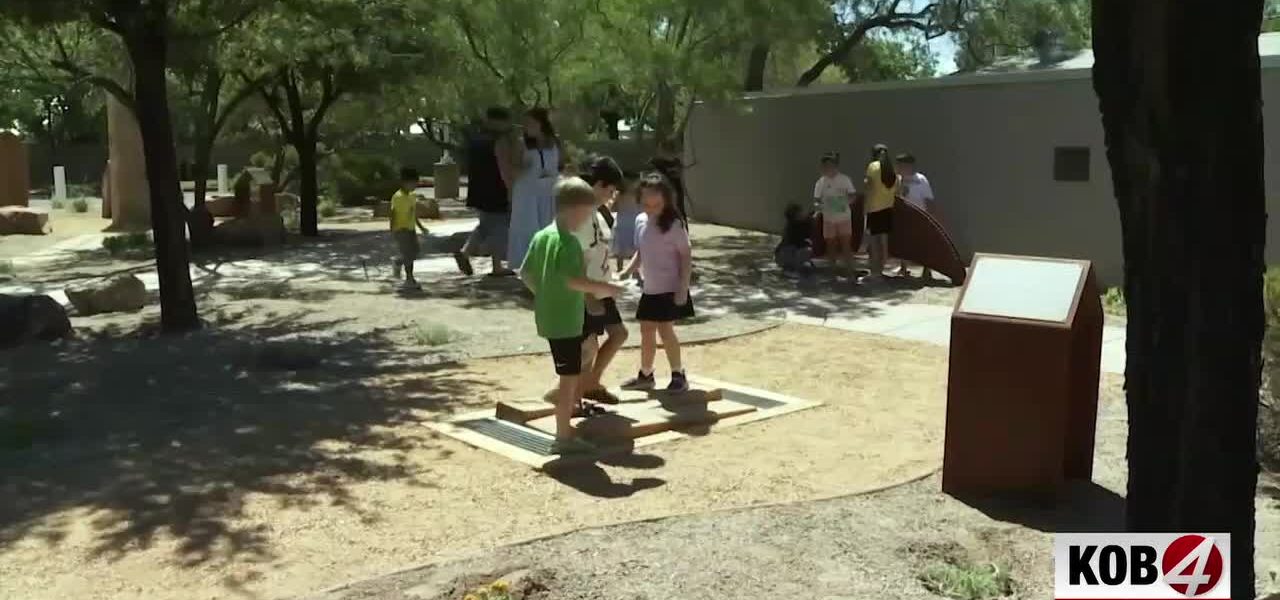
It’s not often that a ribbon-cutting ceremony for a children’s science exhibit resonates beyond its immediate, delighted audience. But the recent unveiling of Explora Inside Out, the Explora museum’s sprawling new outdoor space, presents a miniature parable of societal investment, particularly in a world increasingly bifurcated by technological access and educational opportunity. Think global grandiosity juxtaposed with local, practical application. The buzz, it seems, isn’t always about billion-dollar projects or strategic military alliances. Sometimes, it’s about a two-year endeavor that cost significantly less and is now delivering direct, tangible engagement for an often-overlooked demographic: children. And what an endeavor it’s been.
Explora, for the uninitiated (and there are many beyond the Rio Grande Valley), is a sort of institutional wonderland dedicated to making STEAM — science, technology, engineering, arts, and mathematics — less of a classroom chore and more of an interactive playground. Jessica Trahern, Explora’s special projects manager, captured the essence with a statement that betrays the institution’s broad ambition: “Explora is a science center and childrens museum. We want to have experience for little littles all the way up to retirees.” It’s a philosophy that, on paper, feels comprehensive. But practically, that’s a broad remit, — and delivering on it requires perpetual reinvention. The latest installment moves learning outside the confines of four walls, directly into New Mexico’s abundant sunshine. That’s an interesting move, right? Pushing ‘museum concepts’ into what many would call… just ‘outside.’
Work on the new outdoor space began in 2024, a two-year stretch for what amounts to an expanded sandpit of ideas and contraptions. Yet, Trahern didn’t shy away from expressing a deeply human gratification. “Seeing all the kids having fun is the most rewarding thing. This project has been two years in the making and seeing it come to fruition with kids having fun, running, playing, enjoying the shade, it really makes it all worth it.” It’s hard to argue with that sentiment, isn’t it? The simplicity of children’s joy often cuts through the bureaucratic molasses that typically surrounds such public works.
And there’s hard data to back up this intuitive understanding of outdoor play’s benefits. A study published in the *Journal of Environmental Education* found that outdoor learning activities can increase science achievement scores by as much as 27 percent. Not insignificant. It’s a quantifiable edge in an educational landscape that frequently struggles to meet ever-evolving demands. Perhaps this modest expansion offers more than just ephemeral fun; maybe it’s a small but potent counter-narrative to the prevailing digital dominance, reminding us that sometimes, the best interface is still direct contact with the natural world – even if it’s curated.
Globally, the push for accessible STEAM education faces vastly different realities. Consider Pakistan, for instance, a nation grappling with a surging youth population and significant disparities in educational infrastructure. While urban centers might see sporadic initiatives mirroring Explora’s efforts, the rural vastness often lacks even basic schooling facilities, let alone a sophisticated science center. For millions of children in the Muslim world, access to hands-on learning experiences remains an aspiration, a distant dream overshadowed by immediate needs like clean water and consistent electricity. Initiatives like Explora, in this context, serve as a stark reminder of the unequal distribution of developmental advantages and opportunities that exist across continents and cultures. Their absence impacts national economic competitiveness, long-term societal stability, and — crucially — the individual potential of millions. It’s not just about playtime; it’s about preparation for tomorrow’s economy.
📄 POLICY WIRE WHITEPAPER PUBLISHED: PAKISTAN'S NATIONAL SECURITY POLICY PRIORITIES
👉 READ BY CLICKING HEREBut back in Albuquerque, Explora’s expanded real estate represents a localized investment in future capacity building, whether the children running around grasp the gravity of it or not. They’re just having a blast. And that, in itself, is a kind of policy triumph.
What This Means
The Explora expansion, seemingly a minor local news item, quietly surfaces several enduring policy currents. Firstly, it underscores the continued, — and arguably intensifying, recognition of informal learning environments. As formal education systems face challenges like underfunding, outdated curricula, and a pervasive ‘teach-to-the-test’ mentality, spaces like Explora become crucial supplements for developing critical thinking and problem-solving skills. They’re incubators for future engineers — and scientists, nurtured outside the rigid structure of classrooms.
Secondly, it reflects a nuanced understanding of public space utility. Converting an unused plot into a vibrant, educational zone highlights a growing policy trend toward multipurpose community assets, particularly ones that encourage outdoor activity and community engagement. This isn’t just about providing activities; it’s about public health, cognitive development, and fostering social cohesion. Especially post-pandemic, the value of accessible, enriching outdoor environments can’t be overstated. There’s also an economic angle here: engaged, educated young populations generally translate to more productive workforces and greater innovation down the line. Investing in such institutions is a slow-burn strategy, yes, but a sound one for long-term regional prosperity. We’re not talking about short-term gains; we’re looking at the bedrock of future economies. And it starts with getting kids to actually like science. Seems pretty straightforward, doesn’t it?