


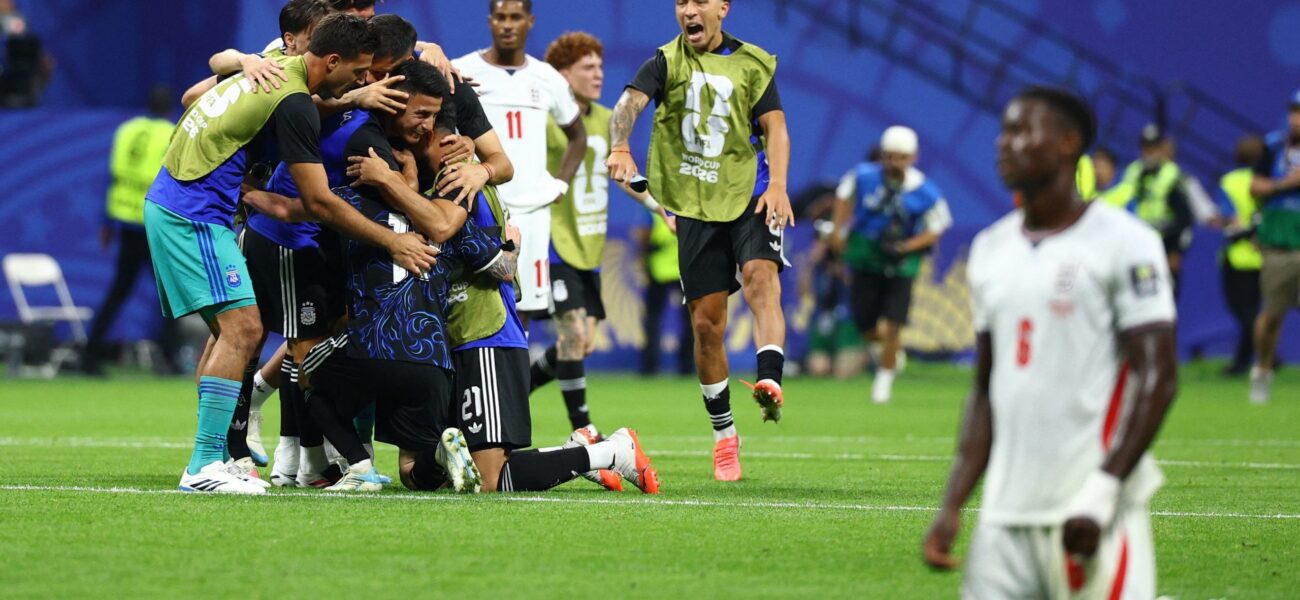
Atlanta’s Roar, England’s Grief: Argentina’s Comeback Shakes Old Orders
POLICY WIRE — Atlanta, United States — The script was, for a breathless moment, so deliciously English. Anthony Gordon, scoring for the Three Lions, pushing them toward a World Cup final that many,...

POLICY WIRE — Atlanta, United States — The script was, for a breathless moment, so deliciously English. Anthony Gordon, scoring for the Three Lions, pushing them toward a World Cup final that many, frankly, didn’t think they quite deserved after a stuttering campaign. But this isn’t a fairy tale, is it? Not for England, anyway. Because what unfolded in Mercedes-Benz Stadium on Wednesday was less about football strategy and more about raw, unadulterated willpower, with a hefty dose of poetic injustice—depending on your hemisphere.
It was a 2-1 loss that England, bless its heart, will stew on for another generation. They were up, comfortable, one-nil in the 55th minute. And then, Enzo Fernández ripped the equalizer past their keeper with five minutes left in regulation. Stoppage time? Just theater, surely? Nope. Lautaro Martínez, off a Messi assist (who else?), stuck the dagger in two minutes later. Just like that, England’s World Cup dream, fragile at best, popped like a cheap balloon.
But the real story here isn’t just goals. It’s the sheer audacity of Argentina, the quiet resilience that so many from the Global South cling to—that feeling of snatching victory from the jaws of a European powerhouse. You see it play out beyond the pitch, too. This wasn’t merely a game; it was a socio-political micro-drama unfolding in real-time, watched by literally billions.
“This isn’t just a win, you see; it’s a ripple effect through our economy, a surge of national pride that’s unquantifiable but very real in its impact,” said Ricardo Sanchez, Argentina’s Undersecretary for Economic Promotion, a broad smile fixed across his face despite the late hour in Buenos Aires. “It boosts morale, it encourages tourism, it reinforces our brand. Football, for us, it’s policy by other means.” His words echo a sentiment common in countries where sporting success can genuinely lift national spirits and even foreign investment interest.
The English perspective, predictably, struck a different chord. “We’ve got to face facts, haven’t we? It’s another tough pill to swallow for the nation,” offered Nigel Ponsonby, a Conservative MP, known for his straight-talking—and his vocal frustration with England’s football fortunes. “But the resilience… well, it always surfaces, doesn’t it?” He muttered the last part with the resigned weariness of someone who’s watched this play out a dozen times. They know the feeling, those poor souls.
And you’ve gotta wonder about the psychological weight of this for England. So much anticipation, so much — almost — certainty. Then it’s gone. Poof. Not a good look when you’re trying to project global leadership on the world stage, is it? Because every slip, every defeat, is magnified, interpreted. This kind of sudden collapse? It’s grist for the mill for analysts, for rivals. It’s a bit like watching a grand plan meticulously constructed, only to crumble in its final moments. But this game was a global phenomenon. Think about it: the last World Cup final, just for reference, snagged roughly 1.5 billion global viewers, per FIFA’s own numbers. That’s an awful lot of eyeballs on a European powerhouse crumbling under pressure.
📄 POLICY WIRE WHITEPAPER PUBLISHED: PAKISTAN'S NATIONAL SECURITY POLICY PRIORITIES
👉 READ BY CLICKING HEREThe match wasn’t just big in Atlanta; its seismic tremors vibrated far across the globe. From Jakarta to Karachi, in living rooms across the Muslim world—where English football clubs have fanatical followings—the outcome of a World Cup semifinal often ignites heated debate and a sense of collective identity. People there follow these European-dominated tournaments with a fervor that might surprise some Western observers, often siding with the underdog or teams like Argentina that represent a different geopolitical power base than the traditional European footballing elite.
Argentina, a nation whose very identity often feels forged in passionate extremes, will now meet Spain in the final. Another clash of titans, yes. Another chance for the narratives to twist, for heroes to be made, or for hearts to be broken. That’s football, baby. Always is. But this one? This wasn’t just a game. It was a statement. A very loud, very clear statement from one part of the world to another. And the folks running things—the ones in power, the ones shaping policy—they’re definitely watching these larger narratives unfold.
What This Means
Politically, England’s early exit, particularly in such dramatic fashion, carries a subtle but real symbolic weight. In a post-Brexit landscape where the UK is actively trying to redefine its global influence and ‘Global Britain’ often feels more like a slogan than a reality, another sporting heartbreak doesn’t exactly project unwavering strength. It plays into a persistent narrative of historical promise unfulfilled—a feeling often exploited by internal critics and observed with interest by international rivals.
For Argentina, a country frequently grappling with economic turbulence and social unrest, a World Cup final berth—and a stunning victory to get there—offers an invaluable psychological boost. This kind of collective triumph, for however brief a time, diverts attention from domestic woes and provides a potent, unifying force for a fragmented populace. It’s cheap, effective public relations on a global scale. Economically, while difficult to quantify precisely, such success often leads to short-term bumps in consumer spending, tourist interest (as Undersecretary Sanchez mentioned), and a general halo effect for the country’s brand on the world stage. It’s all part of the complex dance of soft power, a performance that’s playing out beyond the bright lights of Atlanta.