


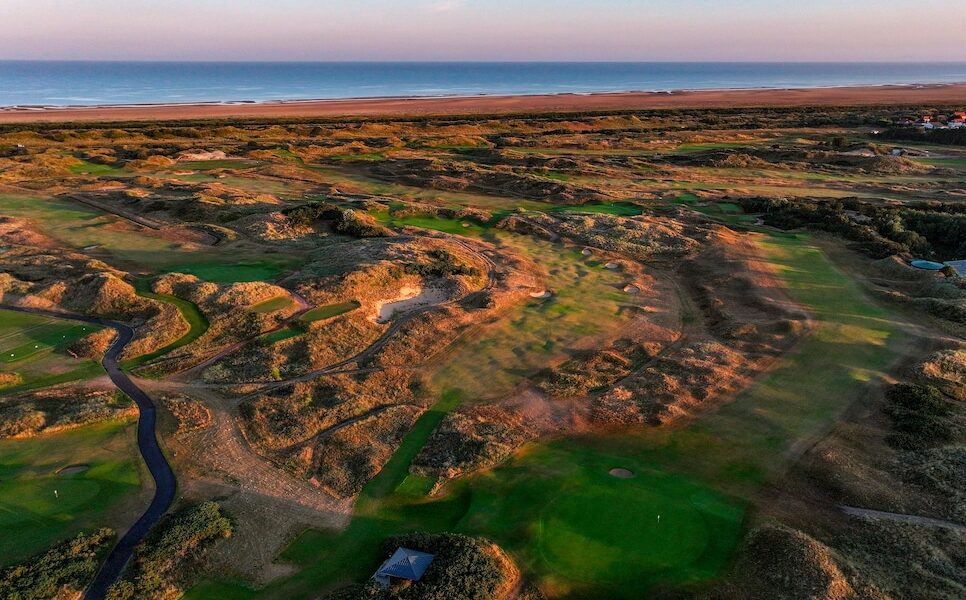
Coastal Crucible: Royal Birkdale’s Multi-Million Pound Metamorphosis for The Open
POLICY WIRE — Southport, England — Few things, it seems, are truly immutable in this world. Not even hallowed ground. Not even a links course carved from shifting sand and buffeted by Irish Sea winds...

POLICY WIRE — Southport, England — Few things, it seems, are truly immutable in this world. Not even hallowed ground. Not even a links course carved from shifting sand and buffeted by Irish Sea winds that has hosted The Open Championship ten times since 1954. For Royal Birkdale, the venerable jewel of England’s golf coast, the relentless churn of modernization isn’t just a suggestion; it’s a mandate, costing millions and stirring a quiet debate about tradition versus the brute demands of contemporary sport.
Because the truth is, prestige — especially the kind tied to billion-dollar events like The Open — doesn’t maintain itself. It demands constant, sometimes bruising, intervention. For 2026, when the championship returns, Birkdale won’t just be a little different; it’s been fundamentally reshaped. Tom Mackenzie, the architect from Mackenzie & Ebert charged with this delicate surgical operation, wasn’t merely re-turfing. He was orchestrating a full-scale intervention, rebuilding or altering portions of every single hole.
It’s not just about challenging the world’s best golfers. It’s about preserving a brand, about drawing eyes from Mumbai to Manama, ensuring a steady stream of golf tourists — and their dollars — to this corner of Merseyside. The R&A, custodians of The Open, understand this calculus well. “We’re not just maintaining a golf course; we’re curating a legacy that must remain relevant in an ever-evolving sporting landscape,” remarked Martin Slumbers, Chief Executive of The R&A. “Our commitment ensures Birkdale delivers the ultimate test, yes, but also a spectacle that captivates a global audience.”
This generational push for change isn’t new to Birkdale, mind you. You see it etched into the land itself, passed down through three generations of the Hawtree design dynasty who sculpted its initial rugged grandeur. The elder Frederic G. laid out the modern routing in the 1930s. Fred W., his son, famously added the now-classic par-3 12th. Martin Hawtree, the grandson, later re-contoured greens — and extended tees. Each intervention, a nod to golf’s unyielding demands for greater challenge — and better conditioning. But this latest overhaul under Mackenzie feels different, more comprehensive.
And where, exactly, did Mackenzie wield his formidable scalpel? Quite dramatically, for starters, on what was once a rather sedate par-4 fifth hole. That awkward, blind 350-yarder? It’s gone. A sizable grassy hill has been trimmed back, a sand — and wetland habitat introduced, and the green shifted and elevated. Now, it’s a ‘drivable’ 321-yard par 4, presenting a delicious dilemma: go for it and risk ruin in seven newly-installed pot bunkers, or play safe. That’s good theatre.
Another striking alteration came at the seventh, now a more precise — and shorter — par-3. At just 151 yards (down from 177), its elevated green, like a perilous pedestal, demands absolute accuracy. Missing means contending with some of the course’s deepest bunkers, a tough ask when the Irish Sea wind comes calling. “We sought to introduce an element of surgical precision,” explained Mackenzie, “forcing players to rethink their approach, especially in coastal conditions. It’s about creating strategic questions on every shot.”
Perhaps the most poignant change, for those who relish golf history, is the quiet eradication of the famed ‘Spieth spot’ at the 13th hole. Jordan Spieth’s improbable recovery from the equipment trucks during his 2017 Open win etched that location into legend. But alas, a corporate hospitality village now sprawls across that sacred ground for the 2026 event. Capitalism, as it turns out, often trumps romanticism.
📄 POLICY WIRE WHITEPAPER PUBLISHED: PAKISTAN'S NATIONAL SECURITY POLICY PRIORITIES
👉 READ BY CLICKING HEREBut there’s more. The par-3 14th? It’s been completely retired from championship play, integrated into a new practice area. In its place, the old par-5 15th has become the new par-5 14th, drastically lengthened from 542 to a formidable 602 yards. Before this change, data from The R&A indicated that this hole, along with the 17th, played to the easiest or second-easiest stroke average on the course at 4.93 during previous Opens, despite often facing prevailing winds. Mackenzie shifted the entire fairway 30 yards to the right, pushing it perilously close to the dunes and artfully repositioning bunkers to demand specific drive shapes. A new, perched green 70 yards beyond the old one, complete with plateau sections and a steep fall-off, ensures no two-shot attempt will come easy.
The vacated space then gave rise to a brand-new par-3, the 15th, a bruising 240-plus-yard challenge. This addition ensures Birkdale now boasts a greater variety of one-shot holes, spaced to demand a wider array of club choices and skills.
What This Means
This costly overhaul, spanning several years and involving countless tonnes of earth moving, is far more than a golfing anecdote. It’s a multi-million-pound statement of intent in the fiercely competitive world of elite sports tourism — and branding. For the UK, hosting The Open represents a significant economic boon, drawing not just local fans but international visitors, many from regions like the Middle East and South Asia. For countries and businesses in places like Pakistan, the global reach of such prestigious events presents lucrative sponsorship and tourism opportunities – an image of high-end leisure and meticulous tradition they too want a piece of. This isn’t just about golf balls finding sand; it’s about the relentless pursuit of relevance, of capturing eyeballs, of selling an experience that justifies high ticket prices and lucrative television deals.
Because ultimately, these alterations serve to maintain Royal Birkdale’s place at the apex of championship golf. It’s a pragmatic, some might say brutal, exercise in future-proofing a historic asset against the erosion of time, technology, and evolving player prowess. They’re investing heavily not just in greens and bunkers, but in their global standing—an expensive, high-stakes game that few can afford to sit out. For those at the top, change isn’t an option. It’s the cost of staying in the game.