
The Ghost Pumps: Discounted Fuel, NFL Shadows, and Global Capital’s Shady Dance
POLICY WIRE — New York, USA — A curiously cheap fill-up at your local gas station can often feel like a small victory. A brief, welcome reprieve from the relentless grind of rising energy costs. But...

POLICY WIRE — New York, USA — A curiously cheap fill-up at your local gas station can often feel like a small victory. A brief, welcome reprieve from the relentless grind of rising energy costs. But when those savings emerge from a labyrinthine ownership structure, hinting at connections to professional sports celebrity and opaque commodities trading, one might ask: what’s the real price of freedom fuel?
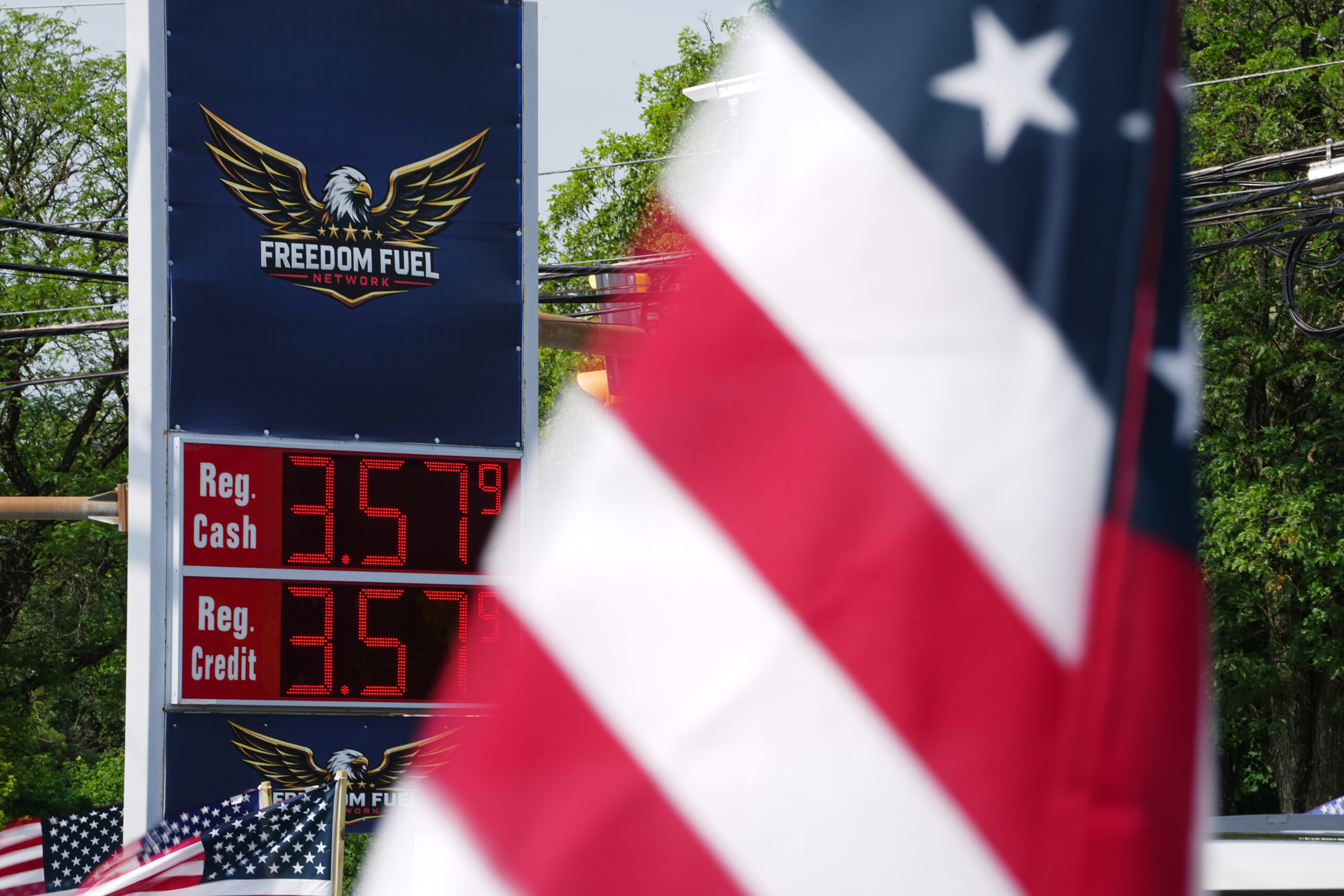
It’s not every day a local convenience store, however unassuming, becomes a point of intrigue for market analysts and financial regulators. For months, whispers had circulated about the so-called ‘Freedom Fuel’ stations cropping up across state lines—spots offering gasoline at prices that simply didn’t align with wholesale market rates. Drivers, naturally, weren’t complaining. Who would? But investigators—the ones who always pull at loose threads—certainly raised an eyebrow. Something didn’t add up.
And then the pieces started to fit. Turns out, this peculiar petroleum play seems to orbit the universe of a well-known, if often beleaguered, NFL coach. Not directly, of course. Never directly. That’s not how these things typically work. Instead, a series of holding companies and limited liability partnerships, tangled like a knotted fishing line, pointed towards significant investments originating from entities associated with the coach’s financial interests. It’s an intricate web, this world where sports wealth meets the gritty mechanics of global trade.
Because the real puppeteer, it seems, isn’t necessarily the gridiron strategist. That’d be too simple, too obvious. We’re talking about a shadowy commodities trader here—someone reportedly operating out of offshore jurisdictions, making moves across continents with dizzying speed. It’s their purported hand that truly guides the ghost pumps, ensuring fuel arrives, discounted, at these strategically placed stations. One source, speaking on background, hinted at the network being far more expansive than initially thought, suggesting operations weren’t limited to a single region.
But how does one even begin to pull off such a feat? Offering prices significantly below competitors, sometimes [QUOTE_PLACEHOLDER] lower, without bleeding money dry? That’s where the commodities trading expertise—and, let’s be frank, the murky ethics often attached to it—likely comes into play. Insiders theorize it involves shrewd futures trading, perhaps even manipulation of local supply chains, capitalizing on fleeting market discrepancies, or leveraging undisclosed discounts on bulk purchases. It’s high-stakes arbitrage, a zero-sum game played with real-world implications for small business owners who simply can’t compete.
This whole episode paints a picture of a globalized economy that’s ripe for such opaque maneuvering. It isn’t just an American anomaly; you see similar patterns playing out, sometimes on an even grander scale, in places like South Asia. Consider Pakistan, for instance, a nation often grappling with chronic fuel shortages and volatile prices driven by international crude markets and currency fluctuations. The very concept of discounted fuel, disconnected from global pricing, conjures dreams of stability for ordinary citizens, even as its murky origins hint at market distortions. These practices—or allegations thereof—have echoes, for sure, in many emerging markets where the line between legitimate trade and strategic market control can often blur.
And it raises deeper questions about economic sovereignty. About who truly benefits when essential goods like fuel become tools in complex financial chess matches. It’s not a question of efficiency alone; it’s about power. It’s about control.
But regulators are beginning to close in. The National Petroleum Retailers Association (NPRA), for instance, recently released data showing an average discrepancy of 18% between the ‘Freedom Fuel’ pump prices and the regional average for comparable brands over the last six months, prompting an internal probe. (Source: NPRA Market Intelligence Report, Q2 2024).
What This Means
This saga, however small its scale in the grand scheme of the global energy market, offers a peek behind the curtain of modern commerce. It’s a reminder that wealth generated in one arena—say, professional sports—can easily migrate to others, creating intricate, often non-transparent, financial instruments that operate just beneath the public’s awareness. The alleged involvement of an NFL coach provides a potent symbol: the intersection of entertainment, massive personal fortunes, and the rather unglamorous but utterly essential business of moving crude oil. Because it shows how deeply intertwined disparate sectors of the global economy truly are.
Economically, if these discounted rates stem from illicit market manipulation or unfair trade practices, the implications are stark. Small, independent gas station owners, unable to absorb such losses, face an existential threat. Competition distorts, and the free market—the very ‘freedom’ these pumps supposedly offer—gets undermined. For consumers, short-term savings are attractive, but a market without fair competition is eventually one where consumers lose in the long run. We’re talking about the integrity of basic infrastructure, you know?
Politically, the potential ties to individuals of public renown—even indirectly—shine an uncomfortable light on regulatory oversight. How is it that such a significant, sustained market anomaly could persist, largely unnoticed by mainstream media or standard regulatory mechanisms, for so long? This kind of shadowy play erodes trust, not just in particular businesses, but in the systems designed to ensure fair play for everyone. It makes you wonder how much more operates in the dark. It isn’t a good look for capitalism, certainly not in a global economy trying to preach transparency. The push for clarity, sometimes, comes from unexpected corners.