


MetLife’s Millions: FIFA Final’s Unseen Play for Influence and Greenbacks
POLICY WIRE — New York City, USA — When the ball drops, or rather, when it’s kicked off in East Rutherford on July 19, 2026, it won’t just mark the culmination of a global sporting...

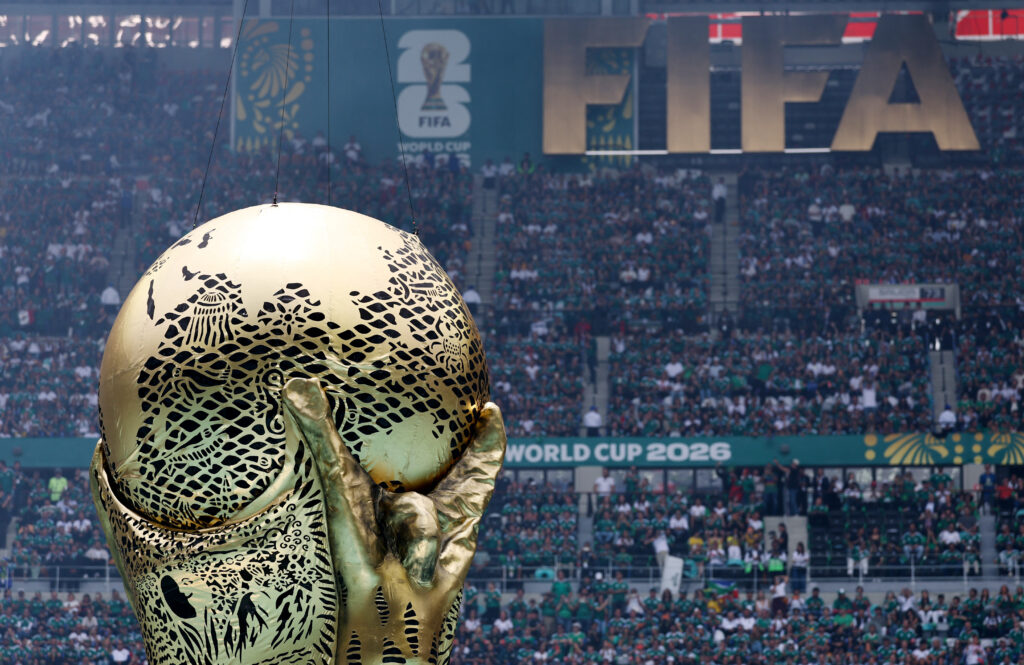
POLICY WIRE — New York City, USA — When the ball drops, or rather, when it’s kicked off in East Rutherford on July 19, 2026, it won’t just mark the culmination of a global sporting tournament. Oh no. That Sunday afternoon at MetLife Stadium represents something far more intricate: a geopolitical chess match disguised as a football final, a brazen display of soft power where every goal tallied translates into a silent, strategic win for someone far removed from the pitch.
It’s easy to get swept up in the narrative, the sheer drama of Lionel Messi’s continued late-career theatrics, especially after his recent masterclass dragged Argentina back from the brink against a shell-shocked England. Trailing by a goal, Messi conjured two assists from what seemed like thin air, orchestrating a 2-1 turnaround that sent Argentina rocketing toward the championship match against Spain. For England, that familiar ache of World Cup disappointment, an annual tradition almost, sends them into a consolation prize bout against Kylian Mbappé’s France.
But strip away the emotion, the breathless commentary, — and what remains? A behemoth of economic — and diplomatic maneuvering. FIFA isn’t just selling tickets; it’s selling national narratives, hosting prestige, and future tourism dollars. This isn’t just sport; it’s international relations by other means. And don’t forget the branding: New Jersey, forever in the shadow of its larger metropolitan neighbor, gets to shine—momentarily, anyway—on the biggest stage possible.
FIFA President Gianni Infantino, a man whose pronouncements often carry the weight of a decree, offered his characteristic foresight recently. “This final, this unparalleled spectacle, will once again prove football’s capacity to unite a fractured world,” he reportedly mused to a private consortium last week, perhaps with an eye toward future sponsorship deals rather than genuine global harmony. “The investment from our host cities pays dividends far beyond the ninety minutes.” He’s not wrong, of course, just perhaps underselling the ‘dividends’ part.
The economic ripple is immense. “We’re not just hosting a game; we’re launching an economic engine,” stated Phil Murphy, New Jersey’s Governor, in a prepared remarks sheet that likely saw more revisions than a budget proposal. “Early estimates from our state’s Treasury Department suggest the World Cup, encompassing all its host-city obligations, could pump over $2 billion into the regional economy, not counting the incalculable benefit of global exposure.” Those numbers, mind you, come with an asterisk usually denoting “optimistic projection,” but even a fraction is still a tidy sum. According to a 2018 report by Nielsen Sports, the last FIFA World Cup in Russia garnered a cumulative in-home global audience of 3.572 billion people, indicating the sheer scale of eyeballs this event commands.
And where does a spectacle of this magnitude resonate beyond the usual suspects? Across South Asia, for one, football’s slow but steady march continues its relentless pace. Pakistan, for instance, a cricketing madhouse through and through, still harbors an immense, fervent following for international football. You see it in the streets of Karachi, Lahore, and Islamabad, where jerseys bearing the names of Messi, Ronaldo, and Mbappé are as common as traditional attire. While domestic football struggles, the global tournament provides a shared cultural touchstone, a collective pause from the often-stark political realities, momentarily linking homes in Punjab to a grand stadium in New Jersey. They might be wrestling with complex regional dynamics, as evidenced by Pakistan’s ongoing efforts in the US-Iran Gulf Crisis, where it strives to save the Islamabad Memorandum, but when a final kicks off, all eyes are on that field. But this phenomenon isn’t exclusive to South Asia; it’s mirrored in every developing nation yearning for connection to the global stage.
This grand convergence of sport, capital, — and national pride is meticulously managed, often behind layers of glossy PR. We’re talking about stadiums transforming into temporary, highly secure diplomatic zones. Massive investments pour into infrastructure that will, theoretically, benefit locals long after the final whistle. The reality? Sometimes, it does; sometimes, it merely funnels resources into areas of temporary, international interest. Think about the sprawling complexes erected in Brazil or Russia for past World Cups—some are now vibrant community assets, others ghost venues.
What This Means
The 2026 World Cup Final isn’t simply a sporting event; it’s a meticulously crafted exercise in global branding and soft diplomacy. For FIFA, it reinforces its standing as the world’s premier single-sport governing body, flexing its economic muscles and showcasing its ability to command national resources. For the United States, hosting this behemoth (alongside Canada and Mexico) is about reasserting its position as a global cultural arbiter, projecting an image of stability and openness𠅊 timely message given an often-contentious geopolitical landscape. Economically, while the promised billions sound impressive, the benefits are rarely distributed evenly, often favoring urban centers and hospitality industries, while taxpayers shoulder much of the security and infrastructure costs. And then there’s the subtle, but potent, power play: Nations vying to host these extravaganzas are essentially bidding for influence, a chance to steer global perception and build allegiances through the universally appealing language of sport. It’s a game played far beyond the boundary lines, with stakes far higher than a gilded trophy.
And these stakes, frankly, stretch across every facet of national and international policy, just like we’re seeing Riyadh’s Ring become a battleground for Saudi Arabia’s own sporting aspirations and image makeover. It’s not just about winning on the field; it’s about winning the narrative.