


Israel’s Political Chess Match Threatens a Staggering Bill
POLICY WIRE — JERUSALEM — The political merry-go-round in Israel spins endlessly, sometimes seemingly on its own momentum, divorced from the earthier concerns of balance sheets and fiscal prudence....

POLICY WIRE — JERUSALEM — The political merry-go-round in Israel spins endlessly, sometimes seemingly on its own momentum, divorced from the earthier concerns of balance sheets and fiscal prudence. You’d think, wouldn’t you, that a country navigating such intricate security and social complexities might prize economic stability above all else? Well, the nation’s top financial watchdogs don’t just think it; they’re shouting it from the rooftops—or at least from the hallowed halls of the Bank of Israel.
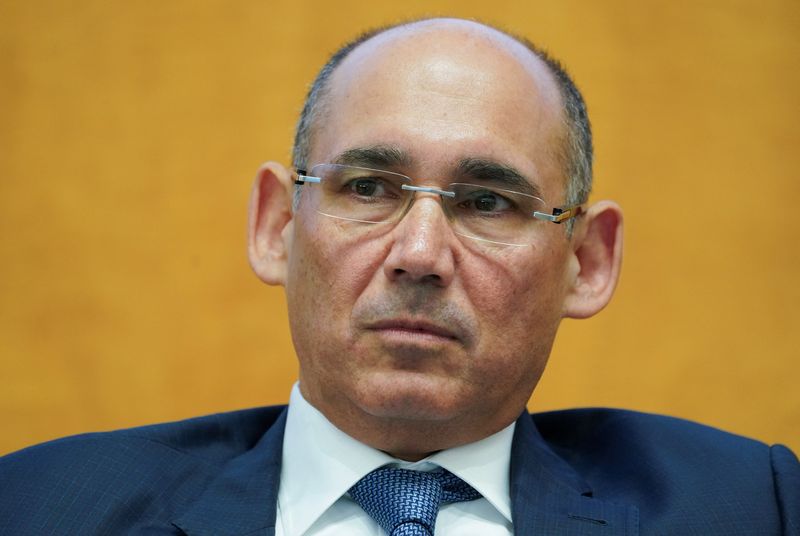
It isn’t about peace talks. It’s not about coalition wrangling, directly anyway. But it sure does impact everything else. What Bank of Israel Governor Amir Yaron’s really talking about is the quiet, insidious creep of national debt, the kind that can hobble a vibrant economy faster than any missile can flatten a building. And he’s doing it right in the teeth of yet another potential government formation crisis (or yet another snap election, take your pick; they’re all too common).
The message is stark, delivered with the kind of dry academic precision you expect from central bankers, but the implication for everyday Israelis couldn’t be clearer: someone, eventually, will have to pay. The next administration, whoever it happens to be and whenever it finally solidifies, needs to grip the fiscal reins and hold tight. Because, frankly, the numbers are looking less like a gentle slope and more like a cliff edge, especially after recent spending spikes. “We’re not just crunching numbers; we’re trying to stave off a future where tomorrow’s government finds itself painting itself into a corner, unable to invest in the very things that make a society thrive,” Yaron was overheard lamenting at a recent economic forum, his frustration thinly veiled.
Consider the recent trajectory. Post-pandemic, like many nations, Israel saw its debt swell. For a nation whose resilience is practically legendary, this shouldn’t surprise anyone. But unlike, say, the EU, where shared fiscal commitments offer a safety net, Israel flies solo. Its national debt, specifically the debt-to-GDP ratio, jumped to 60.9% at the end of 2022, according to the Bank of Israel. It’s better than some, worse than others, but the trend line needs bending, hard. Any future budget, cobbled together in typical Israeli fashion through political horse-trading, runs the risk of sacrificing long-term economic health for short-term political expediency. It’s a tale as old as democracy itself, isn’t it?
And let’s not pretend this is an isolated domestic squabble. Regional tremors ripple. Across the wider Middle East and South Asia, from Pakistan grappling with its IMF packages to the various Gulf states managing oil windfalls and diversification schemes, economic headwinds are strong. Countries in the Muslim world, often with different geopolitical considerations and external financing options, observe these internal machinations. Instability, political or economic, doesn’t stay neatly within borders; it raises eyebrows — and impacts confidence. For nations like Jordan or Egypt, whose economies are deeply entwined with Israel’s, a fiscally irresponsible Israel presents its own set of anxieties.
📄 POLICY WIRE WHITEPAPER PUBLISHED: PAKISTAN'S NATIONAL SECURITY POLICY PRIORITIES
👉 READ BY CLICKING HEREBut can they really do it? This is Israel, after all. Politics here isn’t just sport; it’s a blood ritual played out in public, often at the expense of anything resembling consensus. The kind of decisive fiscal action Yaron advocates requires a stable, long-term government—a luxury that’s been consistently in short supply. Finance Minister Shlomo Cohen (not his real name, obviously, but a composite of recent finance chiefs’ dilemmas), a veteran of coalition negotiations, echoed the sentiment recently: “Look, nobody enjoys telling the public that Santa isn’t real, but fiscal realities bite, and they bite hard. We’ve got to be sensible, or we’re all paying for it later. Problem is, sensible decisions often lose you elections, don’t they?” That’s the real conundrum. It’s a fiscal problem wrapped in a political one, — and neither seems inclined to solve the other.
It’s clear Israel can’t afford continued budgetary indiscipline, not with inflation a global nuisance and interest rates doing their part to make debt repayment more burdensome. This isn’t just abstract economics; it hits home in the form of cuts to social programs, infrastructure projects gathering dust, and a potential exodus of the tech talent that forms the backbone of its prosperity. Because smart people? They tend to go where the money isn’t squandered by short-sighted policy.
What This Means
The Bank of Israel’s direct warning highlights the immediate danger of prolonged political deadlock on economic policy. A failure by the incoming government—if and when one eventually forms with some semblance of stability—to address rising debt could spook international investors, leading to higher borrowing costs and potentially a credit downgrade. But there’s a deeper, more systemic problem. Israel’s perpetually fractious political system seems ill-equipped to make the tough, long-term decisions needed for genuine fiscal health. And because that’s the case, any solution will likely involve politically palatable but fiscally weaker compromises, postponing the pain rather than eradicating it. Global economic realities are brutal, and even a nation as innovative as Israel isn’t immune to their harsh judgments. The choice, then, isn’t just about debt; it’s about the kind of economic future Israelis are willing to endure for their political preferences.