


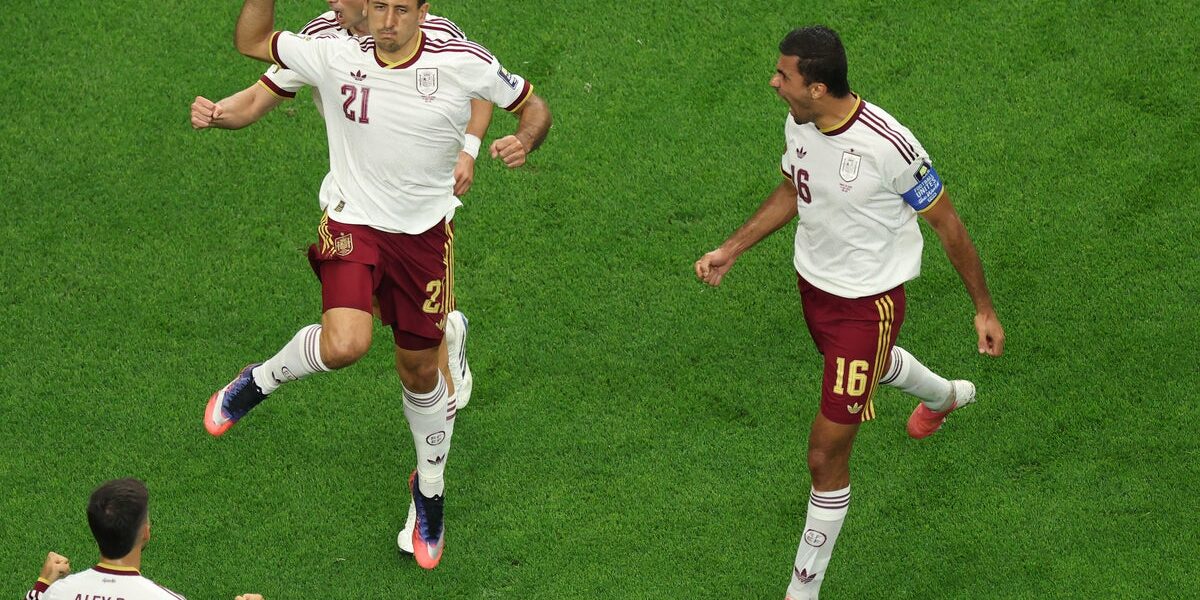
The End of Empire: Spain’s Surgical Strike Dethrones France in Texas
POLICY WIRE — Dallas, United States — It wasn’t the thunderclap many expected. It was more like a slow, deliberate strangulation, delivered with surgical precision under the searing Texan sun....

POLICY WIRE — Dallas, United States — It wasn’t the thunderclap many expected. It was more like a slow, deliberate strangulation, delivered with surgical precision under the searing Texan sun. Didier Deschamps’s magnificent French machine, the one that routinely steamrolled opponents and looked destined for another global showdown, coughed, sputtered, and finally died on the pitch, ushering Spain into the World Cup final. This wasn’t just a semi-final upset; it felt like a seismic shift, an undeniable end to an imperial reign.
Mbappé, France’s golden boy, found himself in an unfamiliar role: spectator. For long stretches, his electrifying runs were thwarted, his trademark bursts absorbed by a Spanish rearguard as organized as it was relentless. And that’s what made it so fascinating. Spain didn’t merely win; they asserted a quiet, uncompromising dominance that chipped away at French confidence until there was nothing left but frustration.
The game hinged, as these high-stakes encounters often do, on a simple human error. Lucas Digne, typically so reliable, found himself bamboozled by Lamine Yamal, the audacious teenager who doesn’t seem to know what ‘nervous’ means. Digne’s attempted clearance, a moment of confusion, became a gift: a penalty. Mikel Oyarzabal, Spain’s understated hero, buried it, slotting home his fifth goal of the tournament. The French, for the first time in this World Cup’s knockout stages, were chasing. And they just couldn’t catch up.
“We prepared for every contingency, but you can’t account for everything,” Deschamps told reporters, his face a mask of disappointment. “They were better. Plain and simple. It’s hard to swallow.” He rarely admits defeat so unequivocally. Meanwhile, Spain’s coach, Luis de la Fuente, sounded almost stoic in victory. “This team knows what it’s. We build from the back. We play our game,” he asserted. “There’s no magic, just belief in the system — and each other. We’ve earned this opportunity.” It’s a philosophy born of practicality, not romanticism, much like the measured approach taken by some global powers facing unexpected headwinds, focusing on structural strength over flamboyant display.
The statistics were brutal for France. After 35 minutes, their expected goals (xG) stood at a minuscule 0.01. By halftime, it had barely crept to 0.04. That’s not just muted; that’s borderline mute, an attacking force of their caliber rendered utterly toothless. Data from Opta Sports tells a stark story of an offense that rarely threatened the Spanish net, while Unai Simon, Spain’s keeper, largely watched the spectacle unfold from a privileged distance. The impenetrable wall Spain erected, conceding just one goal in the entire tournament, made France look positively amateurish in their attempts to breach it.
And then there was Pedro Porro. A Premier League defender known more for battles than brilliance, he combined effortlessly with Dani Olmo, slotting home Spain’s second. No one tracked his run. The French defense, for all its individual talent, just wasn’t connected. It’s not often you see a World Cup semi-final decided by such cool, composed efficiency, devoid of any ‘tiki-taka’ flashiness, but full of grim, determined purpose. They aren’t trying to charm; they’re trying to win. And they did.
📄 POLICY WIRE WHITEPAPER PUBLISHED: PAKISTAN'S NATIONAL SECURITY POLICY PRIORITIES
👉 READ BY CLICKING HEREWhat This Means
This Spanish triumph isn’t just about football; it’s a masterclass in soft power. For Spain, an unlikely World Cup final berth ignites national pride, providing a tangible boost to public morale and, yes, a potential spike in tourism and merchandising. The narrative of a new generation emerging, untethered from the ‘tiki-taka’ obsession but retaining its technical brilliance, resonates deeply. It signals a national identity that values pragmatic success over dogmatic aesthetics, a welcome relief after years of searching for their footballing soul. This moment, particularly significant as Spain often unites behind its sporting heroes, will likely see the country pause as one.
For France, it’s the stark realization that all empires eventually ebb. Deschamps’s magnificent run, spanning years and multiple finals, has effectively concluded in a manner he’d scarcely have envisioned. The sporting implications are obvious—a period of introspection, potential tactical overhauls, and the monumental task of replacing generational talents while integrating new blood. But it’s also a geopolitical echo; for a nation that projects such confidence on the world stage, a humbling defeat in such a high-profile arena can—subtly, yes, but meaningfully—dent that perception. This event will ripple through global sporting circles, perhaps even in places as far-flung as Pakistan, where football’s global reach means fans passionately follow these European giants, dissecting tactics and lamenting defeats with the same fervor seen for local cricket teams. The hunger for international sporting success transcends borders, binding disparate cultures through shared competitive drama.
The final awaits, — and Spain has served notice. They might not play the most glamorous football, but they’ve proven themselves the most unyielding. And in high-stakes competition, that’s often what wins you everything.