


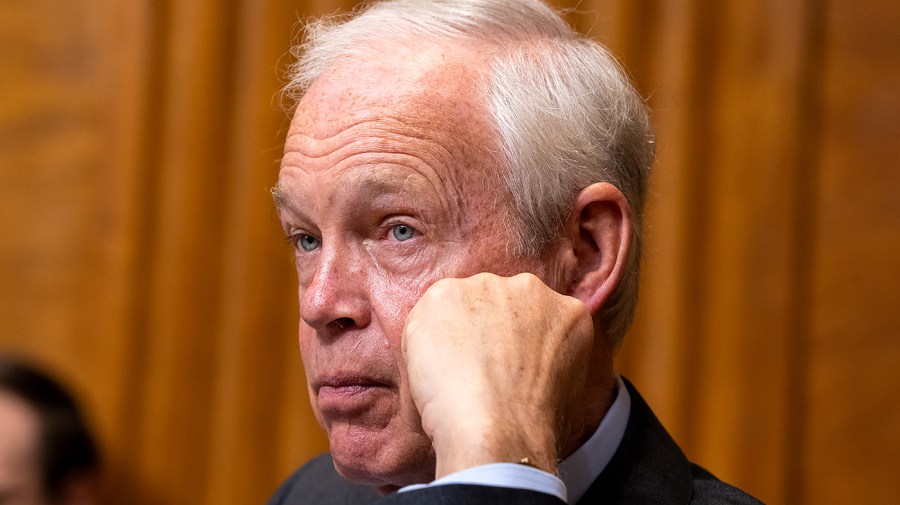
Political Chronologies: When an Old Snapshot Becomes Today’s Scandal
POLICY WIRE — Washington D.C., USA — The curious case of a photo’s perceived vintage isn’t usually the stuff of national conversation, much less the fuel for simmering political intrigue....

POLICY WIRE — Washington D.C., USA — The curious case of a photo’s perceived vintage isn’t usually the stuff of national conversation, much less the fuel for simmering political intrigue. Yet, here we’re. It’s an election year, after all, — and the political oxygen we’re breathing often feels thinner, more charged. Every shadow, every historical artifact, seems capable of generating an outsized ripple. That’s just the reality of this particular moment in the republic’s rather chaotic journey.
It’s fascinating, honestly. One might think legislative priorities—the looming budget, say, or foreign aid packages—would dominate the D.C. discourse. But sometimes, it’s the more abstract notions that seize the collective imagination. A picture’s date. Whether it’s recent or dug from an old archive. We’re discussing a powerful figure, naturally—a name synonymous with institutional memory and, well, power. This kind of minor confusion about when something happened, not just what, can oddly become a Rorschach test for how the public views political influence and its seemingly impenetrable networks. It implies an unsettling continuity, a static tableau where certain players remain forever fixed, regardless of the revolving cast around them. [QUOTE_PLACEHOLDER]
And you’ve got to admit, there’s a certain irony in all this. The machinery of Washington—with its committees, its hearings, its C-SPAN saturation—often feels designed to be opaque. But a simple image, potentially out of time, can cut through that haze. It doesn’t really matter what the photo actually depicted; it’s the idea that it might be presented as new when it’s old, or vice versa, that ignites things. That kind of narrative distortion, even accidental, feeds into a deeper, perhaps more unsettling distrust in official narratives. People don’t just want facts; they want unvarnished truth, even if they’re often not quite sure what that truth looks like.
Because politics, at its heart, is a human drama, albeit one playing out on a grand, sometimes absurd, scale. You’ve got characters, you’ve got power struggles, you’ve got these almost theatrical turns of phrase. A political figure’s public appearance or the interpretation of a visual cue can quickly overshadow, say, actual policy achievements or failures. It’s like watching a high-stakes poker game where a tell, a slight twitch, becomes more important than the cards themselves. The whispers start. The pundits dissect. And the public, sensing a narrative fissure, leans in. This wasn’t some grand scandal unearthed, just a fleeting doubt about chronological accuracy. But it speaks volumes, doesn’t it?
The incident reminds one of the deeply interwoven threads of reputation and perception that dictate fortunes in South Asian politics, too. Take Pakistan, for instance. Public opinion can shift on the turn of a rumor, or the misinterpreted visual on social media. A staged photo from years ago, recirculated, can spark protests or incite nationalist fervor faster than any government white paper. Leadership is perpetually under the lens there, their every gesture parsed for deeper meanings, connections, or perceived slights. For the Pakistani diaspora watching D.C., this seemingly trivial photographic doubt might even resonate more acutely. It’s the constant challenge of distinguishing fact from fabrication in a digitally saturated, politically charged environment. And let’s not pretend it’s unique to them—it’s a global phenomenon. But they’ve certainly had more practice, unfortunately.
📄 POLICY WIRE WHITEPAPER PUBLISHED: PAKISTAN'S NATIONAL SECURITY POLICY PRIORITIES
👉 READ BY CLICKING HERELet’s also not forget the broader context. Social media’s acceleration of information, real or manipulated, means a split-second observation can become a global talking point in minutes. Pew Research Center data from 2023 indicated that approximately 47% of American adults get their news regularly from social media. That’s a huge slice of the electorate, and they’re often encountering news without traditional editorial filters or rigorous fact-checking, making minor temporal ambiguities disproportionately powerful. It’s a digital echo chamber effect that magnifies even the smallest questions about veracity.
What This Means
This kerfuffle over a photo’s recency—or lack thereof—is more than just idle political chatter; it’s a telling symptom of our contemporary political landscape. Economically, it feeds the speculation economy around political capital. Investors — and markets thrive on certainty, or at least predictable uncertainty. When narratives blur, when even visual evidence becomes disputable, it introduces an unnecessary, minor tremor into the bedrock of trust. This, in turn, can subtly erode confidence, even if the primary subject isn’t economic policy. Politically, it showcases the relentless performativity of power. Figures aren’t just making policy; they’re managing perceptions, navigating a relentless gauntlet of visual cues and viral narratives. A momentary lapse, or a simple question of dating, can become an entire news cycle. For constituents, it deepens the sense that political dealings are cloaked in mystery, encouraging a perpetual skepticism. It also speaks to how entrenched political identities have become. Disagreement isn’t just about policy; it’s about validating one’s own chosen narrative, making any piece of ambiguous evidence a potential weapon. It means the work of governance often competes with—and sometimes loses to—the theater of perceived transparency, or lack thereof. And it means journalists like me are sifting through a never-ending stream of data points, trying to differentiate between what’s significant and what’s merely sensational noise. The struggle for legacy isn’t confined to a few; it’s a relentless, pervasive fight.
But the biggest implication, maybe, is the sheer drain of it all. This constant parsing, this questioning of everything from policy to photographic timestamps, takes a toll. It distracts from real challenges. You can’t effectively legislate or build consensus when half the debate is about the packaging, the optics, or the timeline of a particular image. It’s a battle fought on shifting sands, one where the foundations of discourse feel less about substance and more about strategic uncertainty. And that’s not good for anyone, truly.