

Redrawing Ancient Lines: Trump’s Utah Monument Cuts Ignite Perennial Land War
POLICY WIRE — Washington D.C. — Some maps, you’d think, are etched in stone. They show sacred canyons, ancient dwellings, — and panoramas stretching back geological ages. But a pen, wielded by...

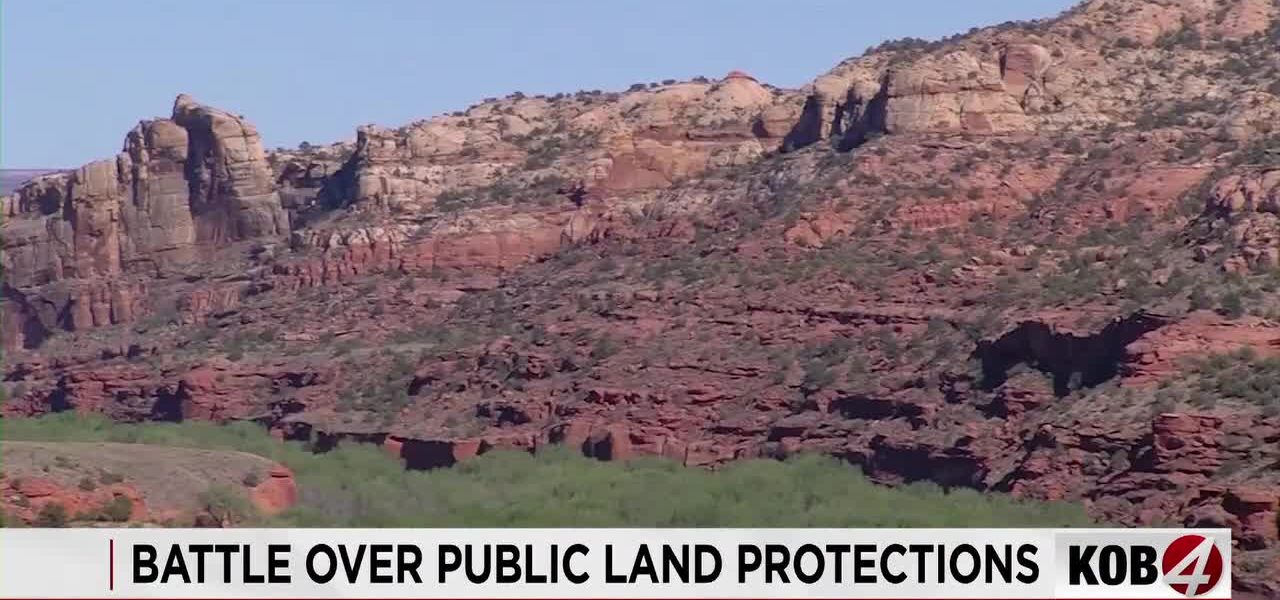
POLICY WIRE — Washington D.C. — Some maps, you’d think, are etched in stone. They show sacred canyons, ancient dwellings, — and panoramas stretching back geological ages. But a pen, wielded by a politician a thousand miles away, it turns out, can redraw those lines in an instant. Just like that, millions of acres in southern Utah — ancestral lands holding stories whispered across centuries — got dramatically smaller.
President Donald Trump’s executive order slashed the Bears Ears and Grand Staircase-Escalante national monuments, whittling them down by roughly 90% each. This wasn’t some quiet bureaucratic tweak; it was a detonation, reigniting a fight over nearly three million acres that’s been smoldering for decades, sometimes bursting into open flame. You’d think some things, once designated, would be safe. You’d be wrong. Dead wrong, if you’re counting on permanency in public land policy.
The decision, executed from the Oval Office, wiped away protections over vast tracts. The ink was barely dry before a firestorm erupted. For many tribal leaders, the move wasn’t just a policy change; it felt like an existential affront. Davina Smith-Idjesa, an outspoken voice from the Bears Ears Inter-Tribal Council, didn’t mince words. “Today I am speaking from a broken heart,” she began, her voice reportedly thick with emotion. “I am angry, I am hurt, and I’m tired of standing here having to explain again why Bears Ears matters to me.” Her exasperation? Palpable. It’s an old song, sung by a new generation, with the same infuriating rhythm.
Because, of course, Washington has always had its reasons. Trump, for his part, cast the initial monument designations as a “massive land grab.” He championed the reductions as a return to “fairness” for the folks in Utah. “It was very unfair to the people of Utah, — and now fairness has been brought back. It’s going to be better taken care of, and they’ll be able to use it a little bit,” he claimed, framing it as local control reclaiming what was rightfully theirs. But who exactly are the ‘people of Utah’ he’s talking about, and what constitutes ‘fairness’ when sacred landscapes are on the chopping block? Those are questions few bothered to answer properly.
The environmental lobby — and its congressional allies saw red. Sen. Martin Heinrich of New Mexico was quick to connect the dots, alleging a familiar pattern. “Unfortunately this is the latest salvo in what has been a pretty relentless war on our public lands,” Heinrich stated, suggesting a deeper game was afoot. And he’s not wrong; battles over federal land use have a lengthy, often circular, history. President Obama created Bears Ears in 2016. Trump gutted it a year later. President Biden, later on, expanded them again. It’s a policy seesaw, exhausting for anyone genuinely invested in the land’s fate.
But beyond the immediate political sparring, there’s an ancient pulse beating beneath this whole kerfuffle. These lands aren’t just empty spaces on a map; they hold millennia of human presence, of prayers, of ancient rock art — petroglyphs and cliff dwellings that offer glimpses into forgotten civilizations. Autumn Gillard, another tribal representative, put it plainly: “Our relationship with this land didn’t begin when it became a monument, and it doesn’t end when political administrations change its boundaries or protections.” You can draw lines. You can’t erase history, not really.
📄 POLICY WIRE WHITEPAPER PUBLISHED: PAKISTAN'S NATIONAL SECURITY POLICY PRIORITIES
👉 READ BY CLICKING HEREThe opposition’s fear? A thinly veiled land grab, dressed up in economic rhetoric. Heinrich and other Democrats maintained that the real play was to open up these pristine, protected zones to resource extraction, specifically mining interests—perhaps uranium, a material that draws a whole different kind of strategic attention. Globally, the struggle between ancestral rights — and resource extraction echoes in diverse geographies. Think of the indigenous communities in Pakistan’s resource-rich Balochistan province, often clashing with state-backed corporations eyeing everything from copper to natural gas. Their ancestral lands too become battlegrounds for economic imperatives against deep cultural — and spiritual ties. For instance, just 5 percent of Pakistan’s 2,670 mining sites are operational due to conflicts over land use and governance, according to a 2021 report by the Sustainable Development Policy Institute. That’s a stark reflection of the same tension at play in Utah, just a world away.
What This Means
This isn’t just about rocks and dirt in Utah; it’s a policy-laden boxing match with profound political and economic implications. The Republican argument, that the Antiquities Act — a century-old law intended to protect objects of historic and scientific interest — has been abused to lock up vast swaths of land, suggests a desire to redefine federal land management. It’s less about conservation and more about resource liberation, aiming to increase domestic production of minerals and energy resources. Economically, fewer restrictions on these lands could indeed open doors for mining, ranching, and perhaps even oil and gas exploration, creating jobs and revenue, at least in the short term. However, the long-term environmental costs and the irreversible loss of cultural heritage sites present a stark counterpoint, fostering prolonged litigation and resentment. For Washington, the message is clear: federal protections, however long-standing, can shift on a dime, signaling volatility for corporations eyeing resource access and local communities fighting to retain their cultural landscapes. And internationally, it raises uncomfortable questions about global norms around indigenous rights and environmental stewardship, especially for nations like Pakistan wrestling with similar development dilemmas. It’s all connected, you see.
This perpetual tug-of-war isn’t likely to subside. With presidential administrations capable of unilaterally expanding or contracting these monuments, they become political footballs, vulnerable to every change of power. The very ground beneath our feet, sacred and irreplaceable for some, merely an exploitable commodity for others, remains in constant contention. It’s an exhausting cycle, where the land, — and its original guardians, always seem to bear the brunt. Maybe international waters face less turbulent ownership battles, but then again, that’s debatable too. History doesn’t just repeat itself in policy; sometimes, it screams.