


Mbappé’s Fleeting Dynasty: The Political Economy of a Shattered World Cup Dream
POLICY WIRE — ARLINGTON, Texas — The air-conditioned chill of the Dallas Cowboys stadium offered little respite for France’s Kylian Mbappé. He’d walked onto a field not just as an athlete, but...

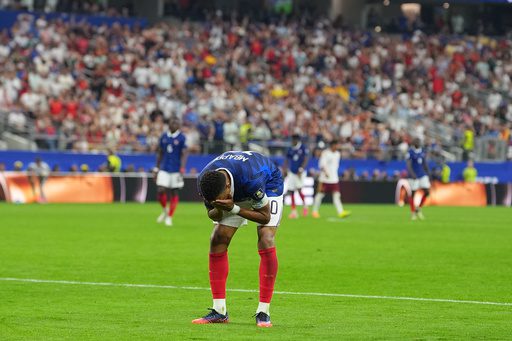
POLICY WIRE — ARLINGTON, Texas — The air-conditioned chill of the Dallas Cowboys stadium offered little respite for France’s Kylian Mbappé. He’d walked onto a field not just as an athlete, but as a walking, breathing national monument—a figure etched into the collective consciousness of his homeland. Yet, for all the marketing might — and generational talent, sometimes the ball just doesn’t bounce your way. Sometimes, even giants fall a bit short, making their descent on a Tuesday in Texas, of all places, rather than a more glamorous Sunday final. It wasn’t a poetic defeat, mind you, but a workmanlike dismantling that leaves more questions than heroic narratives.
Mbappé’s immediate concern, we’re told, revolved around the unpalatable truth: his squad simply wasn’t good enough. They hadn’t punched their ticket to a third consecutive World Cup finale. That dream evaporated against a Spanish side that, frankly, seemed more intent — and more coherent. But beneath the surface, it’s rarely just about the game itself. There’s always the larger theater of influence and national identity, especially when you’re talking about athletes who transcend sport to become cultural ambassadors. [QUOTE_PLACEHOLDER]
He’ll now be competing in a comparatively lackluster third-place skirmish, still chasing that coveted Golden Boot. And make no mistake, that individual accolade, though a secondary prize to team glory, carries its own considerable weight. It’s an arms race of scoring prowess against none other than Argentine phenom Lionel Messi. They’ve both logged eight goals in this year’s tournament, per the Associated Press’ reporting from tournament organizers, creating a high-stakes, personal rivalry that almost overshadows the team outcomes. Mbappé currently holds the tiebreaker with three assists to Messi’s two. A small edge, but in these elite circles, every single data point matters.
Spain, meanwhile, now preps for the grand showpiece in New Jersey, while France grapples with its unexpected early exit. Mbappé himself had very few touches during the first half of the semifinal match against Spain—just 15 for any forward, the lowest of the lot. This wasn’t the dominant presence the world has come to expect, certainly not the electrifying force seen just four years ago. Remember Qatar? The stage was set there, too. The atmosphere, a blend of state-sponsored spectacle and fervent Middle Eastern fandom, underscored how sports aren’t just entertainment—they’re strategic geopolitical investments. Mbappé’s prior World Cup triumph saw France face off against Messi and Argentina, ultimately losing in a dramatic penalty shootout.
And so, as the narrative goes, individual glory is fleeting, particularly when shackled by team performance. But, what happens when a whole nation hangs its expectations on one player? What’s the true cost when that gambit falls short? For fans from Morocco to Pakistan, regions where European football’s reach is profound, these matches aren’t mere games; they’re emotional investments, moments of shared identity. A star like Mbappé isn’t just selling jerseys; he’s projecting an image of competitive excellence that becomes intertwined with his country’s soft power—or its perceived lack thereof, at least for a day.
The man himself sounded rather pragmatic post-match. Kylian Mbappé said, “At the end of the day, you take all the glory when you win.†He’s a veteran, despite his relative youth, having faced down triumphs and tribulations before. He added, “When you don’t win … it’s part of the game. As the captain, I have to take all the responsibility, — and I have no problem with that. We wanted to go to the final. We didn’t go.†A rather matter-of-fact acceptance, even after that penalty call early on, where Lucas Digne’s foul on Lamine Yamal allowed Spain to net its first. That’s a true leader, I suppose—one who’s seen enough to understand the relentless scrutiny.
Later, he was issued a yellow card—an exasperated moment, perhaps, after colliding with Spanish goalkeeper Unai Simón. He also commented on Spain’s tactics: “It’s a team who loves to have control of the game, control of the ball. That’s what we let them do. We let the midfield too much time to play, — and at the end of the day they had quality to play. It’s difficult when you don’t change the play of Spain. We weren’t at the level to go to the final.†A candid assessment, acknowledging their own tactical shortcomings. Sometimes the truth just hurts.
What This Means
This semifinal stumble, particularly for a player of Mbappé’s stature and marketability, illustrates more than just a momentary dip in form. It exposes the delicate balancing act in a billion-dollar ball game where global icons vie for national prestige. For France, it means a momentary ding to the athletic narrative, a minor setback in the ongoing story of national excellence on the global stage. Nations like France invest substantially in sports infrastructure and youth academies, cultivating talent not just for the love of the game, but also for the potent soft power dividends it pays. Victory fuels national pride, encourages tourism, — and can even subtly influence international relations.
Economically, individual star power—especially that of an Mbappé or a Messi—is a currency unto itself. Their performance directly impacts sponsorships, broadcast rights, and merchandise sales that funnel billions into the global sports industrial complex. A major final featuring a player like Mbappé guarantees eyeballs — and advertising revenue. His absence in the final, though certainly not catastrophic, takes a measurable bite out of the broader economic excitement surrounding the event. For rapidly developing economies or regions like South Asia and the Muslim world, where football viewership is massive and loyalty to European clubs runs deep, such outcomes are digested with particular intensity, influencing consumption patterns and cultural trends across borders. The politics of global sport are complex, layered with financial ambition — and statecraft. Even when a phenom fails to make the final, the ripples are felt far beyond the pitch. It’s a reminder that even in sports, the policy implications are always in play.