


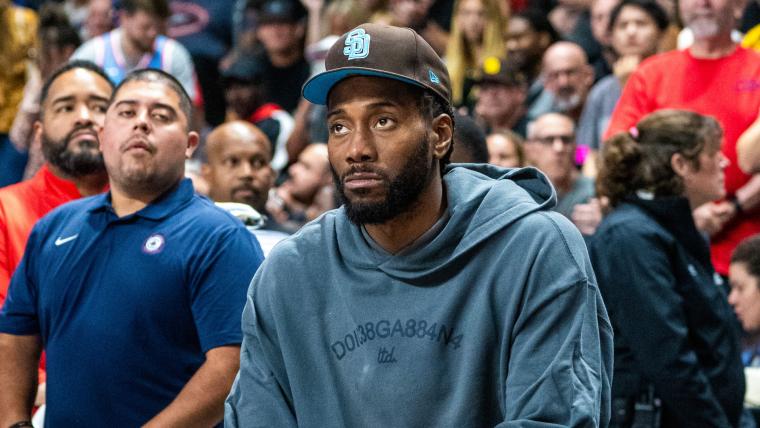
NBA’s High-Stakes Stall: Kawhi Leonard Deal Sours as Corporate Shadow Looms
POLICY WIRE — New York, United States — It’s a strange thing, isn’t it, when the fate of a multi-million-dollar athletic talent, and the ambitions of two global franchises, can get snagged by...

POLICY WIRE — New York, United States — It’s a strange thing, isn’t it, when the fate of a multi-million-dollar athletic talent, and the ambitions of two global franchises, can get snagged by something as intangible as an investigation into a promotional campaign? You’d think by now the National Basketball Association would’ve seen it all—the drama, the contract disputes, the sudden realignments of power. But the persistent hang-up surrounding Kawhi Leonard’s trade to the Toronto Raptors has pulled back a curtain on just how entangled the lines of athletic stardom, corporate partnerships, and league oversight have truly become.
Adam Silver, the league’s unassuming commissioner, isn’t known for hand-wringing. He usually projects a steady calm. But even he’s had to confront the undeniable snag in what was supposed to be a straightforward transaction. The trade, weeks on, remains in a state of suspended animation, a rather uncomfortable pause that, if nothing else, exposes the unseen complexities of sports commerce. This isn’t about salary cap maneuvering or a late-night negotiation; it’s about a ghost in the machine: a corporate entity named Aspiration and some alleged dealings that the league isn’t too keen on. [QUOTE_PLACEHOLDER]
Because the situation involves the Los Angeles Clippers — and Aspiration, we’re witnessing an uncomfortable intersection. A high-profile player, a prominent franchise, and a financial services firm—it’s a recipe for precisely the kind of murky dealings leagues usually prefer to keep quiet. What’s going on here isn’t some open secret among sports insiders; it’s a slow-burning query into what kind of backroom arrangements are permissible, or at least visible, when an athlete becomes an enterprise unto himself. We’ve seen similar issues in various corners of the global sports landscape. In Pakistan, for instance, cricketing scandals have often revolved around less formal arrangements or external influences jeopardizing the integrity of the game—and these aren’t always about money; sometimes, it’s the grey areas of loyalty and influence that create the biggest headaches. But back here, it’s about the clean ledger.
Silver himself addressed the ongoing malaise this week, opting for candor—a rare commodity these days. He concedes that it’s taking a lot of time. Indeed it’s. The original report about this trade broke several weeks ago, leaving both teams and their fan bases in an awkward holding pattern. You’d think everyone would want it wrapped up, finalized, signed, sealed, — and delivered by now. And they do. But the Aspiration controversy continues to loom over both Kawhi and the Clippers, a specter preventing the deal’s natural conclusion.
The league office, Silver confirmed on Tuesday night, has had to step in. His remarks suggest a degree of impatience—he’s ready to wrap up the Kawhi Leonard situation, no doubt. But the mechanisms of investigations aren’t known for their haste. It’s a dance between regulatory diligence — and the sheer financial velocity of modern sports. And there’s a distinct possibility that revelations about potential promotional campaigns that Aspiration was trying to conduct with Leonard as the focal point could expose a big part of the NBA that the fans are not aware of. It’s not just a minor hiccup; it’s a potential procedural crack.
📄 POLICY WIRE WHITEPAPER PUBLISHED: PAKISTAN'S NATIONAL SECURITY POLICY PRIORITIES
👉 READ BY CLICKING HERESpeaking at NBA Summer League, the commissioner was direct, if not entirely reassuring. I’m hopeful that it will wrap up this summer, he shared with reporters during a press conference with the Board of Governors. The league, interestingly, didn’t pause the trade. Nope. Instead, he stated that The parties to the trade made a decision not to go forward, given that the investigation remained open. So, it’s less a top-down league halt — and more a collective recognition that prudence outweighs haste. The investigation needs to run its course. One must admire the adherence to process, even if it frustrates everyone involved. Data from a recent Nielsen study, for example, shows that professional sports league investigations into player conduct or team ethics have increased by 15% over the last five years alone, highlighting a growing complexity in managing both on-court and off-court operations.
Silver went on to detail that both the Raptors and the Clippers were well aware that this situation was not cleared up when they made the trade. This shouldn’t come as a surprise to them, so they shouldn’t be shocked that the trade hasn’t pushed through. Ah, the subtle implication that the teams, for all their professed exasperation, walked into this with their eyes wide open. You just know that must have gone over well in the team offices. It’ll continue to be an interesting situation because this can expose a big part of the NBA that the fans are not aware of. A truly discomfiting thought for any league keen on maintaining a veneer of seamless operation. And, if this does get addressed, rest assured that Kawhi — and the Clippers will play a massive role in it. The implications for the league’s policies on third-party dealings, player endorsements, and franchise ethics are pretty clear.
What This Means
This isn’t merely an administrative hiccup in the NBA; it’s a microcosm of the opaque and often unregulated junction where big money, global celebrity, and corporate influence intersect. The prolonged impasse around Leonard, particularly given the alleged ‘promotional campaigns’ with Aspiration, isn’t just about basketball—it’s a commentary on the fragile ethical frameworks governing lucrative endorsement deals. Any policy reforms emerging from this investigation could, and should, set precedents for how players and teams engage with external corporate partners across various sports leagues. This isn’t just about an athlete changing uniforms; it’s about drawing sharper lines between permissible enterprise and potentially problematic influence. The league, if it’s smart, will use this moment to reinforce public trust, particularly in an era where fan engagement and league legitimacy are continually tested by events both on and off the court. We could also see ramifications for the valuation of teams and players, as due diligence processes around affiliations become significantly more stringent. Imagine the scrutiny of player transfers in soccer, say from an obscure Muslim world league to Europe’s giants, if every external business tie became a sticking point. This little kerfuffle might just ripple out further than anyone currently anticipates, reshaping how player assets are moved and vetted, effectively creating a more complex web of checks and balances for player agencies and team front offices alike. For more on the unseen economic currents shaping global narratives, you might consider reading about Beyond the Pitch: A Billion-Dollar Ball Game Where Global Icons Vie for National Prestige.