

The Ghost of Gib: Border Fence Vanishes, Old Animosities Linger
POLICY WIRE — La Línea de la Concepción, Spain — It wasn’t with pomp, or a diplomatic handshake between beaming heads of state, but rather a quiet, almost dismissive affair. A small, rather...

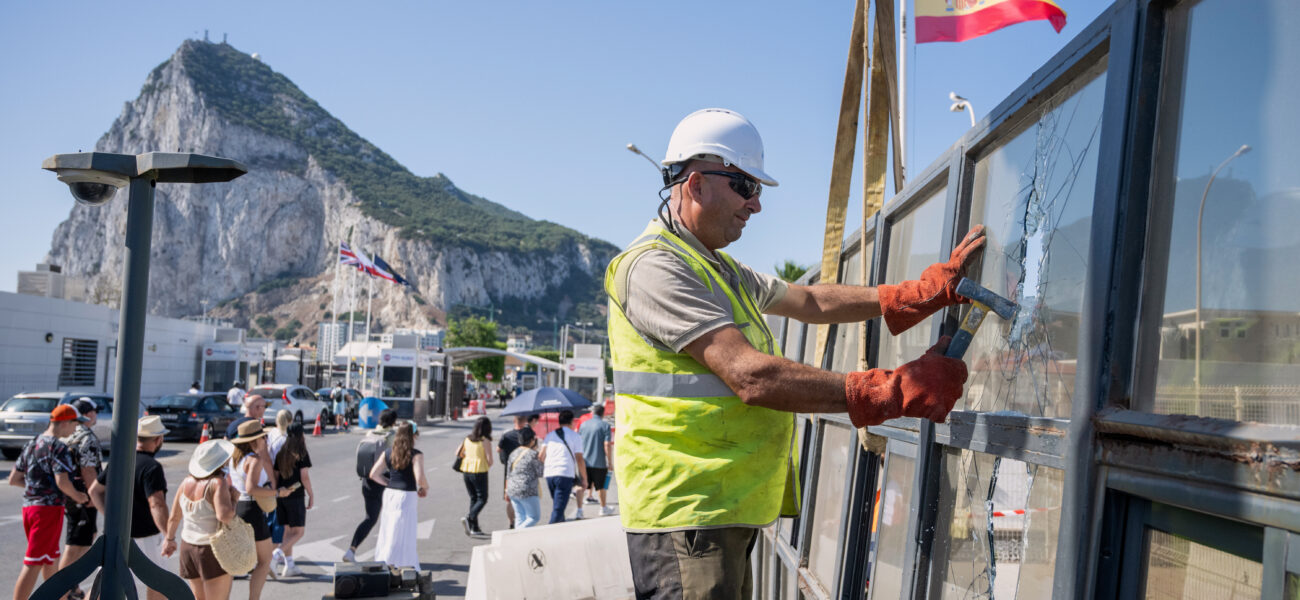
POLICY WIRE — La Línea de la Concepción, Spain — It wasn’t with pomp, or a diplomatic handshake between beaming heads of state, but rather a quiet, almost dismissive affair. A small, rather ordinary chain-link fence, a physical manifestation of centuries of bruised pride and stubborn refusal, has finally come down on the border between Spain and the tiny British territory of Gibraltar. For decades, it was a symbolic thorn, an annoying speedbump in the otherwise mundane commute for thousands of workers. Now, it’s just… gone. But don’t confuse the disappearance of some metal — and wire with the sudden melting of hardened geopolitical ice.
The Rock, that jutting behemoth, has always been more than just limestone. It’s an outpost of Britishness, a fortress whose very existence rankles Madrid, sitting squarely at the mouth of the Mediterranean. Brexit complicated an already fraught relationship, pulling Gibraltar—whose residents overwhelmingly voted to remain in the EU—away from its closest continental neighbor, Spain, and its lucrative economic links. The fence’s removal, orchestrated quietly, represents a gesture toward freer movement and perhaps, just perhaps, a fragile truce in a long, cold war of words.
It’s a peculiar thing, watching a minor barrier dissolve when the real walls remain firmly entrenched in policy papers and historical grievances. The local populace, both Gibraltarian and Spanish, are simply trying to get on with things, earn a living, perhaps grab some cheap petrol or duty-free liquor. Approximately 15,000 people, according to Gibraltar’s government figures from 2022, cross that border daily for work, a testament to sheer economic pragmatism overriding abstract notions of sovereignty. This pragmatic need often dwarfs the political theatrics.
“Look, we didn’t build this fence to be pretty,” Fabian Picardo, Gibraltar’s Chief Minister, reportedly remarked with characteristic pragmatism. “It was a necessary evil. Its absence now? That’s simply acknowledging reality—people move, trade happens. But let’s be clear: our self-determination isn’t on any negotiation table. This is about smoothing things, not capitulating.” And you’d be foolish to think Madrid isn’t seeing this as a long game.
From the Spanish side, officials echo a similar, albeit diplomatically veiled, sentiment. “We welcome any steps that enhance regional stability and economic integration,” stated a spokesperson for Spain’s Ministry of Foreign Affairs, speaking on background. “The ultimate goal remains constructive dialogue regarding the future, always respecting historical claims and the wishes of the Spanish people. This isn’t about fences, it’s about what happens on the other side of them.” They’ve certainly got a point. Physical borders might disappear, but the lines on a map, the contested allegiances—they’re harder to erase.
📄 POLICY WIRE WHITEPAPER PUBLISHED: PAKISTAN'S NATIONAL SECURITY POLICY PRIORITIES
👉 READ BY CLICKING HEREFor observers accustomed to geopolitical spats often spilling into armed conflict, the Anglo-Spanish quarrel over Gibraltar can seem quaint, almost theatrical. But it mirrors, in its own miniature way, more intense territorial disputes elsewhere. Think of the contested lines in South Asia—Kashmir, for instance—where ethnic and religious identity intertwine with political boundaries. Just as Muslim communities straddle borders in Kashmir or Pashtuns between Afghanistan and Pakistan, many Gibraltarians feel caught between British identity and European economic reality. The promise of seamless movement could offer a template, however imperfect, for easing friction in other complex zones where communities depend on stable access to jobs and resources, often crossing lines that are politically loaded, culturally significant. The easing here shows that economic sense sometimes, just sometimes, trumps historical stubbornness.
What This Means
The removal of Gibraltar’s border fence isn’t a diplomatic earthquake; it’s more akin to adjusting a wonky chair in a room full of finely tuned negotiators. Politically, it’s a subtle olive branch from Madrid, signaling a desire for greater cooperation with London post-Brexit regarding the Rock’s future status. But don’t misunderstand it for a concession on sovereignty—that’s a non-starter for both sides. It merely removes a visible impediment to what a post-Brexit deal hopes to create: a relatively frictionless flow of people and goods, mirroring the benefits Gibraltar enjoyed as an EU member. Economically, this should reduce commuting times and improve supply chain efficiency for businesses dependent on cross-border interaction, bolstering Gibraltar’s economy and providing much-needed relief to Spain’s bordering regions like Andalusia. However, the foundational issues surrounding jurisdiction, customs controls, and indeed, the price of allegiance, remain very much alive. The quiet dismantlement of a physical barrier means diplomacy now has to work harder on the invisible ones. It’s a testing ground for how two European powers, intertwined by history yet estranged by modern political choices, can manage a disputed territory without resort to the confrontational posturing of old. But Rome, as they say, wasn’t built in a day, and the fences inside people’s heads don’t just disappear with a bolt cutter.