


Europe’s EV Fortress: Why Renault Snubbed China’s BYD, Twice
POLICY WIRE — Paris, France — They say money talks, but sometimes, a deeper, less tangible currency holds sway. Twice, China’s automotive behemoth, BYD, approached Renault with what anyone...

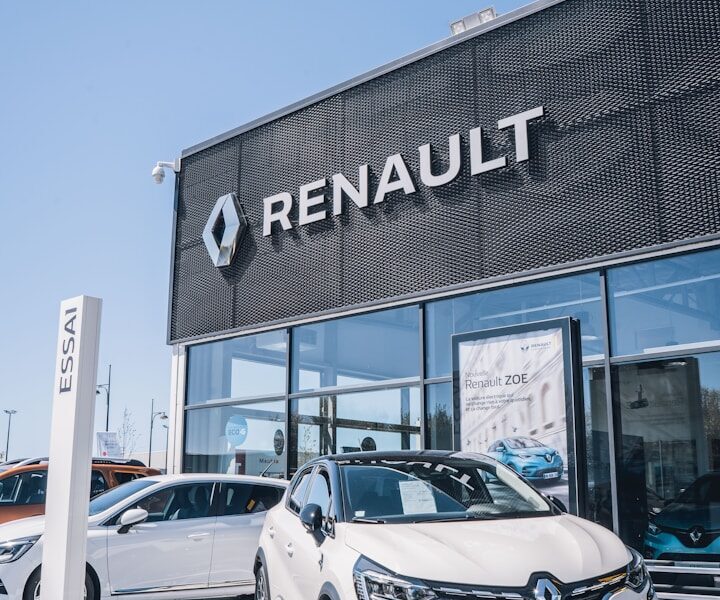
POLICY WIRE — Paris, France — They say money talks, but sometimes, a deeper, less tangible currency holds sway. Twice, China’s automotive behemoth, BYD, approached Renault with what anyone would consider a more-than-generous proposition for a slice of the venerable French automaker. And twice, Renault firmly, unapologetically, said non. Cash wasn’t the sticking point; it was never really about the numbers, was it? Instead, it’s a telling snapshot of the deepening fissures in the global economy, where national interest and industrial heritage often trump market logic, no matter how enticing the offer.
BYD, a manufacturing juggernaut backed by Warren Buffett’s Berkshire Hathaway, isn’t known for shyness. They’ve rocketed past established players to become a dominant force in the electric vehicle (EV) sector, exporting their tech-forward, aggressively priced cars globally. So, when they came knocking on Renault’s door, observers expected, at the very least, a spirited negotiation. But sources close to the discussions describe less a negotiation and more a polite, yet absolute, refusal, a quiet shutting of the gates against an industrial raid, regardless of its financial appeal.
It’s not just about brand loyalty or a boardroom full of stubborn French executives. This rejection signals a much broader European recalibration concerning strategic industries—especially those considered foundational. Autos, of course, sit squarely at the core of European manufacturing identity, employing millions and anchoring a vast ecosystem of suppliers and innovators. Handing over even partial control to an outsider, especially one perceived as a state-backed rival, wasn’t on the menu.
And Renault Chairman Jean-Dominique Senard didn’t mince words in private circles. “Our industrial heritage, our French roots, these aren’t assets to be simply tallied on a balance sheet and sold off to the highest bidder,” he’s rumored to have stated, reflecting a sentiment pervasive among key stakeholders. “It’s about sovereignty, innovation developed on European soil. We’re charting our own course, fiercely independent.” But how fiercely independent can any major automaker truly be in this hyper-connected, yet fracturing, global market?
On the other side of the world, BYD’s frustration was palpable. Wang Chuanfu, BYD’s CEO, is understood to have viewed the snub as a missed opportunity, a failure of vision. “We saw immense synergy, an opportunity to accelerate Europe’s green transition with proven technology and massive scale,” Chuanfu purportedly told confidants, lamenting the closed-door policy. “Their refusal? It points to a deep misunderstanding of a truly collaborative, efficient future. They missed a real chance to leapfrog.” And perhaps he’s got a point. BYD, after all, moved 3.02 million new energy vehicles globally in 2023, outstripping many Western legacy brands, according to data from Statista. That’s real, tangible success.
📄 POLICY WIRE WHITEPAPER PUBLISHED: PAKISTAN'S NATIONAL SECURITY POLICY PRIORITIES
👉 READ BY CLICKING HEREThis protectionist streak has wide-reaching consequences, particularly for regions eager for foreign investment and advanced technology. Take Pakistan, for instance. A country strategically positioned and eager for industrial development, Pakistan offers a potentially lucrative market for electric vehicles. But it’s also a landscape where global giants often contend with a complex mix of geopolitical allegiances, local industrial policies, and fluctuating trade relations. Chinese firms have been significant investors there, yet the desire for diverse partnerships and technology transfers remains high. An integrated European-Chinese venture might have explored markets like these with unprecedented leverage, potentially reshaping regional trade flows and investment patterns, though current global friction seems to render such collaboration a pipedream. This kind of rejection could slow the transfer of EV technology and infrastructure development into markets hungry for it.
What This Means
The repeated rebuff isn’t just a corporate anecdote; it’s a signpost on the road to a more fragmented global economy. Europe’s industrial strategy is visibly shifting towards safeguarding national champions, prioritizing strategic autonomy over raw economic efficiency. This posture, though understandable in an era of heightened geopolitical competition—where technology transfer often sparks alarm—risks isolating European manufacturers from the scale and innovation of their Asian counterparts. It’s a calculated gamble that European protectionism can foster internal strength faster than it generates external resentment or inefficiency. But it definitely raises the cost of entry for anyone hoping to truly unify global supply chains, affecting everyone from semiconductor manufacturers to consumers. Will this ultimately protect jobs and bolster local economies, or will it create insulated, less competitive ecosystems in the long run? Because when the global giants are forced to compete on parallel tracks, instead of collaborating, it’s typically the end consumer, or smaller, developing markets seeking a bargain, that get the short end of the stick. This geopolitical tightrope walk echoes the delicate diplomatic dances seen in regions grappling with conflicting global interests, such as Pakistan’s nuanced approach to superpower relations. You know, where maintaining the last diplomatic bridges can literally mean the difference between regional stability and chaos.
For BYD, the refusal merely confirms what they already know: the West isn’t easily conquered through direct acquisition. Instead, they’ll pivot, to aggressive organic growth, leveraging their technological lead and lower production costs to compete head-on, from Stuttgart to Seoul, and potentially, Islamabad. But don’t count Europe out just yet; they’re betting on ingenuity and national grit to power their own electric future, even if it means doing it the hard way, all alone.