


WNBA’s Tumultuous Midseason: The Brutal Calculus of Power and Unmet Expectations
POLICY WIRE — New York, USA — Just when you think you’ve got a read on professional sports, the WNBA’s midseason shuffle drops a whole bucket of cold water on those easy...

POLICY WIRE — New York, USA — Just when you think you’ve got a read on professional sports, the WNBA’s midseason shuffle drops a whole bucket of cold water on those easy narratives. The season, already halfway done with all 15 franchises having crossed the 22-game mark, hasn’t just tweaked the script—it’s torn the damn thing up.
Forget the MVP conversation for a minute. That’s usually the crown jewel, right? But the real fireworks, the genuine political maneuvering and harsh realities, have played out around the unlikeliest of battlegrounds: the Sixth Player of the Year award. It’s supposed to honor bench brilliance, a steady hand. Instead, it’s become a grim ledger of unmet expectations — and abrupt career U-turns.
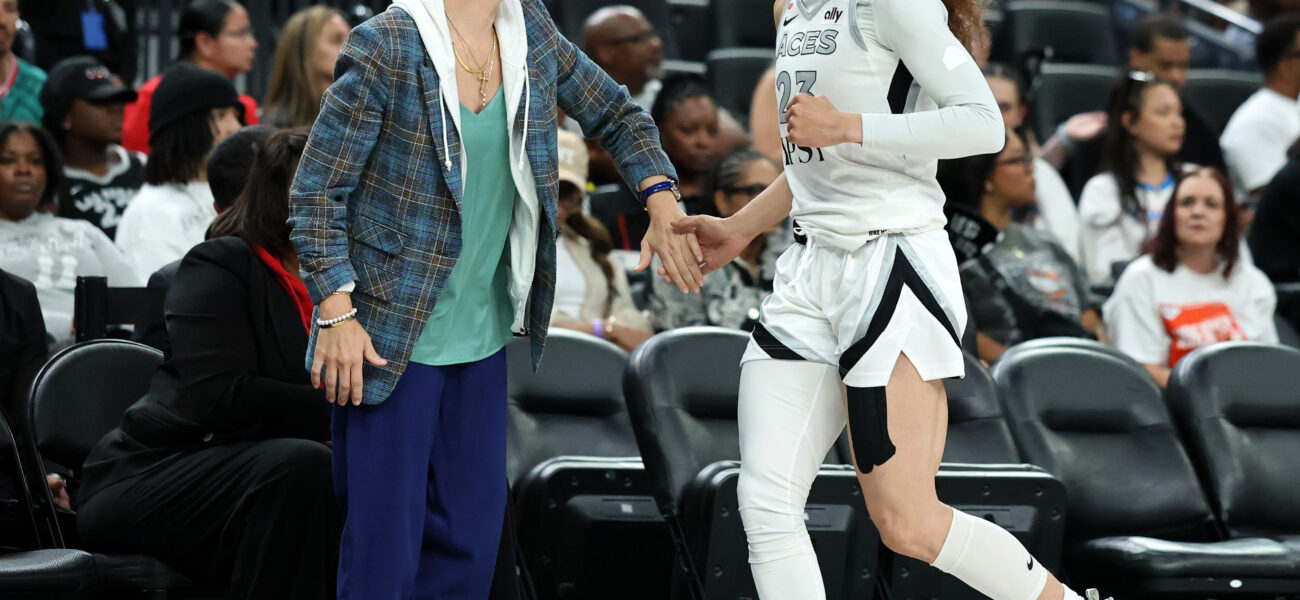
Take Chennedy Carter. Preseason, she was practically engraving her name on the trophy for the reigning champion Las Vegas Aces. But her Vegas tenure? Gone faster than a promise from a backbench senator. After 13 games, she was out. Just like that. A top-tier talent—third in points-per-40 minutes across the league, no less, according to official WNBA statistics—unceremoniously jettisoned. You don’t often see a player producing 28.9 points per 40 minutes sidelined this way.
Her head coach, Becky Hammon, known for her candor, offered a rather pointed observation at the time: "This league’s about talent, yes, but it’s also about cohesion, about putting your team first. Sometimes, talent alone just isn’t enough to secure a roster spot on a championship-caliber team, no matter the numbers." Casual enough for you? It speaks volumes about the delicate chemistry demanded at the league’s pinnacle.
And it’s not just Vegas. Betnijah Laney-Hamilton, a critical cog for the Liberty last year, is seeing DNP-CDs (Did Not Play – Coach’s Decision) rack up. Cameron Brink’s injury added another layer of uncertainty, while Naz Hillmon, the reigning Sixth Player, has been forced into starting roles. The whole category needed a reset button. Enter Janelle Salaün, now second-leading scorer for the ascendant Golden State Valkyries, and Sophie Cunningham, the sharpshooter keeping the Indiana Fever climbing. But their rise underscores the raw volatility of trying to predict outcomes in a league where fortunes shift faster than political winds in Islamabad.
The MVP race, by contrast, feels almost placid. A’ja Wilson remains the dominant force. She’s not merely leading the league in scoring (a staggering 25.5 points per game) and blocks (2.0), but doing so while anchoring a Las Vegas team still contending at the top, even if they’re not cruising as easily as last year. But for her closest competitors, it’s been a tougher road. Breanna Stewart’s stellar individual play has been dinged by the Liberty’s inexplicable habit of digging themselves into double-digit deficits. And Alyssa Thomas? Her Mercury isn’t just failing to play well; they’re sinking, despite her prodigious stat lines. It’s hard to hand a trophy to someone whose team isn’t delivering, isn’t it?
📄 POLICY WIRE WHITEPAPER PUBLISHED: PAKISTAN'S NATIONAL SECURITY POLICY PRIORITIES
👉 READ BY CLICKING HERERookie of the Year? Forget a race. It’s a procession for Olivia Miles. Her numbers speak for themselves—18.7 points, 5.6 assists, 4.8 boards—all as the driving force for the league-leading Minnesota Lynx. She’s pro-ready, a generational talent, and the Lynx, minus their injured star Napheesa Collier, haven’t missed a beat thanks to her stewardship.
Speaking of the Lynx, their head coach and architect, Cheryl Reeve, might just walk away with her fifth Coach of the Year award. "Our belief is in the collective," Reeve quipped recently, a masterclass in understated self-praise. "When you instill that, individual absences, however significant, become challenges, not excuses." It’s a leadership ethos that’d probably be studied by every aspiring executive from Karachi to Kuala Lumpur if it were applied to business rather than basketball. And that collective grit shines, doesn’t it?
What This Means
This midseason tumult isn’t just about who wins what; it’s a hard look at the economics and political landscape of a rapidly professionalizing women’s league. When an expanding league — now gaining genuine traction on global sports radars, drawing comparisons even to global football’s burgeoning financial markets — makes abrupt roster changes or sees established stars falter, it sends ripples. It impacts sponsorship potential, player leverage in contract negotiations, — and even future expansion considerations. Every unexpected team surge, every celebrated rookie performance, creates a more compelling product, one that draws in fresh eyes and, more importantly, new capital.
For players, especially those on the bubble or fighting for recognition, these shifts mean the stakes are astronomical. One bad social media misstep, one perceived locker-room disruption, can torpedo a career quicker than a poorly timed budget proposal. And for coaches and executives, it’s a constant tightrope walk between winning now and building for tomorrow, between talent acquisition and ensuring internal harmony. This WNBA season isn’t just a sporting event; it’s a dynamic case study in competitive markets, human psychology, and the relentless pursuit of supremacy.