
As Wildfire Haze Descends Again, Policy Makers Choke on Inaction
POLICY WIRE — Washington, D.C., USA — There’s a particular kind of collective sigh, isn’t there? That slow, heavy exhale that precedes the inevitable. It’s the sound of the public health...

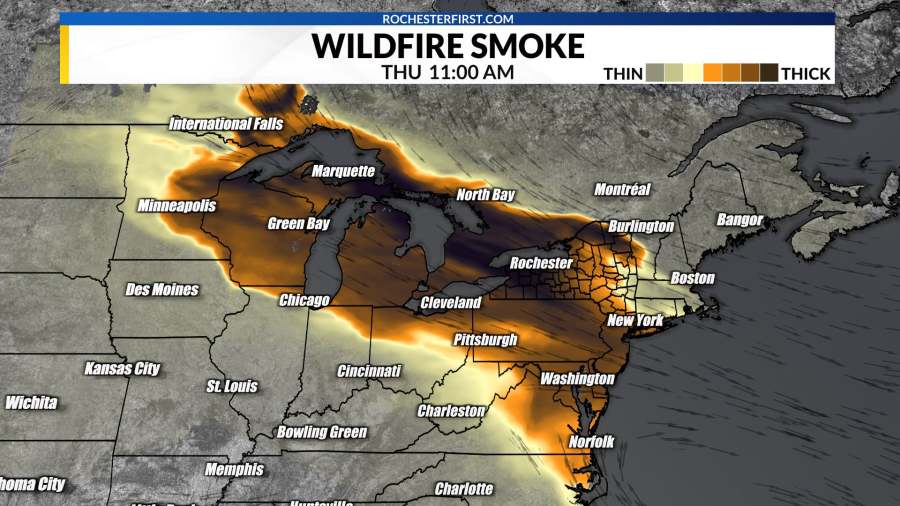
POLICY WIRE — Washington, D.C., USA — There’s a particular kind of collective sigh, isn’t there? That slow, heavy exhale that precedes the inevitable. It’s the sound of the public health warnings cycling back, of air quality alerts flashing crimson, of children ushered indoors, denied the simple joy of a sunny afternoon. For residents of Western New York, that familiar misery is set to become a grim reality once more, as Canadian wildfires prepare their annual, unsolicited encore, blanketing cities from Buffalo to Rochester in a sepia-toned haze. Forget the idyllic summers; these days, they come with a filter, both literal — and metaphorical.
It’s not just a weather phenomenon; it’s a political migraine. Because these smoky curtains aren’t merely blocking the sun—they’re obscuring uncomfortable truths about policy paralysis, about governmental inertia in the face of what’s clearly becoming the new normal. We’ve seen this show before. Many times.
Health officials, bless their diligent hearts, are already trotting out the familiar spiel. Dr. Evelyn Clarke, director of the regional Public Health Commission, sounded a weary but firm warning. “We’re talking about particulate matter, PM2.5, that can burrow deep into lung tissue,” Clarke told Policy Wire, her voice tinged with the frustration of a recurring nightmare. “It’s not just a bother for those with asthma or heart conditions. It’s a demonstrable threat to everyone, especially the young — and the elderly. Wear masks. Stay inside. We can’t stress it enough.” Her words hang in the polluted air like an echo of last year, — and the year before that.
And where’s the real action? Folks get sick. But who bears the brunt? It’s often the low-income communities, the folks without robust air conditioning, those who can’t simply afford to hole up. This is environmental inequity, pure — and simple, blown in on the northern winds.
The economic toll, often overlooked in the immediate discomfort, mounts steadily. Business slows, outdoor activities dry up, tourism takes a hit. It’s another disruption in an economy already navigating precarious waters. There’s no magic wand here, only preventative policy – a bitter pill many seem unwilling to swallow until the sky turns orange.
Senator Julian Vance, a Democrat representing a significant portion of affected counties, issued a statement brimming with the predictable rhetoric of concern. “This recurring health crisis demands a concerted, national — indeed, international — strategy,” Vance declared, as if the concept was groundbreaking. “We simply cannot continue to put our constituents’ health at risk. It’s time for real investments in climate resilience — and cross-border cooperation on forestry management.” Noble words. One just wonders if they’ll amount to anything beyond a press release, or just become another talking point to be buried under the next layer of ash.
📄 POLICY WIRE WHITEPAPER PUBLISHED: PAKISTAN'S NATIONAL SECURITY POLICY PRIORITIES
👉 READ BY CLICKING HEREBut this isn’t just an American problem. Oh, no. From the haze shrouding Jakarta to the annual, suffocating smog that descends upon Lahore, Pakistan, we see these spectral events repeating across the globe. Just last winter, Lahore grappled with some of the worst air quality on Earth, prompting calls for emergency action and a familiar blend of public outcry and governmental promises. The causes might differ—industrial emissions, agricultural burning, traffic congestion—but the human cost and political posturing? Eerily similar. It’s a shared global ailment, manifesting in varied shades of grey, regardless of geography or governance.
According to a 2020 report from the National Bureau of Economic Research, annual exposure to wildfire smoke could reduce economic activity by an average of 1.27% of GDP in affected counties in the United States. That’s not pocket change; it’s a substantial hit, a slow bleeding wound on regional economies.
What This Means
The recurrent wildfire smoke blanketing Western New York is less an anomaly and more a stark illustration of systemic failure and global interconnectedness. Politically, it exacerbates the ever-present climate debate, fueling calls for more aggressive environmental policies while providing easy targets for opponents. But it’s not a partisan issue—the smoke doesn’t ask for your voter registration card. It’s an economic disruptor too, straining healthcare systems, dampening local commerce, and casting a shadow, quite literally, over property values and long-term regional planning. This annual cycle creates a creeping sense of fatalism, chipping away at public trust in governance, especially when proactive measures consistently lag behind reactive advisories.
The international dimension can’t be overstated. Canada’s struggles directly impact U.S. air quality, mirroring how industrial output in one nation can taint the skies of another. For a region like South Asia, particularly in Pakistan and India, perennial air pollution is a health catastrophe already baked into the daily lives of millions, an ‘acceptable’ casualty of industrialization and developmental pursuits. The West, having largely outsourced its dirtiest industries and air, is now getting a taste of a broader problem, albeit via natural phenomena rather than direct emissions. And the grim lesson? There’s no escaping the long arm of global atmospheric dynamics. No walls or borders stop these microparticles. So, while folks in Buffalo are told to cover their faces, the policy question is: Who, ultimately, is going to clear the air, and what price are we truly willing to pay?