


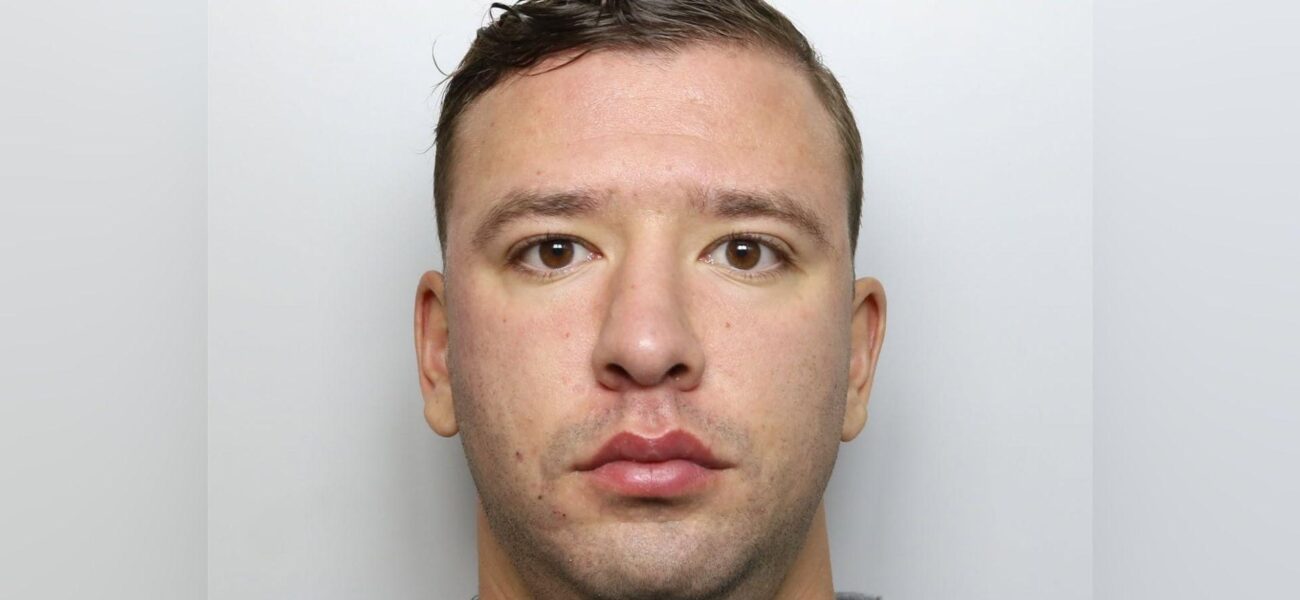
The Ghost in the Global Machine: Fugitive’s Multi-Continental Dash Ends, Exposing Network Weaknesses
POLICY WIRE — Paramaribo, Suriname — The relentless pursuit of global justice, often whispered about in hushed diplomatic tones, sometimes manifests with an almost mundane inevitability. Forget the...

POLICY WIRE — Paramaribo, Suriname — The relentless pursuit of global justice, often whispered about in hushed diplomatic tones, sometimes manifests with an almost mundane inevitability. Forget the spy novel glamour; a protracted, two-continent manhunt concluded not with a bang, but with the quiet thud of a cell door closing in a nation few can pinpoint on a map. An individual, whose name authorities are keeping close to the vest but whose financial transgressions cast a long shadow, has finally been locked away after a convoluted dodge through Mexico’s sun-baked resorts and Suriname’s humid embrace.
It’s a story less about daring escape — and more about the inexorable tightening of a bureaucratic net. The accused, sought for a complex web of high-value investment fraud and money laundering schemes—operations believed to have exploited informal hawala networks often favored for illicit transfers, including those touching parts of the Indian subcontinent and the broader Muslim world—thought a significant geographical leap might afford anonymity. He was wrong. The financial tremors he left behind weren’t just felt on Wall Street; they rippled into communities far removed, where even small fortunes were at stake.
His initial bolt took him south, into the convivial chaos of Mexico, a well-trodden path for those looking to simply disappear. But even sandy beaches and perpetual margaritas couldn’t mask a man whose digital footprint, however meticulously scrubbed, still flickered on distant servers. Because modern crime, particularly the white-collar variety, leaves a digital breadcrumb trail an ocean wide.
Eventually, as law enforcement agencies began closing in, his perch in Mexico became untenable. He then performed another remarkable disappearing act, surfacing months later on the South American mainland, in the small, ecologically rich republic of Suriname. A place, let’s be honest, not typically the first stop on an international criminal’s itinerary, lending a certain absurd charm to the whole saga. But that’s where the international dragnet finally ensnared him, after months of painstaking collaboration between U.S. agencies — and local Surinamese authorities.
Assistant Attorney General for the Justice Department’s Criminal Division, Mark Kroll, didn’t mince words in a rare public statement about the case. “This individual believed borders offered an impenetrable shield,” Kroll observed. “He underestimated our global resolve. No corner of the world is too remote for justice, especially when financial stability—and countless livelihoods—are compromised.” His tone was measured, but the underlying message was clear: there aren’t many places left to truly hide.
The arrest itself was a testament to persistent, low-profile intelligence sharing. Officials haven’t elaborated on the specifics of his capture—likely a bland operation of papers and diplomatic protocols rather than high-octane drama. After his detention, he was swiftly processed and transported back to face charges, demonstrating the efficiency, for all its ponderousness, of international legal agreements.
📄 POLICY WIRE WHITEPAPER PUBLISHED: PAKISTAN'S NATIONAL SECURITY POLICY PRIORITIES
👉 READ BY CLICKING HEREAnd it’s a testament to these quieter, diplomatic victories that such cases are brought to a close. Minister of Justice and Police in Suriname, Stanley Vroom, was quoted stating, “Suriname is not, and will never be, a sanctuary for those fleeing justice, regardless of their origin or the magnitude of their crimes. Our commitment to international cooperation in combating transnational criminality is unwavering.” These aren’t just hollow political niceties; they reflect a pragmatic understanding of shared vulnerabilities in an interconnected world.
The scope of these transnational economic crimes continues to swell. According to a 2023 Interpol report, Red Notices—global alerts for wanted persons—have seen a year-on-year increase of approximately 7% over the last five years, indicating not just more crime, but also a growing efficacy in tracking perpetrators across jurisdictions. Our ghost, it turns out, was merely a ripple in a much larger, increasingly choppy ocean. (You can read more about global economic flows and their wider implications in Policy Wire’s coverage of Barcelona’s cold calculus of youth amid global capital flows.)
What This Means
This arrest, while singular, isn’t merely about one man’s comeuppance. It highlights several simmering realities of the modern global state. First, the supposed sanctity of sovereign borders as a barrier to prosecution is eroding, especially in economic cases. Nations, even those far removed from the core victim countries, increasingly view international financial crime as a shared threat, often bypassing slow-moving diplomatic machinery for swifter, quieter cooperation. This shift underscores a broader political calculus: the potential reputational and financial costs of being seen as a haven for fugitives now outweigh the occasional inconveniences of extradition. it shines a spotlight on the vulnerability of financial ecosystems, especially those with informal components, to exploitation. The illicit flows of capital, often through regions like South Asia and the Middle East where hawala and other informal systems are prevalent, become critical arteries for international fraud. The ongoing ability to trace these funds, however circuitous their journey, dictates the success—or failure—of such prosecutions. And this incident reinforces the message to other would-be economic refugees: the planet, for all its vastness, is steadily shrinking.
This particular episode underscores an undeniable truth: the international legal infrastructure, for all its quirks and lacunae, does work. Slowly, surely. But it works.