


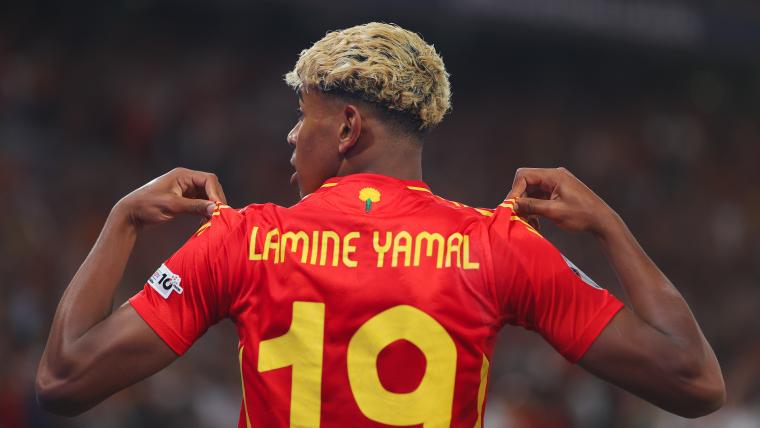
Europe’s Next Generation: Lamine Yamal and the Shifting Geopolitics of Identity
POLICY WIRE — Barcelona, Spain — It’s often said sports offer a universal language. But sometimes, they simply expose all the questions no one wants to ask aloud. Take the case of Lamine Yamal,...

POLICY WIRE — Barcelona, Spain — It’s often said sports offer a universal language. But sometimes, they simply expose all the questions no one wants to ask aloud. Take the case of Lamine Yamal, Spain’s youngest footballing sensation. Most folks—the casual fans, that’s—see a dazzling prodigy, a blur of talent carving up defenses. We, however, see something else entirely: a geopolitical jigsaw, a policy quagmire masquerading as a wunderkind’s origin story.
His lineage isn’t just a simple family tree; it’s a living diagram of Europe’s intertwined demographic destiny. Mother from Equatorial Guinea, father from Morocco. Both North African, both with histories stretching back into Africa and, in Morocco’s case, an ancient connection to Spain itself. Not just blood, but migration streams, economic imperatives, colonial echoes—they all coalesce in this seventeen-year-old’s rise. It’s hardly just about where he got his speed; it’s about what he represents for a continent still grappling with who, exactly, gets to call themselves European.
Spain, a country historically defined by its deep Catholic roots and the shadow of the Reconquista, now cheers wildly for a young man whose family hails from nations inextricably linked to its own past and, crucially, its present labor force. You see this everywhere, don’t you? In Paris, London, Amsterdam—the children of immigrants often become the face of national pride. But does that pride translate into meaningful, long-term policy shifts for the communities they represent?
“Yamal’s journey—and there are countless others like it—forces us to reckon with the messy, beautiful reality of modern Spain,” quipped Emilio Calatrava, Spain’s Secretary of State for Migration. “He is a Spanish citizen, yes, — and an exceptional athlete. But his existence also shines a rather bright light on the fact that our immigration system, for all its complexities, does work for many. We’re adapting, perhaps slower than some would like, but adapting nonetheless.” He’s got a point. You can’t exactly ignore a phenomenon running down the wing.
But adapting implies friction, doesn’t it? A nation doesn’t just seamlessly absorb diverse populations without some push and pull, some serious cultural heavy lifting. And that’s where the unspoken policies—the social integration mechanisms, the economic opportunities, the counter-extremism narratives—come into play. Shadow Games: Birthright, Bluster, and the High Court’s Unseen Hand, indeed, can impact an individual’s sense of belonging just as much as a football call-up.
Because while Europe celebrates these talents, the larger debate—the one about border controls, economic migrants, and assimilation—drags on, often fraught with political opportunism. It’s a recurring drama playing out across the globe, frankly, from Spain to the United Kingdom, where diaspora communities—from Morocco to Pakistan—forge new identities while maintaining complex ties to their homelands. Look at the flow of remittances: Moroccans abroad sent home an estimated €11.5 billion in 2023, representing over 9% of Morocco’s GDP. That’s just one tangible link, a lifeline really, that keeps these identities dual-rooted.
📄 POLICY WIRE WHITEPAPER PUBLISHED: PAKISTAN'S NATIONAL SECURITY POLICY PRIORITIES
👉 READ BY CLICKING HEREMr. Omar Benjelloun, a prominent Moroccan diplomat often outspoken on diasporic affairs, put it rather bluntly: “Our youth who find success abroad, whether in sport, science, or art, are both a source of pride and a stark reminder of the opportunities we need to build here, at home. Their accomplishments in places like Spain aren’t just Spanish triumphs; they’re a collective achievement that transcends borders, showing the world what’s possible when talent finds its stage—even if that stage is far from home.” He speaks with the weariness of someone who’s seen a lot of talent exit, hasn’t he?
The Yamal story, therefore, isn’t just a feel-good piece about a rising star. It’s an inconvenient mirror, reflecting the sometimes uncomfortable truths of modern nationhood and the future composition of what we casually refer to as ‘Western societies.’ This boy’s trajectory isn’t just about scoring goals; it’s about whether Spain—and by extension, Europe—is ready to embrace the complex, often challenging, yet undeniably rich legacy these new generations bring.
What This Means
The geopolitical reverberations of individuals like Lamine Yamal extend far beyond the football pitch. Economically, these high-profile figures can symbolize successful integration, potentially bolstering trade and diplomatic ties between sending and receiving nations. Politically, however, their visibility can become a double-edged sword. While governments like Spain’s might leverage their success as a PR coup for multiculturalism, it also spotlights lingering questions about social equality, access to opportunity, and the ongoing struggles faced by immigrant communities.
His very existence on a national stage challenges conventional notions of ‘us’ and ‘them’, forcing political discourse to evolve. Or, at least, it should. Because when a child of immigrants becomes a national icon, the narratives of exclusion, sometimes promulgated by right-wing elements, become visibly contradictory. The challenge now for policymakers isn’t just celebrating these individuals but building systemic frameworks that genuinely support the full spectrum of a multi-ethnic populace, ensuring that the dreams Yamal lives out aren’t exceptions, but accessible pathways for many more.