


The Silent Sabotage: Europe Unmasks a Decade of Digital Frontline Warfare
POLICY WIRE — Brussels, Belgium — The shadows, they’re getting bolder. After years of digital skirmishes simmering just beneath the surface of international diplomacy, European powers, alongside...

POLICY WIRE — Brussels, Belgium — The shadows, they’re getting bolder. After years of digital skirmishes simmering just beneath the surface of international diplomacy, European powers, alongside their British counterparts, have pulled back the curtain on a deeply unsettling reality: a persistent, pervasive cyberespionage campaign attributed directly to Russia’s state intelligence apparatus.
It’s not just about stealing secrets anymore. This isn’t some low-stakes intel grab; this is about disrupting daily life, kneecapping economies, and shaking public trust. And frankly, it’s been going on since 2010. Ten years. Imagine that: a decade-long digital assault targeting the very plumbing of modern society, all while official communiqués maintained a veneer of cordiality.
This Monday, a line was drawn. The European Union decided it was high time for some payback, at least symbolically, imposing sanctions on a cadre of Russian military intelligence officers, sundry hackers, and several private outfits. The accusation? A wholesale effort to [QUOTE_PLACEHOLDER] using tactics that seem straight out of a Cold War-era thriller, but updated for fiber optics. The bloc specifically pinpointed nine people — and four entities.
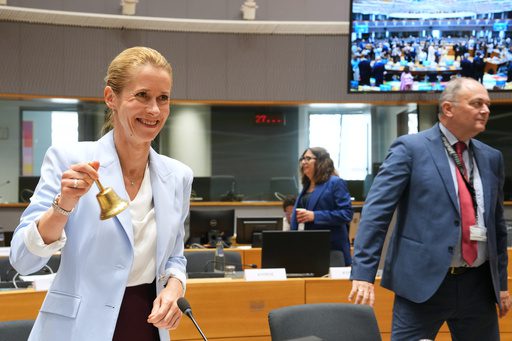
Britain, never one to be outmaneuvered in a diplomatic tussle, echoed the sentiment and then some, laying sanctions on a more expansive list of 24 individuals and entities. Kaja Kallas, a woman who doesn’t mince words, asserted that those targeted “contribute to Russia’s efforts to destabilize the EU, its member states and international partners.” That’s a fairly stark indictment, don’t you think?
France, Germany, Poland—they’ve been in the crosshairs. Even the quieter corners of Europe, places like Cyprus — and Finland, apparently haven’t been immune. Berlin’s already called Russia’s ambassador on the carpet. And French Foreign Minister Jean-Noël Barrot? He’s gearing up to summon Russia’s envoy, telling BFM television that the cyberactivities aimed [QUOTE_PLACEHOLDER] These aren’t just abstract breaches; they’re attacks on the real world, folks.
But how do you really hit back at ghosts in the machine? Asset freezes — and travel bans, for starters. The EU focused these measures squarely on the 16th Center of Russia’s Federal Security Service, or FSB. Kallas elaborated, stating the FSB “has been controlling a variety of cyberthreat groups,” and further, it “has conducted a wide range of malicious cyberactivities with growing severity.” That sounds like a clear escalation of a low-grade war.
Beyond the FSB, the EU zeroed in on a specific member of Russia’s GRU military intelligence agency, Yevgeny Bashev, and a company reportedly under his purview, Impuls. The sanctions notification flat-out said Impuls [QUOTE_PLACEHOLDER] the actions of Impuls, it claimed, “constitute an external threat” to EU member countries and have had “a significant effect” on an unnamed country outside the bloc. But who? They ain’t saying.
Britain’s intelligence believes Impuls wasn’t just a hub for seasoned hackers. Oh no. It went scouting for new talent, apparently recruiting cyber specialists and hackers fresh out of Russian universities and academies. They slapped Bashev with sanctions, too, plus three other senior GRU officials, all “for their role in directing GRU cyber and hybrid threat operations.” The picture painted? A systematic, institutionalized program for digital infiltration — and sabotage.
📄 POLICY WIRE WHITEPAPER PUBLISHED: PAKISTAN'S NATIONAL SECURITY POLICY PRIORITIES
👉 READ BY CLICKING HEREAnd then there’s the more shadowy side of this cybercoin: Russia’s intelligence agencies, Britain suggests, have been “tasked cybercriminals to collect intelligence to support Russia’s military and foreign policy objectives, threatening security across Europe.” So, it’s not just uniformed operatives; it’s a network that blurs lines between state actors and common criminals. That’s a complicated mess.
Because ultimately, when vital infrastructure—heating plants, railways—comes under attack, it’s not just a geopolitical squabble; it’s a direct threat to the citizens these governments are supposed to protect. It’s a calculated gamble that such disruptions could sow dissent, create instability, and ultimately bend nations to another’s will. That’s a pretty cynical view of the world, if you ask me.
What This Means
This coordinated wave of sanctions, late as it might be, signals a hardening stance. It means that European capitals, once perhaps wary of poking the bear too vigorously in the digital realm, are now willing to call out and penalize direct state-sponsored aggression. The geopolitical implication is stark: cyber warfare isn’t some future sci-fi scenario; it’s here, now, and it’s weaponized to destabilize democracies from within.
Economically, these sanctions might not cripple Russia overnight, but they do make it harder for individuals and entities associated with these operations to conduct business or travel freely within the West. It also means increased investment, almost certainly, in defensive cyber capabilities across Europe—a new kind of arms race, perhaps, but with keyboards and firewalls instead of missiles. For nations in volatile regions, say, across South Asia or the Muslim world, watching these developments in Europe offers a grim preview.
Take Pakistan, for instance, a nation grappling with its own internal security challenges and delicate geopolitical balancing acts. The very idea of an external state actor actively working to sabotage critical infrastructure—power grids, railway systems, communication networks—could trigger an internal meltdown, let alone the havoc it’d wreak on an already strained economy. This European situation isn’t isolated; it’s a blueprint for a brand new form of geopolitical aggression that could ripple across any nation with an internet connection, impacting their domestic stability and broader regional influence. It underlines that digital sovereignty, once an obscure concept, is rapidly becoming as fundamental as territorial integrity. You can see how shadow games play out in other contexts, but these digital maneuvers truly push the envelope. The message from Brussels — and London is clear: the digital playground has consequences now, and the gloves are off. But is it too little, too late after a decade of incursions? Only time—and perhaps the next cyber-attack—will tell.