


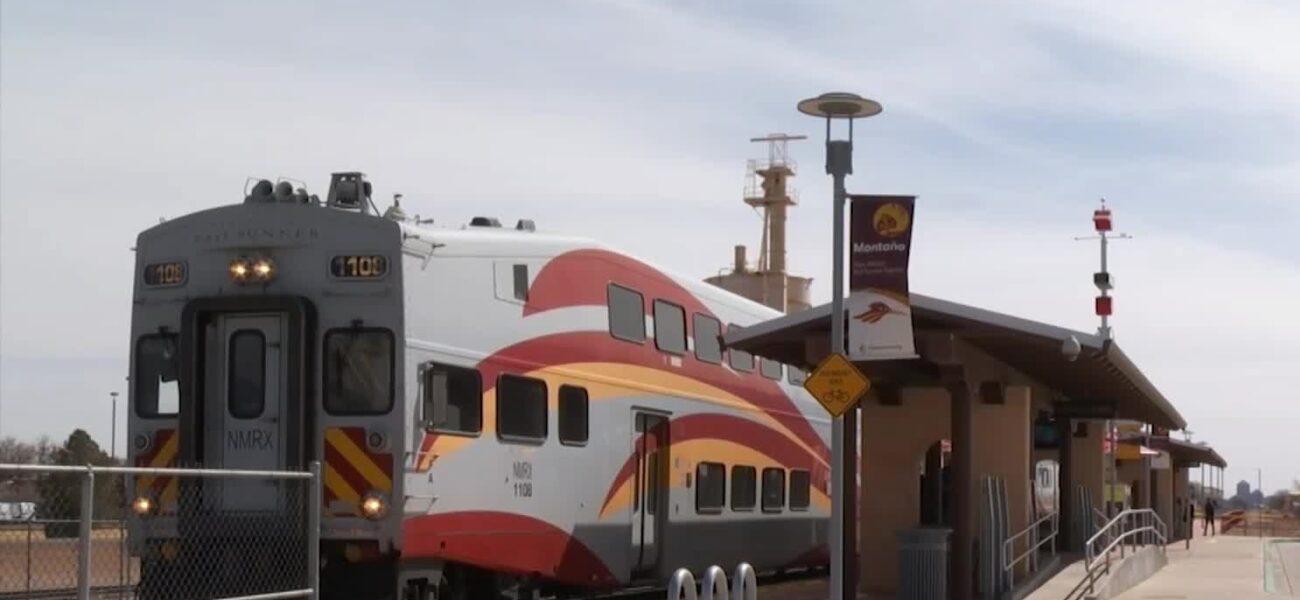
Quiet Wheels, Long Run: New Mexico’s Rail Runner Express Marks Two Decades of Unassuming Success
POLICY WIRE — SANTA FE, N.M. — In an era of fleeting trends and grand, often sputtering, infrastructure ambitions, there’s a certain stubborn charm to the New Mexico Rail Runner Express. It’s...

POLICY WIRE — SANTA FE, N.M. — In an era of fleeting trends and grand, often sputtering, infrastructure ambitions, there’s a certain stubborn charm to the New Mexico Rail Runner Express. It’s celebrating two decades of chugging along this week, doling out commemorative pins to passengers—a low-key fanfare for a service that’s quietly outperformed many of its flashier global counterparts. It didn’t launch with much fanfare, back on July 14, 2006, just a regional train linking two cities, but it’s still here. And that, frankly, says more than any ribbon-cutting ceremony ever could.
It’s easy to dismiss a modest 100-mile commuter rail, especially in a car-obsessed landscape like the American Southwest. But its sheer longevity, its persistent utility, serves as a masterclass in what happens when public services are allowed to simply exist and perform. We’re not talking about a bullet train that promises to reshape continents; we’re talking about reliable steel wheels on steady tracks, morning after morning, evening after evening. Because sometimes, just showing up is the real victory in public policy.
Initially, it was just Santa Fe — and Albuquerque, a logical enough start. Now, it stitches together a 100-mile corridor connecting Belen, Albuquerque, — and the state capital. Over two decades, it’s ferried millions of people. Think about that: millions of trips taken off congested highways. Governor Michelle Lujan Grisham, not one to shy away from highlighting state successes, recently noted, “Twenty years? That’s not just a milestone, it’s a statement. It proves that sustained public investment, even in projects sometimes scoffed at as too regional, absolutely pays dividends. We’re not just moving people; we’re quietly, steadily, greening our economy and easing congestion.” She’s got a point. It’s not a sexy quote, perhaps, but it’s grounded in real-world efficacy.
Its operators claim it’s kept an estimated 17.1 million vehicle miles off New Mexico roads during peak commuting hours, and saved roughly 175,000 gallons of gasoline in the process. Those aren’t Hollywood numbers, sure, but they’re tangible wins. This isn’t a one-off tech startup burning through venture capital; it’s a government-backed workhorse proving that infrastructure, patiently nurtured, pays back in real-world emissions reductions and alleviated gridlock. It doesn’t scream for attention; it simply delivers.
And that’s where the lesson extends beyond the Sangre de Cristos. Consider the often-turbulent landscape of infrastructure development in, say, South Asia. Nations like Pakistan are constantly debating ambitious high-speed rail lines or vast, modern transit systems. Often, these grand visions—backed by billions in foreign investment or domestic debt—struggle with consistent maintenance, funding, or even basic operational reliability post-inauguration. The focus tends to be on the launch, the initial impressive display, rather than the enduring, humdrum necessity of actually running the thing for decades without interruption. What’s often forgotten in the rush for grandeur is the deep, fundamental public service that an unspectacular, but relentlessly consistent, train offers.
📄 POLICY WIRE WHITEPAPER PUBLISHED: PAKISTAN'S NATIONAL SECURITY POLICY PRIORITIES
👉 READ BY CLICKING HERE“The lesson from Santa Fe isn’t about high-speed bullet trains. It’s about reliability. It’s about serving a genuine, consistent need,” posits Dr. Azfar Khan, a theoretical infrastructure economist with an eye on developing markets. “You see countries like Pakistan grappling with grand, often short-lived infrastructure visions. What’s often overlooked is the incremental, yet profoundly impactful, stability offered by a service that just *works*, day in, day out, for decades. That builds real public trust, which is something you can’t buy.” Dr. Khan’s observation neatly sums up the kind of gritty realism that defines enduring policy.
It’s not just about economics, is it? It’s about social fabric, too. Regular commuters form communities, whether they know it or not. They develop habits around a trusted service. The Rail Runner isn’t a mere convenience; for many, it’s a critical lifeline, an antidote to rising gas prices and frustrating traffic jams. Its two decades aren’t just a numerical marker; they’re a testament to its embeddedness within the daily rhythms of New Mexico. And that’s a success story we don’t talk about nearly enough. Not the kind that makes headlines, but the kind that makes life work for everyday folks.
What This Means
The quiet persistence of the Rail Runner Express isn’t merely a local anecdote; it’s a powerful, almost contrarian, policy blueprint. In a global climate where infrastructure development frequently defaults to flashy mega-projects—often beset by cost overruns, delays, and political meddling—New Mexico offers a different path. It’s an argument for steady, localized investment in services that address genuine needs rather than aspiring to global headlines. Economically, this model demonstrates sustainable utility; it mitigates environmental damage not through revolutionary technology but through sheer, long-term uptake. Politically, it showcases how enduring public trust is forged not by initial pomp but by consistent, reliable delivery over time. For nations eyeing significant transit overhauls, especially in regions prone to infrastructure white elephants (hello, some of the projects we’ve seen in the MENA region or parts of Southeast Asia), the Rail Runner’s unassuming milestone should serve as a practical, rather than ideological, reminder: sometimes, the tortoise really does win the race. Its two-decade survival and continued operation underscore that modest ambition, paired with robust execution and long-term public support, can yield far greater returns than projects designed purely for grandiosity. It proves that reliable service is the bedrock of societal functioning, not a mere amenity.