


Shadow Games: How a Pardon Board’s Discretion Undermines Public Trust
POLICY WIRE — Minneapolis, USA — You’d think the quiet hum of state bureaucracy, the kind that churns out paper forms and official decrees, wouldn’t hold much drama. But...

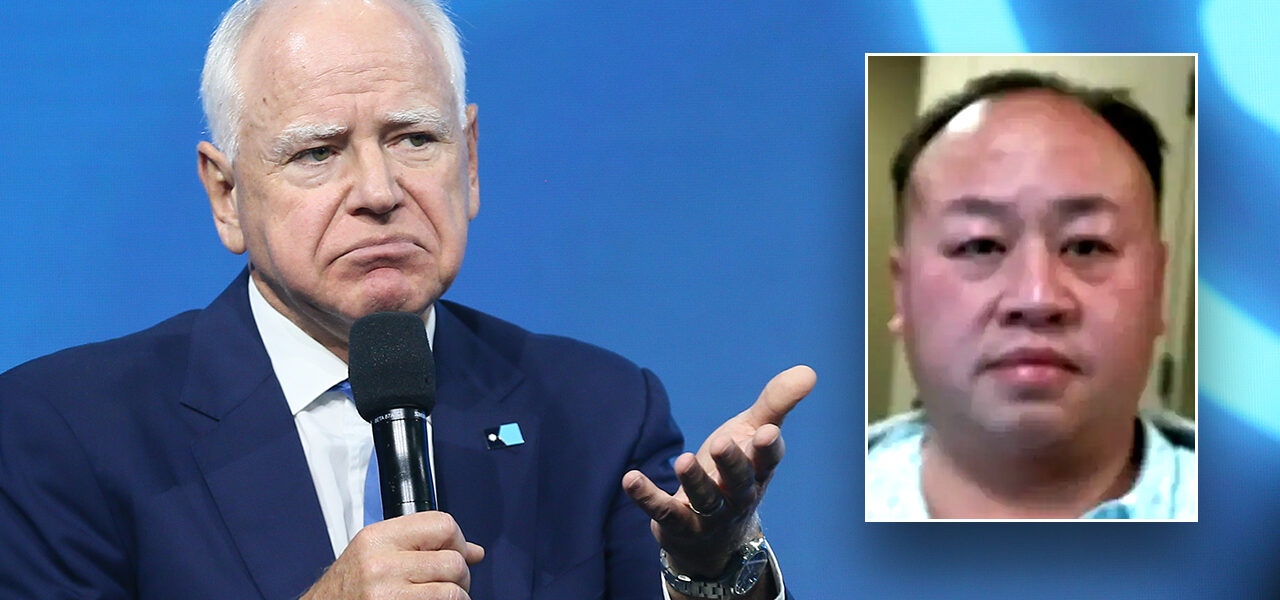
POLICY WIRE — Minneapolis, USA — You’d think the quiet hum of state bureaucracy, the kind that churns out paper forms and official decrees, wouldn’t hold much drama. But sometimes, just sometimes, a tremor beneath the surface reveals a much deeper crack. Recently, that tremor arrived in the form of released documents shedding an unsettling light on a particular Minnesota pardon board decision — specifically, why a panel appointed by Governor Tim Walz saw fit to grant a reprieve to an individual convicted as a repeat child rapist.
It isn’t every day you get to peer into the inner workings of such a consequential act. For years, folks — especially those living on the margins of justice, feeling its heavy boot — have speculated about the precise calculus behind these decisions. Now, we’ve got some official paper, some explanations, if you can call them that. The core reasoning, from what’s been made public, seems to circle back to the inmate’s health. Or perhaps, more cynically, to an assessment of a lack of a future, as the documents apparently claimed: ‘No future’. [QUOTE_PLACEHOLDER]
And there it’s. That phrase, stark — and cold, supposedly justifying what many see as an inexplicable act. What precisely does it mean for a judicial body, especially one charged with the enormous responsibility of clemency, to declare someone has no future? Is it a humane assessment of an irreversible decline, a grim calculation of resources, or something else entirely? But the public, predictably, doesn’t often embrace such nuanced — or perhaps, obscure — explanations when the crime in question is so heinous. It begs the question: Whose future were they talking about, exactly?
The state pardon board, which includes Governor Walz, Attorney General Keith Ellison, and Chief Justice Natalie Hudson, holds considerable sway, and they’ve just gotten an unwilling public peek at how they use it. The mechanisms of mercy, it turns out, can be pretty murky when put under a microscope. Public records often fail to fully explain the depth of these processes, often just giving us glimpses through key phrases that may obscure as much as they reveal. The process, frankly, hasn’t always been the poster child for transparency, leaving advocates and victims’ families in the dark for far too long. They’re left scrambling, trying to make sense of decisions that feel, at best, opaque and, at worst, an affront to justice itself.
Because, let’s be honest, the emotional stakes are through the roof on issues like this. For victims and their families, a pardon for a repeat child molester isn’t just a bureaucratic decision; it’s a fresh wound, a raw reminder of systemic failings. This isn’t abstract policy, it’s shattered lives. And this isn’t the first time such revelations have prompted outrage — and deep mistrust. In many developing nations, where faith in institutions is often already tenuous, such instances of perceived leniency or questionable decisions by high-ranking officials — particularly concerning crimes against children — can lead to widespread unrest, even bringing governments to the brink. Think of Pakistan, where public outrage over alleged corruption or judicial overreach can spill into massive protests, impacting the very stability of the government. The US, with its often-lauded robust legal framework, isn’t immune to these forces, just better at burying the dissent under piles of legalese.
It’s important to remember, too, that judicial systems across the globe grapple with similar tensions between justice, rehabilitation, and public safety. Even in states considered highly developed, a single questionable clemency decision can erode public confidence for years. Data from the Brennan Center for Justice in 2023 indicates that public confidence in the US justice system, particularly at the state level, hovers around 45%, a figure that only tends to dip further when controversial pardons emerge. These aren’t just isolated incidents, but reflections of broader debates about the nature of crime, punishment, and forgiveness.
And what about those subtle signals this sends? Does it suggest a prioritization of prison population management over the severe nature of a crime? Or perhaps a philosophical lean towards a kind of mercy that outstrips public expectations of accountability? One can’t help but wonder if the sheer volume of such cases forces a detached, clinical evaluation, losing sight of the profound human cost. It’s an age-old tension, you know: the individual narrative versus the collective clamor for justice.
📄 POLICY WIRE WHITEPAPER PUBLISHED: PAKISTAN'S NATIONAL SECURITY POLICY PRIORITIES
👉 READ BY CLICKING HEREWhat This Means
The exposure of these documents — though offering only a sliver of context, using phrases like ‘No future’ to explain what would appear on its face to be an exceptionally difficult choice — does far more than just shed light on one state’s pardon system. It’s a stark reminder of the fragile balance between judicial discretion — and public accountability. Politically, Governor Walz — and the other board members will undoubtedly face renewed scrutiny. Voters have long memories, especially when child safety is concerned. It doesn’t matter what the board thought or felt, the perceived optics of this decision will hang around like a bad smell.
Economically, this sort of decision can, over time, subtly degrade civic trust. A system perceived as arbitrary, or one that seemingly undervalues victims’ concerns, can discourage participation in democratic processes, reduce tax compliance, and generally create a less stable social environment. It creates an environment where some segments of the population, often the most vulnerable, feel abandoned by the very institutions meant to protect them. The repercussions extend beyond the immediate outrage, contributing to a deeper, more corrosive skepticism about governance itself.
Internationally, especially within countries where human rights advocacy is active, decisions like these become talking points, fuel for critics who paint the Western justice system as hypocritical or flawed. For emerging democracies or nations like those in South Asia or the broader Muslim world, striving to build robust, trustworthy legal frameworks, observing such controversies in established systems can complicate their own reform efforts. It suggests that even the most advanced systems aren’t immune to deeply unpopular — and potentially unjust outcomes. Ultimately, what starts as a localized act of clemency becomes a global anecdote in the ongoing, fraught conversation about justice, power, and how we, as a society, protect our most vulnerable.
These revealed justifications aren’t going away quickly. But maybe, just maybe, their exposure can force a much-needed, unflinching re-evaluation of just what sort of future these boards are trying to build. One can hope, anyway.