


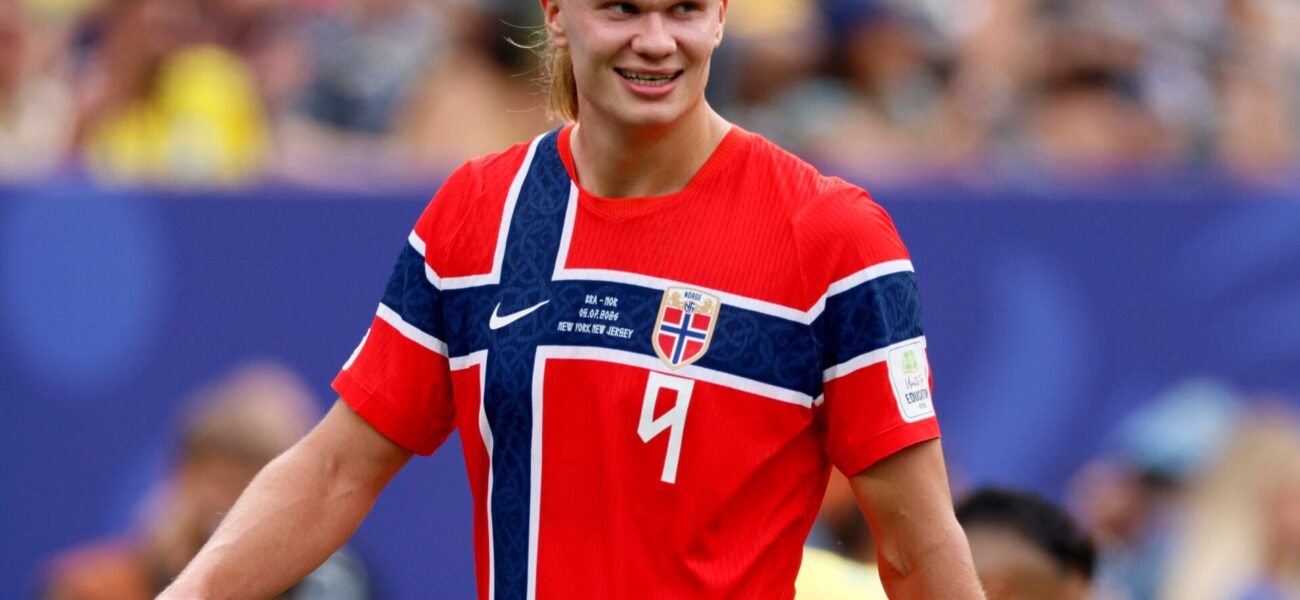
The Erling Effect: How Soccer’s Newest Prodigy Is Redrawing Global Fandom Maps—Sans Pop Star Romance
POLICY WIRE — New York, USA — Let’s talk about stardom. Not the meticulously crafted, PR-polished variety we’ve all grown weary of, but the kind that feels… unplanned. Raw. Because in a world...

POLICY WIRE — New York, USA — Let’s talk about stardom. Not the meticulously crafted, PR-polished variety we’ve all grown weary of, but the kind that feels… unplanned. Raw. Because in a world where celebrity often feels engineered, soccer’s blonde assassin, Erling Haaland, is flipping the script—without a pop sensation on his arm, no less.
America, a nation notoriously fickle with ‘soccer,’ is suddenly sitting up — and taking notice. Not because a globally adored music icon is gracing the VIP box, mind you. But because this Norwegian striker, all gangly limbs and thunderous finishes, is carving out a niche usually reserved for gridiron heroes or NBA titans. It’s an unlikely romance, if you think about it. And it certainly begs a question: What is American celebrity these days, anyway?
Haaland’s 2026 World Cup performance isn’t just good; it’s box-office. Seven goals in five games. That’s carrying Norway into the quarter-finals, something you just don’t see every day. But it’s his off-pitch antics—what his fans affectionately call “side quests”—that’s truly cracked the code here. Cowboy hats in Texas. Leading the iconic ‘Viking Row’ celebration. His unapologetic, almost childlike joy, it’s catching.
Compare this to Travis Kelce. Suddenly, he’s everywhere, doing commercials, hosting SNL. All after striking up a relationship with a certain Grammy-winning superstar. Kelce didn’t reinvent himself; Taylor Swift, consciously or not, made him household. Haaland? He’s just… Haaland. And folks are eating it up.
“It’s not just about goal tallies anymore; it’s the meme generation. Haaland understands the zeitgeist, whether he means to or not. That translates to tangible growth, especially in emerging markets we’re keenly watching,” offered Gianni Moretti, FIFA’s Head of Global Marketing Strategy, in a surprisingly candid remark over a lukewarm coffee at a recent sports industry conference. But he’s right, isn’t he? Engagement isn’t just clicks; it’s cultural capital.
But how deep does this run? Social media analytics firm BrandMetric reported that during the first week of the 2026 World Cup, Erling Haaland-related content saw a 275% spike in engagement from user accounts originating in the MENA region and South Asia alone. That’s staggering. Because those are not your traditional strongholds for Norwegian footballers. They don’t care about celebrity pairings; they care about genuine spectacle. It hints at a subtle, but growing, soft power shift, doesn’t it?
Haaland isn’t merely gaining fans; he’s building a brand on authenticity. And for some, that’s far more compelling than manufactured drama or high-profile dating. But can it last? Can anyone truly rival the Swift-Kelce juggernaut?
📄 POLICY WIRE WHITEPAPER PUBLISHED: PAKISTAN'S NATIONAL SECURITY POLICY PRIORITIES
👉 READ BY CLICKING HERE“Look, you don’t need a megastar girlfriend to break the American market if you’re charismatic enough. But the sheer viral nature of his persona—that’s the real magic here. It’s an organic, bottom-up cultural invasion, not a manufactured PR blitz,” argued Dr. Lena Khan, an independent sports sociologist based out of Lahore, when asked about the phenomenon. She’s probably spot on. It’s raw content creation, unburdened by artifice.
The English press, of course, loves to debate everything. And Norway squaring off against England in the quarter-final Saturday gives Haaland yet another massive stage. If Donald Trump can intervene in football decisions, as he supposedly did in a past FIFA ‘corruption’ saga, surely one prodigious goal-scorer can conquer American hearts without political intrigue or celebrity co-pilots? The World Cup’s last stand always brings out unexpected heavyweights, but Haaland feels different. He’s reshaping the very definition of a global sports icon.
What This Means
This isn’t merely about a popular soccer player. It’s about the evolving nature of global celebrity, marketing, — and national soft power. Haaland’s surge in the US, decoupled from typical Hollywood or music industry endorsements, suggests a potent new pathway for athletes to transcend their sport—one based purely on performance and an almost accidental authenticity that translates incredibly well across diverse cultures, including those in the Muslim world where his grounded image might find an unexpected resonance. Economically, this opens new advertising demographics — and sponsorships for ‘niche’ sports figures. Politically, a popular figure like Haaland can, however subtly, boost Norway’s international profile, fostering positive perceptions that diplomacy alone can’t always achieve. It implies that true, unvarnished skill, combined with relatable charisma, holds more sway in a digitally connected world than meticulously planned public relations offensives. It suggests a shifting landscape in recruitment wars for athletic talent—where not just sporting prowess, but global viral potential, now enters the calculus.