

The Global Pitch: How Everton’s Leaked Kit Underscores Football’s Commercial Labyrinth
POLICY WIRE — London, UK — It wasn’t the thunderclap of a record-breaking transfer, nor the resignation of a scandal-plagued executive, that truly illuminated the opaque machinery of modern...

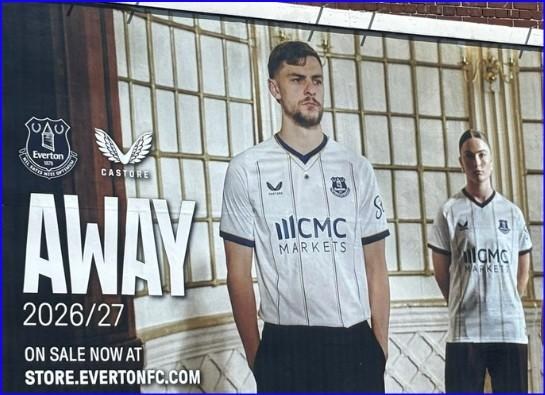
POLICY WIRE — London, UK — It wasn’t the thunderclap of a record-breaking transfer, nor the resignation of a scandal-plagued executive, that truly illuminated the opaque machinery of modern football this week. No. It was a partially unfurled billboard in Liverpool, inadvertently (or perhaps, cunningly) exposing Everton Football Club’s away kit for the 2026/27 season.
An administrative mishap? Or a precisely orchestrated viral gambit in an era where digital buzz reigns supreme over traditional advertising? This little blip, this fleeting glimpse of yet-to-be-released polyester, actually tells you more about the dizzying intersection of sports, commerce, and media manipulation than any official club statement ever could. It’s not just about what colors Everton will wear in two years; it’s about the relentless commodification that dictates everything from shirt sales to geopolitical maneuvering on the world stage.
Because, make no mistake, the business of football today isn’t played out on grass. It’s negotiated in boardrooms, streamed on screens from Mumbai to Merseyside, and priced by analysts poring over engagement metrics, not just goal statistics. And a club like Everton, perpetually dancing on the tightrope of financial fair play regulations, embodies this precarious reality better than most. They’re chasing perceived value in every corner, even down to a jersey whose debut is still two years out.
Consider the flurry of reports accompanying this digital ‘reveal.’ There’s talk of a potential £40 million raid for Tottenham’s Djed Spence, a sum that, while astronomical to the average fan, barely raises an eyebrow in today’s inflated market. And Juventus’ Douglas Luiz? Another significant outlay. These aren’t just transfers; they’re capital expenditures, calculated bets on future returns – in revenue, in prestige, perhaps even in avoiding relegation from England’s lucrative Premier League. They’ve gotta find ways to pay the bills, don’t they?
Then there’s the ongoing saga of Jack Grealish’s ‘unfinished business’ with the Toffees. A quaint sentiment in an age where player loyalty often feels like a forgotten antique. Such narratives are oxygen to the beast, feeding social media algorithms and keeping a club, even one frequently described as perennially underperforming, squarely in the global conversation. That kind of sustained digital chatter has tangible value; it drives engagement, which in turn attracts lucrative sponsorships, which means more money. It’s a closed loop, endlessly self-referential.
“We’re operating in a highly competitive ecosystem where every commercial decision, every transfer negotiation, is meticulously scrutinized,” remarked Dr. Adrian Fynes-Clinton, Everton’s Director of Football Strategy (and a man surely tired of the current transfer window’s shenanigans). “But we aren’t just looking at immediate wins. We’re building a global brand. That takes foresight, a sharp eye for emerging markets, and yes, sometimes a bit of creative marketing.” He paused, almost certainly thinking about that damned billboard. “It’s never a quiet day in this office, I can tell you.”
And it truly isn’t. The women’s team captain, Megan Finnigan, inked a one-year extension. An unsung win for continuity, one might think, but also a stark reminder that investment in women’s sports, while growing, often operates on a vastly different financial scale, a more modest economy within the overarching behemoth. The football market itself, according to a recent report by Deloitte’s Sports Business Group, crossed an estimated $60 billion in annual global revenue last year, primarily driven by broadcast deals and commercial partnerships.
For those clubs trying to punch above their weight, these figures represent both opportunity — and immense pressure. The gulf between the ultra-rich ‘super clubs’ and the striving outfits like Everton is widening, forcing the latter to innovate, or simply gamble harder. This pressure cooker environment affects everything, right down to scouting for players like Tyler Dibling, whose potential is debated online even before he’s truly established himself. Or looking to capitalize on young talents like Tyrique George from Chelsea, hailed by World Cup winner Emmanuel Petit, an astute observer of the financial chess game behind the beautiful game.
📄 POLICY WIRE WHITEPAPER PUBLISHED: PAKISTAN'S NATIONAL SECURITY POLICY PRIORITIES
👉 READ BY CLICKING HEREBut the true policy implication extends far beyond the English Premier League. This intricate web of finance — and fame casts a long shadow. Countries in South Asia, including Pakistan, contribute enormously to the global football viewership – a vast, often untapped demographic yearning for European sporting spectacle. Their enthusiastic consumption of matches translates directly into advertising revenues and brand exposure for these clubs, making them silent but critical stakeholders in football’s commercial machine. The potential for sponsorships, for merchandise sales in cities like Lahore or Karachi, informs many an English club’s global strategy. It’s not just about tickets sold locally, you see.
Professor Anya Sharma, an expert in global sports economics, noted, “What you’re seeing isn’t just sports news; it’s an early warning system for market shifts. Clubs are becoming multi-national entertainment conglomerates, heavily reliant on a delicate balance of on-field success, savvy marketing, and global brand appeal. And when a shirt design leaks on a billboard, it tells us something about the frenzied quest for eyeballs and the blurring lines between news and promotional stunt.” Her observations, often cutting, always highlight the bottom line.
But how do these relatively localized decisions impact larger policy? Think of the scrutiny on foreign ownership, the financial regulations imposed by UEFA to prevent clubs from spending themselves into oblivion, or the political soft power wielded by nations investing heavily in European football. These aren’t just games; they’re strategic assets. What kind of political influence does an anonymous, globally recognized brand like Everton gain simply by being on screens across the Muslim world? The subtle power of cultural ubiquity, I’d say. And because fans around the globe want a piece of that action, governments sometimes even bend local media laws for broadcasting rights.
What This Means
The saga of Everton’s potential transfer targets — and accidental kit reveals far more than just transfer gossip. It’s a microcosm of the intense commercial pressures shaping modern sports, pushing clubs to extremes of marketing and financial maneuvering. Economically, it signifies the ongoing globalization of football’s revenue streams, where brand perception in distant markets like South Asia can hold as much weight as local ticket sales. It underlines the delicate balance between competitive aspiration and financial solvency, a perpetual policy challenge for sporting federations globally.
Politically, the constant quest for global visibility through such everyday events contributes to a subtle but significant form of soft power projection. Clubs like Everton, through their media footprint, become cultural ambassadors, creating a bridge for engagement, sometimes even preceding traditional diplomatic efforts. The ‘leak’ isn’t just about an ugly (or attractive) jersey; it’s a symptom of an industry in relentless pursuit of audience, capital, and influence, reshaping policy discussions from corporate governance to international relations.