

Brussels’ Bitter Brew: Kallas Tests EU Cohesion With Israel Sanctions Push
POLICY WIRE — Brussels, Belgium — It’s a tale as old as the European Union itself: a looming crisis, a sudden call for ‘extraordinary’ action, and the inevitable fracturing of a...

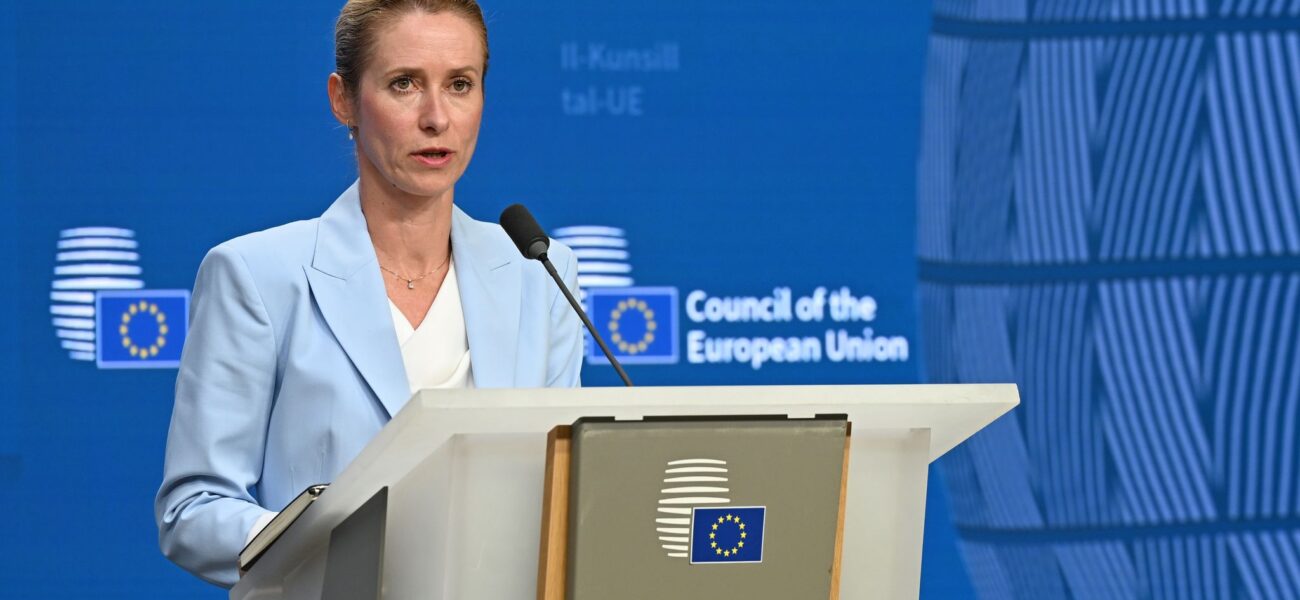
POLICY WIRE — Brussels, Belgium — It’s a tale as old as the European Union itself: a looming crisis, a sudden call for ‘extraordinary’ action, and the inevitable fracturing of a twenty-seven-nation consensus before the first agenda item is even read. This week, Estonian Prime Minister Kaja Kallas threw a rather hefty stone into the still-somewhat-murky waters of Brussels diplomacy, floating the idea of an emergency confab to discuss – wait for it – sanctions against Israel. Because, you know, unanimity on such matters is generally Europe’s strong suit.
Her suggestion wasn’t entirely unexpected. After all, the rumbling dissatisfaction with Israeli actions in Gaza and the West Bank has grown steadily louder, particularly among some of the bloc’s more progressive members and certainly on the streets of its capitals. But the idea of punitive measures? That’s the stuff of genuine intra-European hand-wringing. It pits the old guard’s unwavering support for Israel, often rooted in historical guilt and security concerns, against a newer wave of outrage over humanitarian catastrophes and perceived violations of international law. It’s a mess, plain and simple.
Kallas, known for her staunch adherence to international legal norms (a posture shaped, no doubt, by Estonia’s own complicated past), framed her proposal as a question of credibility. “We can’t just issue condemnations,” Kallas reportedly remarked to a small group of journalists, her tone serious, her jawline sharp. “If the international legal framework means anything, if our principles mean anything, then there must be consequences. An extraordinary session simply allows us to lay all options on the table—it’s a dialogue we can’t shy away from.” But dialogue, in this instance, frequently means shouting past each other in multiple languages until everyone’s exhausted.
Because that’s the rub, isn’t it? Europe can barely agree on a unified stance concerning its own internal agricultural policy, let alone on how to chastise a contentious, well-armed nation in a region as incendiary as the Middle East. Some nations, like Hungary, openly bridle at any talk of restrictions. “Europe has enough problems without adding new ones from a region we don’t fully understand,” Prime Minister Viktor Orbán declared, likely from behind a robust glass of Pálinka, echoing a familiar refrain. “Our friendship with Israel is strong, built on shared values. Sanctions, frankly, solve nothing — and punish the innocent. We don’t need another grand, symbolic gesture; we need pragmatism.” That’s one word for it. Another might be ‘status quo at all costs.’
And so, Kallas’s seemingly principled stand morphs into yet another existential test for Brussels. Can this bloc—proud champion of multilateralism and human rights—ever truly act as a single, decisive foreign policy entity? Or will it always devolve into a cacophony of national interests, particularly when geopolitical hot potatoes get tossed around? Historically, the latter option usually wins. This situation’s no different from the internal divisions around issues like US policy towards Iran; the bloc speaks, if at all, with a severely muffled voice.
From the bustling souks of Lahore to the high-rise offices of Islamabad, such EU deliberations are watched with a weary mix of expectation and skepticism. In many parts of Pakistan and the broader Muslim world, there’s a widespread perception that Western powers, including the EU, apply a double standard to Israel, often granting it exemptions from the kind of criticism or punitive measures leveled against other states. This perceived imbalance fuels anti-Western sentiment — and complicates diplomatic efforts. For instance, the European Commission reported that the EU remains Israel’s largest trade partner, with total trade in goods reaching over €38 billion in 2022—a hefty sum that makes any talk of meaningful sanctions instantly more complicated for Brussels.
📄 POLICY WIRE WHITEPAPER PUBLISHED: PAKISTAN'S NATIONAL SECURITY POLICY PRIORITIES
👉 READ BY CLICKING HEREIt’s not just about economics, though that’s certainly part of the hesitation. But it’s also about alliances, about history, about what each nation perceives as its strategic best interest. Some worry about further destabilizing an already volatile region; others, quite cynically, just don’t want to be the ones to take the first difficult step. And that, dear reader, is the classic EU conundrum in microcosm.
What This Means
Kallas’s proposal, however unlikely to achieve widespread agreement, still serves a purpose. It drags the issue of Israel’s actions — and the EU’s complicity or inaction — back into the harsh glare of official scrutiny. Politically, it deepens the divide within the bloc between its hawkish eastern members and its more dovish western or southern constituents. Economically, while a full trade embargo is almost unthinkable given the global market dynamics at play, targeted sanctions against individuals or specific entities involved in settlement expansion could emerge. Such actions, even if largely symbolic, would carry significant diplomatic weight and could further strain EU-Israel relations, possibly even influencing Israel’s standing with other international partners.
For the Muslim world, and particularly countries like Pakistan, the outcome of this European soul-searching will be viewed through a familiar lens. A robust EU response to perceived Israeli transgressions could, perhaps, mend some fences of trust. Conversely, a predictable retreat into inaction would simply reinforce the existing narrative of Western hypocrisy, widening an already chasmic credibility gap. It’s not just Israel on trial here; it’s Europe’s very ability to live up to its own much-vaunted values. The jury, naturally, is still out. And they’ll probably be out for a long, long time.