

Britain’s Inferno: As Wildfires Scorch and Warnings Mount, Who Pays the Piper?
POLICY WIRE — London, UK — You know, Britain, bless its perpetually drizzly heart, wasn’t exactly designed for the kind of oven-baked inferno it’s cooking in right now. Forget the quaint,...

POLICY WIRE — London, UK — You know, Britain, bless its perpetually drizzly heart, wasn’t exactly designed for the kind of oven-baked inferno it’s cooking in right now. Forget the quaint, damp-proof cottages — and those charming, often perpetually waterlogged cricket pitches. They’re buckling. Literally. And I’m not just talking about tarmac roads getting soft enough to leave tire tracks; the country’s collective psyche feels like it’s melting right along with the asphalt. We’re staring down the barrel of nearly two dozen major wildfires, and frankly, nobody seems quite ready for this new, scorching normal.
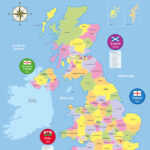
It’s not just a few parched patches. Nineteen active wildfires, stretching from the fringes of Greater London to the Scottish Highlands, are tearing through fields, woods, and precious peatlands. That’s more than twice the usual summer caseload for many regions, emergency services tell me off the record. And they’re battling a heatwave that just keeps on giving—a perverse gift, if you ask any firefighter right now. Public health advisories are coming in thick and fast, urging folks to stay indoors, drink water, and generally try not to spontaneously combust. You’d think this was a dry, scrubby corner of Southern Europe, wouldn’t you? Not old Blighty.
Because let’s be straight, our infrastructure isn’t geared for this. The health service, already stretched thin, now faces an onslaught of heat-related illnesses. Older people, young children, folks with respiratory problems—they’re bearing the brunt. But even healthy young people are struggling, finding workplaces unbearable — and public transport a moving sauna. “We’ve known this was coming, but preparing for it? That’s a different beast entirely,” said Dr. Anya Sharma, a senior public health official I spoke with yesterday. “The public health burden is tremendous. It’s not just the direct heatstrokes; it’s the exacerbation of existing conditions, the mental toll, the stress on our front-line staff. We’re in reactive mode, but we can’t keep just reacting.”
And the politicians? They’re doing their dance. Environment Secretary Evelyn Croft, usually a picture of studied calm, admitted in a terse press briefing that the scale of the emergency was “unprecedented” for a modern UK summer. “We’re absolutely committed to bolstering our resilience,” she offered, rather blandly. “But this isn’t a matter of simply more hoses; it’s about a long-term strategy for a fundamentally changed climate.” A long-term strategy, mind you, that feels perpetually just over the horizon, always discussed in abstract rather than concrete, immediate steps.
The irony, of course, is that while Britain swelters, nations accustomed to such extreme conditions are looking on with a sort of weary familiarity. Take Pakistan, for instance, a nation that routinely experiences temperatures that make Britain’s current heatwave look like a cool breeze. They’ve developed ingenious, albeit often informal, ways of coping: sprawling family homes with shaded courtyards, extensive use of water for cooling, and a rhythm of life that adapts to the midday sun. Their problems are often about poverty compounding climate, not an unprepared national architecture. Here, it’s more like a wealthy, developed nation playing catch-up, rather awkwardly, with global climate trends.
It’s an expensive lesson, too. The economic toll of these fires and the prolonged heat isn’t just in scorched earth; it’s in lost productivity, healthcare costs, and — eventually — the price of rebuilding. Wildfires alone, according to a recent government report citing National Fire Chiefs Council data, already cost the UK upwards of £100 million annually in suppression and related damage, and that figure is set to balloon with more frequent, more intense blazes. But who counts the cost of a society struggling to adapt, a population simmering under unrelenting sun? The financial institutions, one expects, will be making their assessments soon enough. Much like the hard business of holding onto glory in football, managing national resources against these challenges is a brutal economic reality.
This whole episode makes you wonder, doesn’t it, about the future? The projections aren’t exactly rosy. They talk about more frequent, more severe heatwaves. Dry summers. Fire seasons. Britain, a country whose identity is arguably intertwined with its green and pleasant lands, could be headed for a very different future, one where emergency services are perpetually overwhelmed, and summer vacations mean escaping your own country’s heat, not enjoying it.
What This Means
The current confluence of wildfires and extreme heat isn’t just a weather event; it’s a stark indicator of Britain’s deep vulnerability to climate change and the profound inadequacy of its current adaptive strategies. Politically, this creates a lose-lose scenario. The government faces mounting pressure to deliver concrete action, but long-term climate policies are slow to yield immediate results, and short-term fixes feel insufficient against the scale of the problem. This crisis is quickly shifting from an environmental issue to a front-and-centre public safety — and economic one. Expect more vocal demands for funding, better equipment, and clearer preparedness plans for local authorities, fire services, and the NHS. Economically, the hit will be felt across multiple sectors: agriculture, insurance, tourism, — and even urban planning. Insurers are already factoring increased climate risk into premiums, potentially squeezing businesses and homeowners alike. a protracted heat season impacts worker productivity significantly—a silent drain on the national purse. The underlying cracks in societal resilience, previously hidden by Britain’s traditionally temperate climate, are now glaringly exposed. If left unaddressed, these climatic shifts won’t just redraw the British landscape; they’ll fundamentally redefine its social contract and its global standing. Because, you know, even if you put a billion into recovery, like Europe often considers for distant crises, the perpetual rubble still remains (not that these are direct comparisons, but the scale of rebuilding is daunting everywhere). It’s a costly business, indeed.