

Desert Dreams, Global Diamonds: New Mexico’s Young Arms Enter MLB’s Brutal Economic Arena
POLICY WIRE — Albuquerque, N.M. — It’s a brutal numbers game, really. Forget the crack of the bat or the roar of the crowd for a moment; the MLB draft, for all its pomp, is a high-stakes gamble...

POLICY WIRE — Albuquerque, N.M. — It’s a brutal numbers game, really. Forget the crack of the bat or the roar of the crowd for a moment; the MLB draft, for all its pomp, is a high-stakes gamble wrapped in hope and fueled by astronomical — yet fleeting — prospects. For a select few young men from New Mexico, this year, that brutal arithmetic became their immediate reality.
While the headlines crow about potential fortunes, the sobering truth often gets lost in the celebration. For every phenom who inks a multi-million-dollar deal, legions vanish into baseball’s minor league purgatory, their dreams eventually giving way to day jobs. But that didn’t stop a contingent of desert talent from hearing their names called in the 2026 MLB Draft, pushing New Mexico onto the scouts’ radar in a season where global scouting networks are increasingly casting their nets wider than ever before.
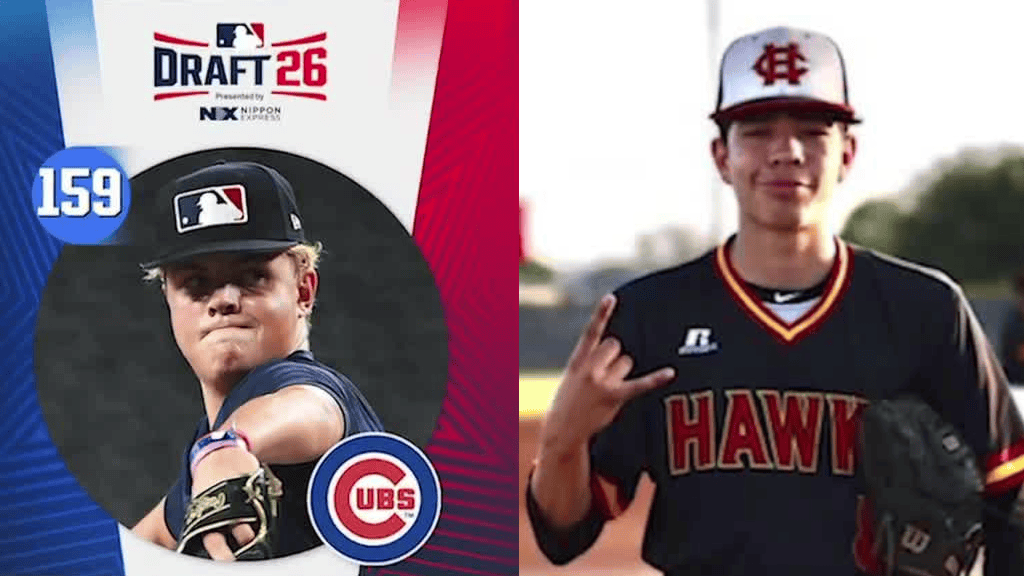
Take Dylan Blomker, for instance. La Cueva High’s ace, plucked by the Chicago Cubs in the fifth round, 159th overall. They’re projecting his signing bonus north of $441,000, which, let’s be real, is life-altering money for most teenagers. And, you know, it’s not nothing. The kid had a stellar run, going 8-1 with a tidy 1.99 ERA in his final year, racking up 113 strikeouts in just 53 innings. Blomker’s not messing around; he’s ditching college for the pro grind right away, which speaks volumes about the perceived immediacy of this opportunity. It’s a calculated risk, of course. For all the fanfare surrounding high school picks, just under 1 in 5 draftees actually reach the major leagues, according to a 2015 study by Insider.com tracking draft success over 50 years. That’s a long shot.
Then there’s Jack Byers, another high school arm, this time from Artesia, picked by the Detroit Tigers in the 17th round. He helped lead his Bulldogs to a Class 4A State Championship game appearance, boasting a 7-1 record — and a 1.67 ERA. He fanned 89 batters in 46 innings. His path, though, isn’t quite as clear-cut as Blomker’s. Byers has a commitment to the University of Arizona. He’ll have to weigh the guaranteed college experience against a lower-round professional offer — a common crossroads where the short-term cash meets long-term education. Sometimes, these decisions turn less on athletic promise and more on the kind of strategic financial planning that would make any venture capitalist nod.
The Tigers weren’t done with New Mexico, snagging New Mexico State University pitcher Jack Turner in the 10th round. His approximate slot value? Around $193,000. He wasn’t quite as dominant in college as the high schoolers were in their respective leagues, but the scouts saw something there across his five wins and 61 strikeouts in 58 innings.
And what about the ones who’ve already taken a bite of the college apple? Santiago Garcia, a former Centennial High alum who bounced from LSU to Oregon, got a call from the Toronto Blue Jays in the 12th round. He’s got some pro seasoning already, tallying 75 strikeouts in 52 collegiate innings with four wins — and six saves. It’s an interesting arc, hinting at the circuitous routes many prospects take.
📄 POLICY WIRE WHITEPAPER PUBLISHED: PAKISTAN'S NATIONAL SECURITY POLICY PRIORITIES
👉 READ BY CLICKING HEREBut it’s not just the elite universities sending players. Cooper Corkrean, pitching for the hometown University of New Mexico Lobos, was taken by the Kansas City Royals in the 18th round. He showed promise, earning a spot on the All-Mountain West Second Team this past season, sporting a 6-2 record. These aren’t just names; they’re investments, commodities in the grand, global ballet of athletic procurement. As the geopolitics of talent acquisition expand, baseball organizations, much like European soccer clubs scouring academies in Africa or South America, are increasingly looking beyond traditional hotspots.
Governor Michelle Lujan Grisham (D-NM) didn’t mince words. “These young men aren’t just playing a game; they’re embodying the fighting spirit of New Mexico,” she told Policy Wire. “Their success sends a clear message: we’ve got talent, grit, and the capacity to produce world-class athletes, whether it’s in rural towns or our bigger cities.” She believes this showcases New Mexico’s growing profile.
Meanwhile, in an interview from MLB headquarters, MLB’s Vice President of Player Development, Alex Rodriguez (not *that* one, but a different, equally well-spoken executive), noted, “Our scouting apparatus is more sophisticated than ever. We’re not just looking at the US and Latin America; we’re establishing pipelines in Europe, Asia, and even exploring nascent interest in places like Pakistan. The idea is to find athletic raw material, wherever it exists, and New Mexico, often overlooked, clearly has that.” This holistic view implies a competitive landscape where regional origin matters less than sheer, unadulterated ability.
What This Means
This handful of New Mexico draftees represents more than just a good recruiting year for a traditionally less-scrutinized state; it’s a testament to the hyper-localized, yet globally connected, nature of professional sports scouting today. Policy-wise, states like New Mexico could leverage this sort of visibility into enhanced youth sports funding or even small economic development initiatives, creating local industries around athletic training and talent incubation. It won’t turn Albuquerque into a global economic powerhouse overnight, of course. But it does signal that talent, like any valuable resource, is increasingly found and extracted from corners once considered peripheral. It’s a localized win in an increasingly globalized sport, where the investment isn’t just in the player, but in the long-term diversification of the talent pool itself — a strategy that mirrors national efforts to secure resources from often-untapped regions worldwide. The players are simply the most visible assets in this intricate, profitable equation.