


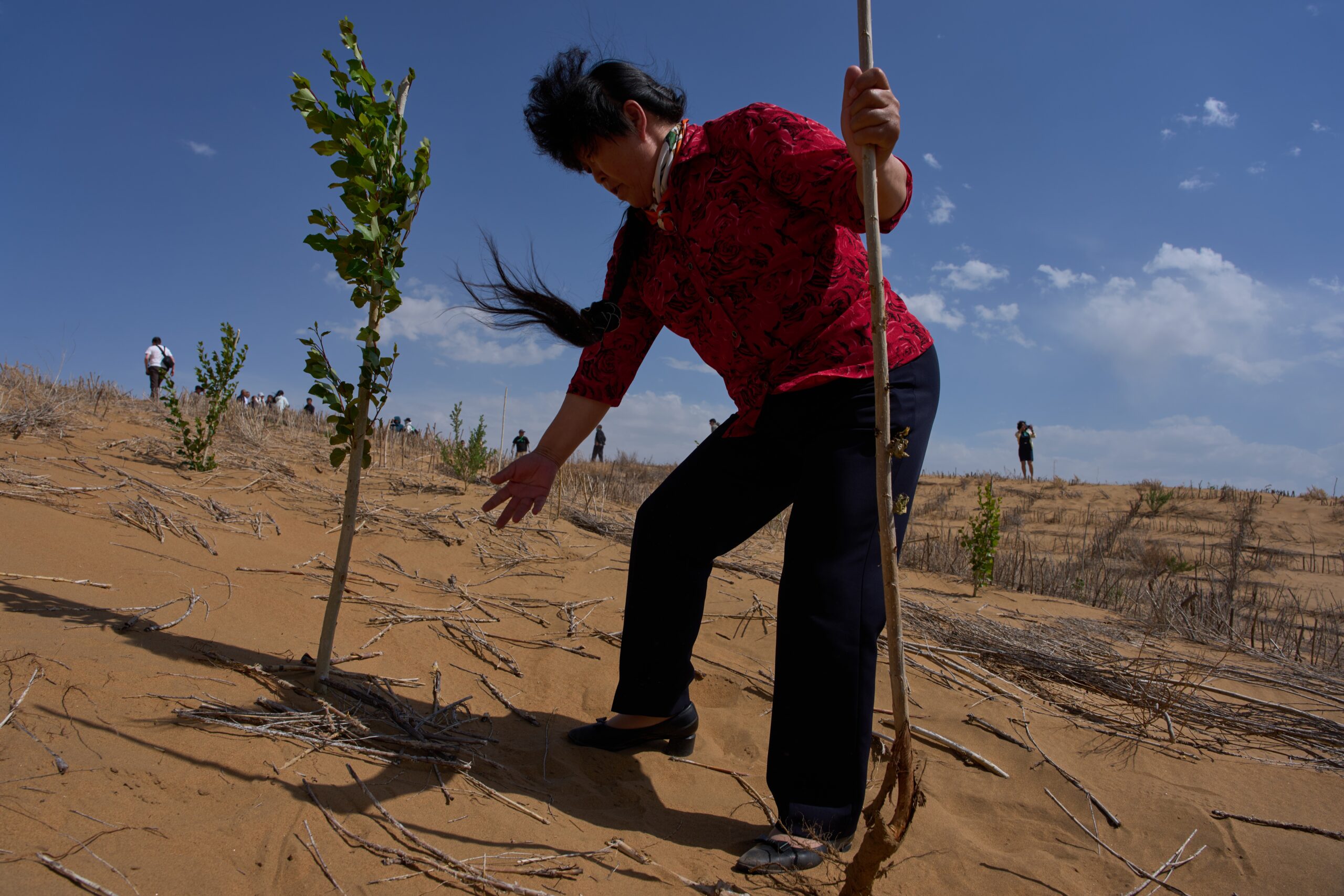
Beijing’s Arboreal Ambition: ‘Green Wall’ Reimagines an Old Battle Against Nature
POLICY WIRE — Beijing, China — Not every great wall keeps invaders out. Sometimes, it battles sand. China’s audacious project to plant a green barrier—an immense forest stretching thousands of...

POLICY WIRE — Beijing, China — Not every great wall keeps invaders out. Sometimes, it battles sand. China’s audacious project to plant a green barrier—an immense forest stretching thousands of kilometers—aims to push back the encroaching deserts that menace its northern heartland. It’s a grand vision, a modern reimagining of ancient defense, but Mother Nature—she’s got a stubborn streak.
For decades, this massive ecological undertaking, popularly dubbed the [QUOTE_PLACEHOLDER] has poured billions into planting trees, hoping to create a biological bulwark against relentless desertification. And in some areas, the results are genuinely stunning. Local reports often laud what seem like miraculous transformations, turning barren lands into burgeoning forests. It’s a compelling narrative—human will bending the natural world to its design, quite literally greening the future.
But the story isn’t all blooming trees — and green shoots. The project has had its critics, particularly scientists who’ve watched Beijing’s sometimes brute-force methods with a discerning eye. They’ve long cautioned that planting the wrong trees in the wrong places can do more harm than good, draining precious groundwater and ultimately failing to establish sustainable ecosystems. Think of it: massive monocultures struggling for water in already arid regions. It’s a bit like building a skyscraper on shifting sand—looks impressive, but the foundations are a bit dicey.
Even with official reports trumpeting success, those in the know aren’t popping champagne corks just yet. [QUOTE_PLACEHOLDER] Some of the scientific community keeps a cautious outlook, suggesting the fight is far from over, despite Beijing’s claims of triumph over the advancing dunes. It’s easy to declare victory, but desert ecosystems—they don’t read press releases.
The government’s long-term goal for the initiative, launched in 1978, has been pretty mind-boggling: planting approximately 35 million hectares of new forest. That’s an area roughly the size of Germany. Now, recent analysis published in Nature Sustainability indicates that a significant portion of these new forests are not doing as well as anticipated, with a quarter of new plantings dying off within a year. A quarter! That’s like a quarter of your carefully budgeted savings just vanishing. It means we’re perhaps not seeing a complete solution, more like an ongoing, extremely expensive tug-of-war.
These massive afforestation projects, for all their good intentions, face an existential paradox. You can plant millions of saplings, but without addressing the deeper issues—climate change, unsustainable agricultural practices, the inherent aridity of certain regions—it’s just a stopgap, isn’t it? It’s like putting a band-aid on a gushing wound; it might look tidier, but the problem’s still there, beneath the surface. For countries like Pakistan, grappling with its own encroaching deserts, and with China being a primary regional influencer, lessons from this grand experiment are crucial. China’s techniques, its successes, and its very public challenges, can certainly inform Pakistan’s own BSM (Billion Tree Tsunami) initiative, which attempts to fight desertification in a similar fashion. One wonders what exchanges on soil science — and indigenous species selection happen behind closed doors. Because, let’s be honest, we’re all in this together, facing global climate weirdness.
And then there’s the sheer human cost, or at least the human effort. Thousands of people, many of them ordinary citizens, have been mobilized over decades to plant trees. It’s a remarkable testament to collective action, even if the strategic direction remains a topic of scientific debate. But sheer human grit — and impressive numbers don’t necessarily guarantee long-term ecological stability.
What This Means
The Beijing regime has invested considerable political capital, not to mention literal capital, into its ‘Green Great Wall’. The symbolism alone—of an authoritarian state marshalling resources to tame nature—is powerful, both domestically and internationally. Politically, declaring victory against desertification fits a national narrative of competency and control, essential for internal legitimacy. Economically, a stable agricultural belt means less migration, more food security, and potentially new ecological industries. But the scientific caveats, those pesky realities about hydrology — and biodiversity, chip away at this gleaming facade.
Should the project falter, or worse, exacerbate water scarcity in an already parched region, it wouldn’t just be an ecological setback. It could turn into a public relations nightmare, undermining China’s green credentials globally—especially as it champions environmental leadership on the world stage. Think of how nations in South Asia, particularly Pakistan, watch this space. They’ve got their own pressing climate challenges, often with direct or indirect links to China’s environmental policy, be it through shared atmospheric pathways or economic interdependence like the Belt and Road. A major project failure could well ripple through regional environmental policy and bilateral cooperation efforts, perhaps making partner nations wary of similar large-scale, top-down approaches. It’s an interesting interplay of nature, nationalism, — and statecraft, isn’t it?
And this whole saga provides a masterclass for policymakers everywhere: grand projects require grander scrutiny. Beijing’s ‘Green Great Wall’ isn’t just about trees; it’s about control, legacy, and a stark reminder that even the most ambitious human interventions against nature carry inherent risks, no matter how many resources are thrown at them. The sands of time—they tend to shift the narrative. You can read more about China’s economic ties and geopolitical maneuvers, often intertwined with environmental policy, by clicking here: Kremlin’s Faustian Bargain: Russia’s Economy on the Brink as Pensions Eyed. Or for a completely different kind of quest, perhaps you’d like to check out: Hoops and Hurdles: Devon Club’s Quixotic Quest for World Record Immortality.