


Undrafted Star’s Billion-Dollar Embrace Reshapes Lakers’ Post-LeBron Future
POLICY WIRE — Los Angeles, California — Forget the glittering draft nights and the meticulously scouted blue-chip prospects. Sometimes, the most compelling narratives — and the fattest paychecks —...

POLICY WIRE — Los Angeles, California — Forget the glittering draft nights and the meticulously scouted blue-chip prospects. Sometimes, the most compelling narratives — and the fattest paychecks — spring from the game’s fringes, from those overlooked talents clawing their way into the big league. The Los Angeles Lakers have just cemented such a story, sealing a deal that quietly redraws the franchise blueprint even as it sends seismic ripples through the sports economy.
It wasn’t a draft lottery phenom or a marquee free agent from an rival outfit. It was Austin Reaves, a guy nobody bothered to draft, who just inked a gargantuan four-year, $185 million maximum contract. You read that right. One-hundred-and-eighty-five-million dollars for an athlete who, not so long ago, was merely hoping for a roster spot. This deal isn’t just about basketball. It’s a stark, compelling study in market forces, perceived value, — and the relentless evolution of celebrity economics.
The saga had its moments of genuine drama, naturally. The guard, a fan favorite known for his understated grit and surprising clutch plays, had been less than clear about his future after the previous season wrapped. Media swirled with speculation. Would he bolt for more cash elsewhere? Did L.A. really appreciate his peculiar brand of scrappy talent? Reaves himself, a man of plainspoken sentiment, articulated a simple desire. “I try not to think about it. Honestly. I’ve said it a million times. I want to be in L.A. I love it,” he confided to ESPN, cutting through the usual athlete-speak with refreshingly direct honesty. And then, adding a touch of self-deprecating perspective on the numbers game: “Even though the other extension was turned down, that doesn’t mean that I’m trying to go get a f—ing gigantic number that don’t make sense. I want to be here, I want to win. I want to do everything that can help this organization be better. So I don’t try to think about those things.”
That sentiment, unvarnished, human, often connects more profoundly than any highlight reel. It’s the kind of thing that builds loyalty, forging a bond with a fanbase eager for authentic stories in an increasingly commodified entertainment landscape. So, after facing what ESPN detailed as significant competition, the Lakers managed to keep their man. Sources told ESPN’s Shams Charania that Reaves declined his $14.9 million player option to pave the way for this new max deal, which is the richest contract in NBA history for an undrafted player. And just like that, the team’s next chapter came into sharper focus.
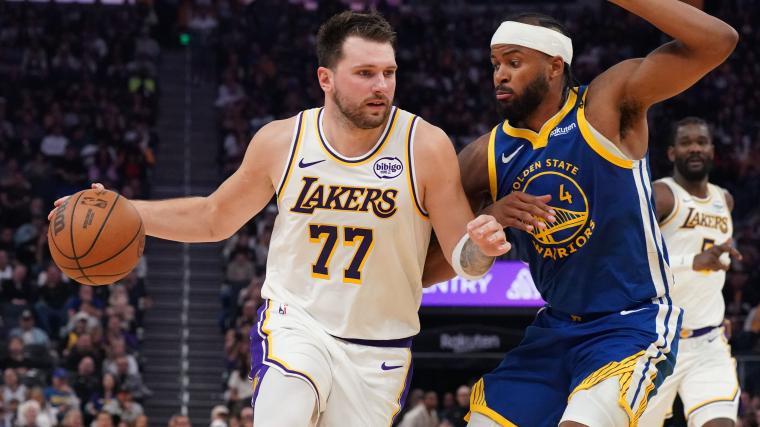
Reaves’s ascent feels particularly poetic now, as the Lakers pivot from the fading shadow of LeBron James. While James’s exit may sting some, it’s a necessary, organic evolution. Now, Luka Doncic stands as the undisputed gravitational center, with Reaves cemented firmly as his strategic counterpart, his partner-in-crime. The franchise leadership clearly believes they’ve located their next long-term pillars, the faces for future billboards and jersey sales. Because even in the glitz of L.A., you’ve got to rebuild at some point. And they’re betting a whole lot of green on these two.
This re-signing, and its attendant stratospheric valuation of an undrafted player, resonates far beyond the Staples Center (it’ll always be Staples to some of us, let’s be real). It’s a vivid snapshot of how a truly globalized sports market—where viewership, merchandise sales, and social media engagement come from every corner of the planet—can catapult niche talents into household names. Take Pakistan, for instance. A nation traditionally obsessed with cricket, yet where NBA jerseys and highlights increasingly populate phone screens, thanks to the league’s relentless global outreach. The sheer volume of transactions in leagues like the NBA reflects capital movement and branding exercises that reach even beyond the usual spheres of influence, shaping cultural consumption and aspirational identities for millions, including large diaspora communities keenly following these sagas from afar.
What once seemed a distant dream for an unknown player—earning the maximum permissible by the league—is now tangible, a financial reality locked in for a substantial stretch. Reaves isn’t just an athlete; he’s now a living, breathing proof-of-concept for the immense, even bewildering, economic clout wielded by even secondary stars in elite American sports. The official word dropped subtly on a Sunday: “OFFICIAL: Laker Nation, HE’S BACK,” the Lakers posted, a digital sigh of relief that reverberated amongst fans and financiers alike. It’s an interesting shift in focus, demonstrating how modern basketball—and modern business, too—places a premium on players who, by hook or by crook, just simply find a way to get it done.
What This Means
This staggering contract for Austin Reaves isn’t just an isolated team decision; it’s a stark indicator of several convergent political and economic trends shaping not just sports, but broader global market dynamics. Firstly, it screams scarcity. As the talent pool at the absolute elite level solidifies, even competent, high-impact role players command astonishing sums, driving up player salaries across the board. It’s the economic theory of rising tides lifting all boats, only here, the tide is a tsunami of global media rights and sponsorship dollars. Because everyone wants a piece of the pie.
Secondly, it solidifies the rise of player empowerment, a significant political shift within the closed ecosystem of professional sports. Players like Doncic are now kingmakers, their preferences dictating monumental financial allocations and personnel decisions. The fact that the Lakers built the roster around Doncic’s reported wish list isn’t just good management; it’s a recognition of where power truly resides in the modern league. That kind of leverage isn’t confined to basketball; it mirrors movements seen in other global industries where highly specialized, indispensable talent—be it in tech, finance, or even politics—can increasingly dictate terms to previously unassailable institutions. You see it too in the transfer market carousel of European football, where individual stars hold incredible sway. This re-signing confirms that even for an undrafted underdog, if you align with the league’s top-tier talent, the economic sky’s the limit.
Finally, there’s the broader narrative of risk assessment. The Lakers have committed a truly immense amount of capital—nearly two hundred million dollars—to a player who, despite his admirable trajectory, isn’t a guaranteed perennial All-Star. This reflects a willingness by organizations, under extreme pressure to win, to accept significant financial exposure for perceived locker room stability, team chemistry, and proven, albeit secondary, on-court performance. It’s a gamble, sure. But in the high-stakes game of professional sports, where the return on investment can be counted in championships and cultural cachet, sometimes, you just have to bet big on a player who wants to be there and plays like he belongs.