


World Cup’s Last Stand: Shifting Tides and Unexpected Heavyweights Battle for Global Glory
POLICY WIRE — Atlanta, Georgia, U.S. — The confetti’s still settling, maybe a few stray shouts echo in the vast stadiums, but the laughter and sighs of the group stages? Those feel like ancient...

POLICY WIRE — Atlanta, Georgia, U.S. — The confetti’s still settling, maybe a few stray shouts echo in the vast stadiums, but the laughter and sighs of the group stages? Those feel like ancient history now. What remains are eight teams, scarred — and tested, poised on the knife-edge of global glory. No room for second chances here. This isn’t just a knockout round; it’s a reckoning, a four-day footballing gladiatorial contest where legacies are minted or melted away, all playing out across the North American continent.
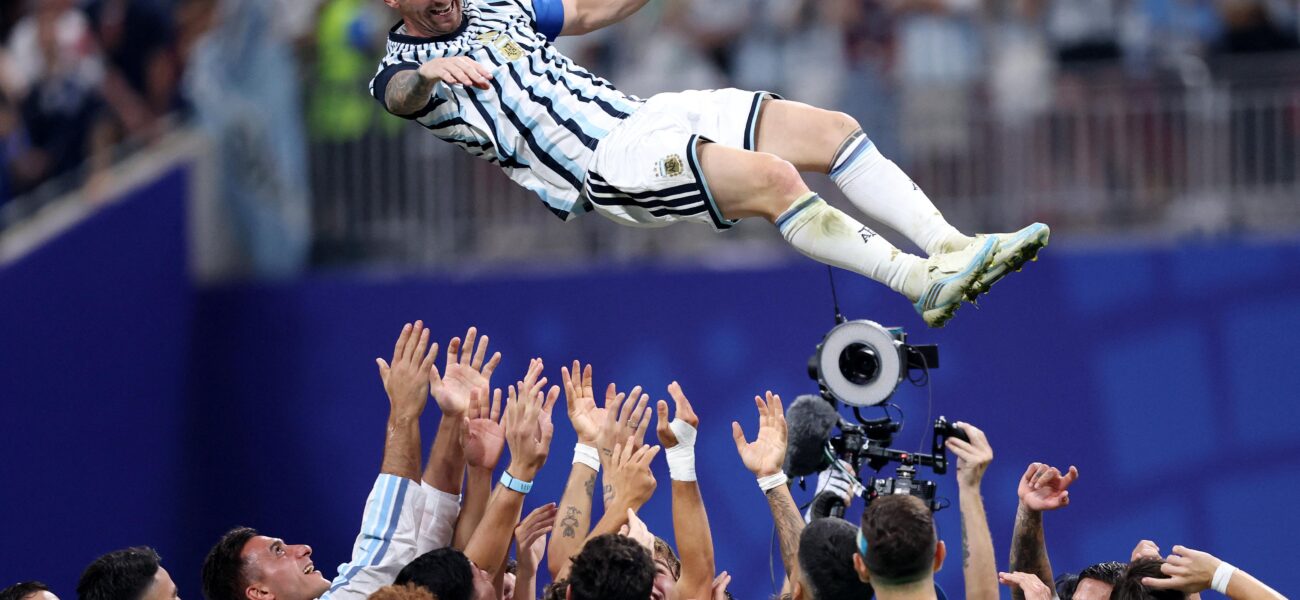
It’s funny, isn’t it? Four years ago, the globe watched as Argentina — and France delivered an all-time classic final. They’re both still here, prowling. Lionel Messi, at 39, still pulling strings—a veritable footballing anachronism, really—was again hoisted sky-high by teammates after another narrow escape, that now iconic image of a celebratory mob in Atlanta just moments after securing a spot in the last eight.
And France, they look frighteningly clinical, their pace — and power still too much for most. They’ve already dismissed Morocco, dispatching the Atlas Lions with a firm, almost businesslike 2-0 victory on Thursday, perhaps leaving some of the poetic justice that defined their earlier runs in the locker room. The Moroccans, remember, were semifinalists in ’22; this time, they didn’t quite catch the same lightning.
But the real story? It might not be the giants. Look closer at the quarterfinalists, — and you don’t see just the usual suspects. Spain, Norway, Switzerland, and Belgium—these aren’t exactly fixtures of the late stages every four years. Spain faltered badly last time out; Norway didn’t even make it. Switzerland? They’re often the reliable underdog. Belgium, a perennial dark horse, frequently chokes. Their presence here is, frankly, a statement. It suggests a rebalancing act, maybe a testament to shifting tactics, or just a truly wide-open tournament.
“We’ve invested heavily in grassroots talent and scouting networks across smaller European leagues,” noted FIFA President Gianni Infantino, speaking generally on the expansion of the World Cup format that debuted four years ago. “It’s starting to pay dividends. You’re seeing more competitive games, more nations believing they’ve a genuine shot. That’s good for football’s global reach — and economic impact across regions. Everyone loves an underdog story, don’t they?”
And a statistic for you: According to Nielsen data from 2022, World Cup matches averaged a global viewership of 534 million people, underscoring just how massive this spectacle truly is. This year’s numbers are expected to surge even higher.
So, here’s what the remaining weekend promises for the global audience, especially those glued to their screens, debating tactics and fortunes:
Friday, July 10
Spain vs. Belgium, 3:00 p.m. ET (Los Angeles Stadium)
📄 POLICY WIRE WHITEPAPER PUBLISHED: PAKISTAN'S NATIONAL SECURITY POLICY PRIORITIES
👉 READ BY CLICKING HERESaturday, July 11
Norway vs. England, 5:00 p.m. ET (Miami Stadium)
Argentina vs. Switzerland, 9:00 p.m. ET (Kansas City Stadium)
That Argentina-Switzerland clash, late on Saturday night, feels particularly loaded. Messi against a stubbornly organized Swiss side—a potential banana peel for the defending champions.
What This Means
Beyond the goals and dramatic penalties, the 2026 World Cup quarterfinals hold considerable geopolitical and economic weight. The sheer viewership, as Infantino hinted, means a global spotlight on host cities, driving tourism and local commerce—a multi-billion dollar boon for the U.S., Canada, and Mexico. For the participating nations, it’s about far more than just a trophy. It’s national pride distilled, a powerful soft power tool on the global stage. Morocco’s performance, for instance, even in defeat to France, generated immense goodwill and a sense of shared identity across the wider Muslim world, from Cairo to Karachi. Pakistani Minister for Culture — and Sport, Tariq Mehmood, recently reflected on this sentiment. “When an Arab or Muslim nation performs well on a world stage like this, it reverberates across our region. It provides a shared moment of celebration, a unity that transcends borders, reminding us of our collective strength and passion. It’s powerful, you know? Beyond the pitch, it sends a clear message of what our people are capable of,” he commented, acknowledging the subtle diplomatic ripples such events create, perhaps even momentarily overshadowing issues like those debated on Policy Wire in previous columns.
And let’s be clear: an unexpected run by a smaller nation like Norway or Switzerland captures imaginations, potentially attracting investment and attention far beyond football circles. This isn’t just sport; it’s a meticulously managed global spectacle, designed to deliver narrative, economic uplift, and cultural moments. The stage is set. And by Sunday, only half will remain standing, carrying the hopes of nations on their bruised shoulders. But for now, they breathe, they plot, they dream. Anything, truly anything, feels possible.