


Seoul’s Phantom Law: The Digital Panic That Wasn’t, And What It Actually Means
POLICY WIRE — SEOUL — The phantom legislation, whispered across TikTok feeds and Facebook groups like a viral contagion, has done its work. Seoul’s women, many genuinely terrified, believed a...

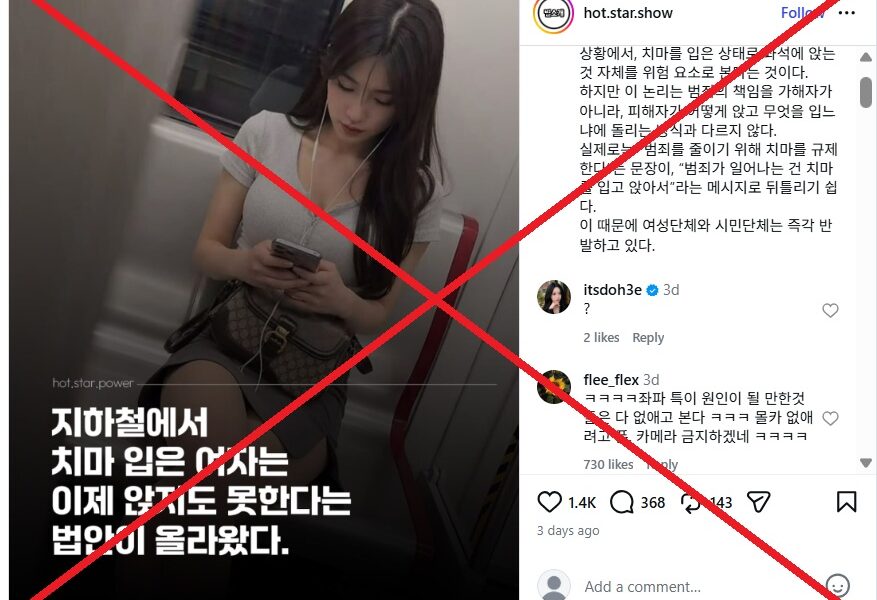
POLICY WIRE — SEOUL — The phantom legislation, whispered across TikTok feeds and Facebook groups like a viral contagion, has done its work. Seoul’s women, many genuinely terrified, believed a sinister new ‘spycam law’ specifically sanctioned the filming of their daily commutes, particularly within the country’s sprawling, hyper-modern subway system. They spoke of official endorsements, implied malevolent state intent, — and a frightening new norm. Except, it turns out, it’s all bunk. The law doesn’t exist—not as rumored, anyway. This whole fracas isn’t about legal statutes; it’s about deep-seated fear and a digital ecosystem perfectly calibrated to amplify it.
It began as many modern myths do: a snippet of misinformation, perhaps a mistranslated news report, maybe just pure fabrication. It swelled, mutated, — and then cascaded across social media. Soon, what was initially a vague warning about existing hidden camera laws (often called ‘molka’ in Korean parlance), which actually penalize perpetrators, transmogrified into its sinister opposite. The rumor claimed South Korea, a nation famed for its technological prowess, had somehow legalized the digital harassment of women on public transport. Seriously. It’s a prime example of how narratives, once set loose, don’t much care for pesky things like facts. And sometimes, they grow into something even more potent than reality.
“We’ve seen these narratives before, a kind of collective digital delusion,” said Dr. Min-seo Kim, a senior analyst with the Seoul National University’s Cyber Policy Institute. “People don’t verify; they react. The fear, I think, is very real, even if the premise isn’t.” She isn’t wrong. It reflects a palpable anxiety, an almost visceral terror of privacy violation that transcends mere legislation. And it’s particularly acute when you consider a country where digital innovation is a double-edged sword, making life incredibly convenient but also frighteningly permeable.
Because, while the alleged “spycam law” is a ghost, the problem it latches onto is all too corporeal. South Korea has indeed grappled with a significant issue of illegal filming. The sheer scale is startling: a report from the National Police Agency indicated that nearly 5,400 cases of illegal hidden camera crimes were reported in 2023 alone. Most victims are women, — and the acts often happen in bathrooms, changing rooms, or public transit. Penalties have toughened over time, not loosened, with perps facing years in prison. But as Policy Wire has covered previously, public perception often lags—or wildly distorts—legal realities.
“There’s no proposal, not a whisper, in the Ministry of Justice about legalizing hidden cameras targeting anyone, let alone women in subways,” affirmed a visibly exasperated spokesperson for the South Korean National Assembly, Mr. Lee Chang-ho. We caught him, practically on the fly, after a committee hearing. “Our efforts are consistently focused on enhancing protections — and increasing penalties. Anyone spreading this misinformation is doing a disservice to victims and to our judicial system.” He’s right to be frustrated. But disinformation, once airborne, doesn’t always dissipate just because a suit in parliament says so.
📄 POLICY WIRE WHITEPAPER PUBLISHED: PAKISTAN'S NATIONAL SECURITY POLICY PRIORITIES
👉 READ BY CLICKING HEREThe incident speaks to a broader, global tension. Consider countries across South Asia and the Muslim world, where conservative cultural norms often place an added burden on women’s comportment in public spaces. In places like Pakistan, for instance, even a phone pointed in a crowd can elicit discomfort, not just from privacy concerns but from societal expectations that women remain out of the male gaze. While the contexts differ wildly, the underlying vulnerability—the potential for unsolicited filming, harassment, or simply feeling unsafe in public—resonates universally. The digital realm has simply collapsed those geographic divides, transforming local anxieties into globally understood symbols of injustice.
What This Means
This whole kerfuffle isn’t just some curious case of internet hooey. It’s a loud, clear alarm bell, signaling a profound distrust between the public (specifically, a segment of the public) and official information. The speed with which such an utterly baseless rumor gained traction speaks volumes about the societal fault lines in South Korea—and frankly, elsewhere. It demonstrates how readily existing anxieties, here about women’s safety and digital privacy, can be weaponized or, at the very least, catastrophically amplified by misinformation. For policymakers, it means their pronouncements, however clear, can be drowned out by the algorithmic currents of social media. It implies a deeper need for digital literacy initiatives and perhaps—and this is a big perhaps—more proactive, empathetic engagement with public fears. Because while the ‘spycam law’ was fake, the fear was very, very real. Ignoring that fear doesn’t make it disappear; it just makes the next digital phantom seem all the more credible. After all, perception, even if it’s wildly inaccurate, can sometimes bend the arc of political will.