
Caracas Aftershocks: When Geological Tremors Echo Political Instability in a Fractured Nation
POLICY WIRE — Caracas, Venezuela — They say when a system’s already buckling, any added stress will send it into a deeper spiral. Venezuela, a nation long familiar with tectonic shifts in its...

POLICY WIRE — Caracas, Venezuela — They say when a system’s already buckling, any added stress will send it into a deeper spiral. Venezuela, a nation long familiar with tectonic shifts in its political and economic landscape, now faces a stark, undeniable truth etched into the very earth: sometimes, the planet decides to weigh in too. The dust is settling, yet the true tremors—the political and social ones—are just beginning.
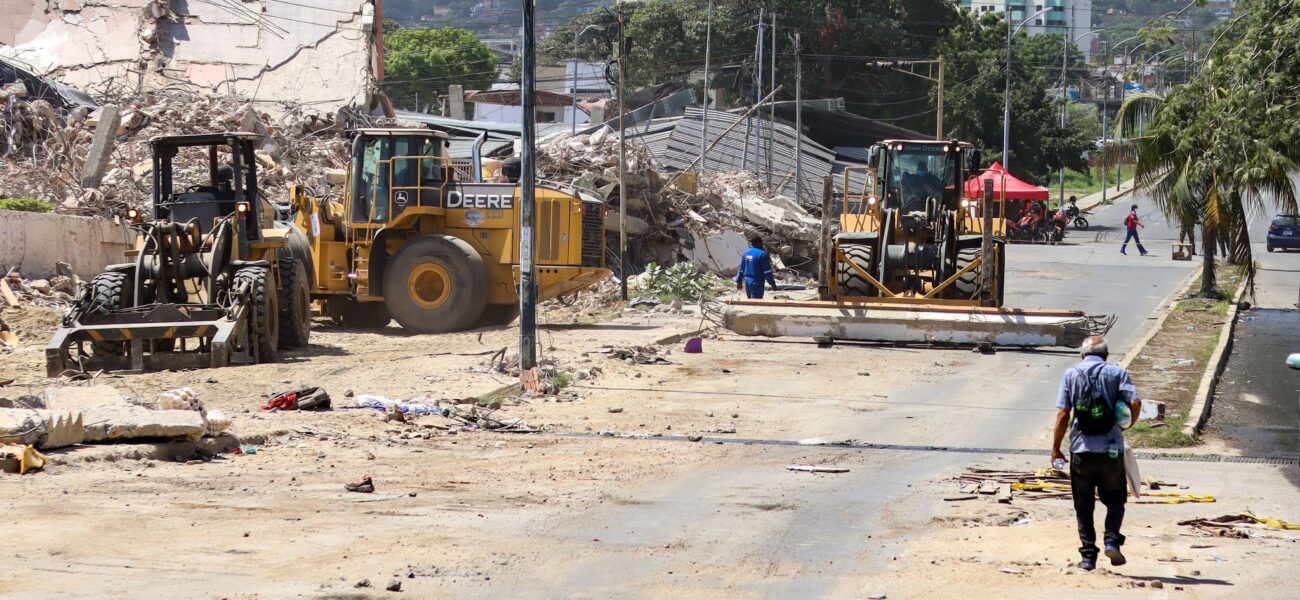
It wasn’t the kind of calamity anyone planned for, not that such things are ever on the docket. Yet, a brutal quake has savaged the nation’s northern regions, particularly the metropolitan sprawl around Caracas. Emergency services, already strained by years of underfunding and infrastructural decay, found themselves instantly overwhelmed. And who could be surprised? This isn’t a country operating from a position of strength, after all. [QUOTE_PLACEHOLDER]
Initial reports were grim, but fluid, you know how these things go. The numbers kept climbing—grim arithmetic on shattered streets. Now, officials concede the Venezuela quake death toll rises to 4,490, a stark figure cited by the Venezuelan National Civil Protection Directorate as of late Wednesday. But beyond the grim statistics, there’s the unseen trauma, the displacement, the communities suddenly erased. What’s left? Rubble and questions, mostly.
International aid has been a predictable, if sometimes sluggish, arrival. A cacophony of pronouncements from distant capitals—sympathy, condemnation of the long-standing sanctions, and offers of assistance often entangled in geopolitical red tape. Because, for many nations, Venezuela isn’t just a place; it’s a chessboard. They’ve got their own agendas, their own allegiances to consider. And frankly, the global compassion reserves sometimes feel finite, allocated according to political expediency rather than pure human need.
But consider Pakistan, for a moment, a nation that knows intimately the crushing weight of natural disaster and the sometimes-uneven hand of global support. After the devastating 2005 Kashmir earthquake, the world rallied, yes, but reconstruction efforts spanned years, hampered by regional tensions and the sheer scale of the damage. For nations like Pakistan, or for that matter, communities in Southeast Asia recovering from events like the 2004 tsunami or Bangkok’s frequent urban infernos, such crises aren’t just one-off events. They expose a continent’s vulnerability, its often-neglected infrastructure, and the persistent socioeconomic disparities that turn a natural phenomenon into a humanitarian catastrophe. It’s a stark comparison to draw, but it’s an unavoidable one, really. Disaster doesn’t discriminate by continent, but response sometimes feels like it does.
Local authorities are scrambling. There’s talk of reconstruction, of course—always talk. But with resources already stretched thin and political fault lines running as deep as the geological ones, the pathway to recovery is hardly clear. President Maduro’s administration has, according to an unnamed official in Caracas, requested significant heavy machinery and medical supplies from Cuba and Russia. It’s a familiar dance, relying on ideologically aligned partners when the broader international community often keeps its distance, or ties aid to politically unpopular conditions. It’s a brutal reality.
But still, the people—they’re digging. Neighbors are helping neighbors. It’s what you do, right? You don’t wait for formal structures that might never materialize. They’re doing the gritty, messy work of survival, while the politicos—and the journalists—start calculating the fallout. This isn’t just a natural disaster; it’s an accelerator, revealing the cracks that were always there, just waiting for a good shake.
📄 POLICY WIRE WHITEPAPER PUBLISHED: PAKISTAN'S NATIONAL SECURITY POLICY PRIORITIES
👉 READ BY CLICKING HEREBecause ultimately, these disasters don’t just happen in a vacuum. They hit communities already on the brink, communities like those throughout the Muslim world or South Asia, where inadequate housing, strained public services, and institutional corruption compound every challenge. When an earthquake hits, it’s not just a battle against collapsing buildings; it’s a battle against years of systemic neglect.
There are whispers now, questions about building codes—or the lack thereof. Questions about whether aid will actually reach those who need it, or disappear into the maw of a corrupt system. They’re not new questions for Venezuela, not by a long shot. This tragedy, it’s just making them louder. Much louder.
What This Means
This seismic event, devastating on its own, acts as a grotesque magnifying glass for Venezuela’s entrenched fragilities. Politically, the Maduro regime now faces an amplified domestic crisis, potentially eroding already limited public trust while simultaneously offering a pretext for increased international intervention or, conversely, a renewed rallying cry against external pressure, depending on how skillfully Caracas plays its hand. The reliance on Havana and Moscow for immediate relief entrenches existing geopolitical alliances, potentially making broader, Western-led aid conditional on political concessions—something Venezuela’s leadership has historically resisted.
Economically, the country’s recovery efforts are now tasked with rebuilding essential infrastructure in a state already contending with hyperinflation, dwindling oil revenues, and international sanctions. This disaster means an immediate drain on what precious few reserves remain, and a diversion of scarce resources from other critical social programs. Expect prolonged economic pain — and a heightened brain drain, as individuals and businesses seek stability elsewhere. From a global perspective, it spotlights the inconsistencies in humanitarian responses—some crises garner widespread international support, others, particularly those in politically charged regions like Venezuela, become proxy battlegrounds for influence. It really makes you wonder about the ethics of it all.