


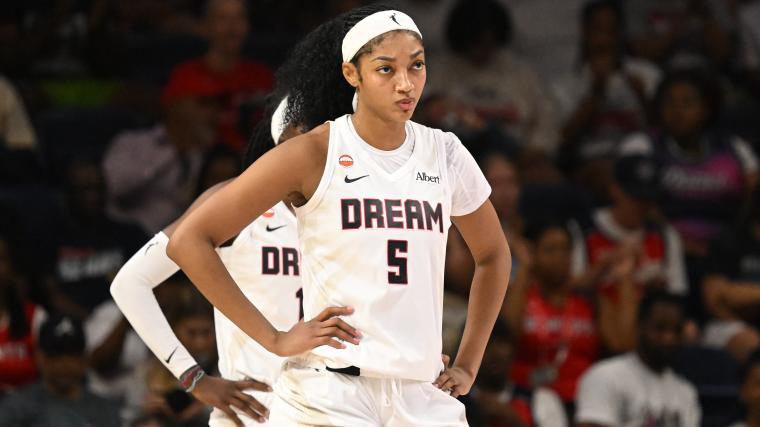
Star Power Precarity: How an Ankle Sprain Shakes the WNBA’s Global Aspirations
POLICY WIRE — Washington, D.C. — They say all politics is local, but the economics of global spectacle tell a different story. In the capricious realm of professional sports, where market value and...

POLICY WIRE — Washington, D.C. — They say all politics is local, but the economics of global spectacle tell a different story. In the capricious realm of professional sports, where market value and fan engagement often tether themselves to the luminescence of a single individual, the precarious balance of an entire franchise—sometimes, even a league’s narrative—can pivot on something as mundane as a rolled ankle. We’re watching that play out, plain as day, with the WNBA’s Atlanta Dream.
It’s not just a sprained limb. It’s an immediate, jarring halt to momentum—the kind that makes investors nervous in any booming market. This season, the Dream shot out of the gate like a startup unicorn, securing a 12-4 record that had prognosticators whispering about legitimate title contention. But then the unexpected occurred. Atlanta, you see, has found itself on a difficult stretch that’s seen their initially hot start cool considerably, losing ground in the standings. They currently stand at a middling 13-10, hardly the picture of invincibility they once projected. [QUOTE_PLACEHOLDER]
The latest, — and perhaps most poignant, symbol of this shifting dynamic centers squarely on Angel Reese. She’s the kind of transcendent talent you build a league around, an absolute magnet for eyeballs. Her athleticism, her sheer competitive drive—it all translates, making her, in economic terms, a brand. The trouble began during their Thursday night skirmish against the Seattle Storm. Reese reportedly exited the game after rolling her ankle with just over a minute remaining in the fourth quarter. She was seen limping, a vision that, to many, was more disquieting than the 89-78 victory itself. And, quite frankly, she didn’t return.
Her initial listing as questionable for Saturday’s game against Portland swiftly escalated; Atlanta ultimately ruled her out. This marked a sobering milestone: it was the first game she has missed all season. But that wasn’t the end of it, was it? The Dream then updated her status on Sunday’s official injury report, classifying her as questionable for the impending matchup against the Los Angeles Sparks with a right leg injury. That term, ‘questionable,’ — it’s just the polite sports-business way of saying, ‘we don’t know, and our financial stability is maybe just as uncertain as her return date.’ It adds a challenge to a squad desperately looking to halt its recent slide. This whole saga, you could say, exemplifies the unpredictable headwinds often faced by emerging markets. Think of a nation in South Asia, perhaps Pakistan, investing heavily in a single economic sector. A sudden, external shock—a trade war, a climate disaster—can just as quickly deflate initial optimism and expose the fragility of dependence on a narrow base.
But the numbers tell you why this matters so acutely. Through 22 games, Reese’s performance has been anything but pedestrian: she’s averaging 15.0 points, 11.7 rebounds, and 2.5 assists, an impressive showing. This consistent delivery is what earned her a third consecutive WNBA All-Star selection. Her rebounding, that raw physicality she brings, her formidable interior presence—it’s been absolutely central to Atlanta’s successes thus far this season. Remove that piece, even for a short stint, — and the entire architecture wobbles.
And it’s not just Atlanta dealing with absences. The opposition, the Sparks, aren’t exactly entering Monday’s fray at full strength, either. They’re still without stars Cameron Brink — and Kelsey Plum, sidelining them from the playoff race. So, yeah, this Monday matchup is really more a battle of attrition — and roster depth than a pure clash of titans. Because sometimes, when the brightest stars dim, however briefly, it’s the supporting cast that has to shoulder an extraordinary burden. It makes you think about how countries navigate leadership changes, doesn’t it?
📄 POLICY WIRE WHITEPAPER PUBLISHED: PAKISTAN'S NATIONAL SECURITY POLICY PRIORITIES
👉 READ BY CLICKING HEREWhat This Means
The policy implications of a single player’s injury might seem trivial from a geopolitical vantage, but don’t kid yourself. The Atlanta Dream’s predicament lays bare a stark economic reality in professional sports: an over-reliance on individual celebrity. This model, often successful in generating immediate buzz and revenue, simultaneously builds in considerable systemic risk. When a star like Angel Reese, with her compelling narrative and undeniable on-court impact, becomes unavailable, the entire investment—from ticket sales and merchandise to broadcasting rights and league perception—takes an immediate hit. It’s a volatility that mirrors the global market’s reaction to single-point dependencies. Countries that anchor their economies too heavily on a solitary resource or industry often find themselves similarly vulnerable to external shocks or commodity price swings.
This situation also raises questions about league expansion — and market penetration. As the WNBA—or any sports league, for that matter—eyes global growth, perhaps seeking inroads into regions like the broader Muslim world, including nations from Morocco to Indonesia, where burgeoning economies and youth populations represent untapped fandom, the predictability of star power becomes an economic calculus. Would investment in grassroots infrastructure or more diversified marketing be a more resilient strategy than simply relying on viral sensations who can be sidelined by a moment’s unfortunate twist?
Consider the delicate balance required to maintain audience interest — and draw in new fans. The Dream’s initial hot streak, fuelled largely by their star power, demonstrates the ceiling. But the subsequent stumble, punctuated by Reese’s absence, illustrates the floor. For Policy Wire readers, this isn’t just sports chatter; it’s a case study in managing strategic assets, mitigating risk, and the profound economic consequences that can flow from even minor operational disruptions, whether they be a factory shutdown or a sports celebrity’s incapacitation. It’s all interconnected, you know? And it sure ain’t getting simpler.