

Silence, Speculation, and a Senator’s Stumble: Power, Age, and Washington’s Tightrope
POLICY WIRE — Washington, D.C. — It often feels like the United States Senate operates behind an invisible shroud, especially when its long-serving members, pillars of a particular generation, face...

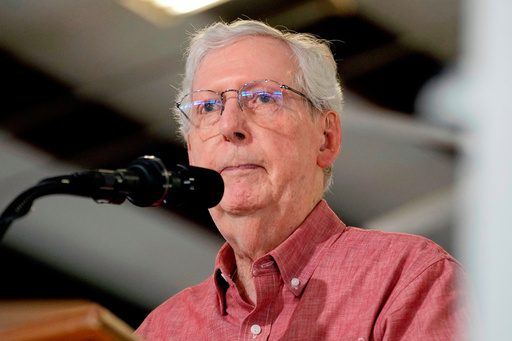
POLICY WIRE — Washington, D.C. — It often feels like the United States Senate operates behind an invisible shroud, especially when its long-serving members, pillars of a particular generation, face down the inevitable. That veil, already tattered by weeks of hushed conjecture, finally shredded this past Sunday. Senator Mitch McConnell, the Kentucky Republican who’s been a fixture longer than some nations have been sovereign, broke his sustained silence not with a roar, but a quietly delivered admission: it wasn’t just illness; a fall had sent him to the hospital, shaking Washington’s fragile power dynamics.
The revelation comes after a veritable fever pitch of whispered speculation. Forget policy debates for a minute—the real capital buzz, if you caught it, was all about what exactly happened to McConnell, 84, who’s logged more Senate years than some folks spend breathing. It’s hard to imagine the pressure Cookeville’s local paper was putting on him, but out here, across the country and certainly within these D.C. circles, everyone wanted answers. He explained his prolonged silence rather candidly, for a politician of his standing: “folks of my generation often hesitate to share the vulnerability that comes with growing older.” And then, a moment of startling self-awareness: [QUOTE_PLACEHOLDER] A blunt truth for a town that thrives on appearance.
McConnell’s office had previously insisted only that he was “receiving excellent care” and recovering, a statement that did little to quiet the internet’s more ghoulish rumors or Kentucky’s Democratic Gov. Andy Beshear’s public letter requesting more transparency. McConnell eventually shared that he was “briefly unconscious” when first taken to the hospital. A battery of tests followed. Miraculously, he claimed, the results came back clean. “My doctors have confirmed that I didn’t break any bones or suffer a concussion. I didn’t have a heart attack or a stroke. I don’t have any tumors or hemorrhages,” he relayed, asserting he’s now “regaining my strength.” He’s been treated for mild pneumonia too, and has moved to a rehab facility, pushing his return to the Senate chamber out indefinitely.
But the impact isn’t merely personal; it’s legislative. The Senate’s already precarious Republican majority now finds itself thinner. His recovery means the GOP majority in that chamber will be down by two, to 51-47, at least temporarily. That’s according to current Senate apportionment, a numbers game that suddenly feels more consequential. This numerical hiccup arrives on the heels of another Republican tragedy—the unexpected death of Senator Lindsey Graham. These absences don’t just leave empty seats; they complicate everything from increasing military funding to advancing the President’s agenda and confirming judicial nominees. It’s a stark reminder that in a chamber balanced on a knife-edge, every single vote, every single body, carries immense weight.
This isn’t his first dance with physical vulnerability. McConnell suffered polio in childhood and has openly acknowledged walking and climbing stairs are, well, not exactly a breeze for him. Congress’s physician’s office Sunday confirmed he’d “experienced several falls through the year” due to his “post-polio condition.” Physical therapy now focuses on keeping him upright. But the picture isn’t entirely rosy. He had a concussion last March after another tumble in a Washington hotel, followed by widely publicized freezing episodes at news conferences, staring vacantly ahead as colleagues and staff looked on—a disquieting image, to say the least. But he’s determined, as always, stating, “I still have unfinished business to complete on your behalf, and I have every intention of finishing the job you elected me to do.” This ain’t his first rodeo. He’s seen quite a bit since first being elected in 1984.
📄 POLICY WIRE WHITEPAPER PUBLISHED: PAKISTAN'S NATIONAL SECURITY POLICY PRIORITIES
👉 READ BY CLICKING HEREWhat This Means
McConnell’s public — yet tardy — disclosure about his health status offers a stark lens into the mechanics of American political power in an era of unprecedented transparency demands. For a leader renowned for his strategic long game and iron-fisted control of his caucus, the prolonged silence only fueled the perception of vulnerability, not just for him but for the broader Republican agenda. It creates a short-term power vacuum that the Senate, particularly its less experienced members, must navigate—and without the architect of so much GOP strategy steering the ship, things might get bumpy. This peculiar silence wasn’t without its own set of political fractures. The GOP’s internal factions, often kept in line by McConnell’s tactical prowess, could become more pronounced, potentially derailing key legislative initiatives or judicial appointments. This sort of leadership uncertainty reverberates beyond the Beltway. When the steady hand guiding a major global power appears unsteady, allies — and adversaries alike take note. Consider Pakistan, for instance, a nation grappling with its own internal instabilities, including the ongoing Operation Shaban in Balochistan, and perennial challenges along its borders. Their leaders observe the continuity—or lack thereof—in Washington’s strategic foreign policy discussions. An unstable US leadership could mean a less predictable partner, affecting everything from aid packages to regional security cooperation and counter-terrorism efforts, especially as the South Asian nation seeks some semblance of economic stability. For democracies across the Muslim world, such visible tremors at the highest echelons of American power serve as a discomfiting barometer, raising questions about Washington’s capacity for sustained global engagement. It’s not just a senator’s health, is it? It’s the health of an entire system.