

McConnell’s Peculiar Silence: A Fall, a Flurry of Rumors, and the Fractured Face of Power
POLICY WIRE — WASHINGTON — It wasn’t the concussion, the momentary freezes mid-sentence, nor even the routine fall that sprained a wrist just months prior. No, it took a prolonged, unnerving...

POLICY WIRE — WASHINGTON — It wasn’t the concussion, the momentary freezes mid-sentence, nor even the routine fall that sprained a wrist just months prior. No, it took a prolonged, unnerving silence – then a press release dropped on a Sunday, complete with a smiling, if static, photo – to finally illuminate the specifics of Senator Mitch McConnell’s latest medical sabbatical. Washington, you see, prefers its infirmity in neat, pre-packaged statements, especially when the subject is an octogenarian titan whose grip on influence has bent, but rarely broken, for decades.
For weeks, the capital buzzed. Whispers, then outright speculation, had followed the Kentucky Republican, 84, from his latest hospitalization. Was it a stroke? Something worse? The official line was thin, just generic assurances of “excellent care” — and recovery. But then, an update: it was a fall. And mild pneumonia, for good measure. Doctors, apparently, are still trying to connect the dots, still probing the cause of a spill that left a figure once considered indestructible off the Senate floor for too long.
“Folks of my generation often hesitate to share the vulnerability that comes with growing older,” McConnell conceded in his statement, offering a rare, almost disarming glimpse into a psychology often impenetrable. “Even in the public eye, I feel that same instinct — I can’t help it.” It’s a sentiment many can grasp. Yet, for a man whose political career has been built on an almost Machiavellian command of information, this public grappling with the unavoidable frailty of the human form feels less like an apology and more like a carefully managed concession to relentless pressure.
This isn’t just about one man’s health, though. Not entirely. It’s about the opaque workings of power, where silence often reigns until political necessity demands a grudging release. Kentucky’s Democratic Governor Andy Beshear, no stranger to political sparring with McConnell, had felt the public’s agitation. He took the unusual step of publicly urging transparency, noting, “Our constituents expect and deserve open communication about their leadership, especially when their ability to govern effectively is in question.” But, of course, Washington often responds to public outcry on its own schedule.
And let’s be frank: the health episodes aren’t new. A battle with polio in childhood left him with some physical limitations, acknowledged long ago. The Congressional physician, in a rather clinical note, casually mentioned that McConnell has “experienced several falls through the year” due to his “post-polio condition.” A jarring admission, painting a picture not just of an isolated incident, but a chronic, unfolding saga. In fact, The Centers for Disease Control and Prevention reports that over 36 million older adults fall each year, resulting in some 32,000 deaths—a somber backdrop to the political drama playing out in Washington.
McConnell, Senate leader from 2007 until last year, has remained a force. He’s been the arch-strategist, the legislative blocker, the quiet enabler of Republican ascendancy. You can’t overstate his role. Even in his non-leadership capacity now, his institutional memory and deep connections still make him a gatekeeper, an advisor, a whisperer of untold influence. He shows up for work, they say, often with a wheelchair, keeping up appearances. But appearances, like everything in Washington, can be deceiving. The questions around his longevity in office aren’t going away. They’re just shifting focus.
📄 POLICY WIRE WHITEPAPER PUBLISHED: PAKISTAN'S NATIONAL SECURITY POLICY PRIORITIES
👉 READ BY CLICKING HEREWhat This Means
This recent saga does more than simply raise eyebrows about McConnell’s personal condition; it throws a spotlight on a much larger, often unspoken truth about America’s geriatric leadership problem. You’ve got an increasing number of powerful figures—in Congress, the White House, the Judiciary—who are, quite frankly, operating on borrowed time. This isn’t an ageist jab; it’s a cold, hard observation about the realities of advanced age and the relentless demands of high office.
Politically, the continuous cycle of health scares creates instability. Other senators start positioning themselves. Legislative priorities, both domestic and foreign, can become unpredictable when key players are physically compromised. Think about foreign policy, for instance. America’s influence, from Pakistan’s Balochistan province to the corridors of Brussels, relies on a consistent, strong message. A leadership vacuum, or even just persistent doubts about that leadership, complicates global diplomacy and crucial alliances. If top decision-makers aren’t perceived as fully fit, or if there’s internal jostling for power, it creates vulnerabilities other nations are quick to exploit. And economically? Investment — and trade agreements need steady hands at the tiller. Any perception of weakness in Washington can ripple, causing jitters in international markets and influencing investor confidence. It’s an inconvenient truth for a nation that sells itself on strength — and stability.
This episode also forces a conversation—however uncomfortable—about mandated health evaluations for top political figures. When a senator can freeze mid-press conference multiple times and then claim the issue was just ‘dehydration,’ only to reveal later a complex web of medical issues, the electorate’s trust wears thin. We, the public, have a right to know the people wielding immense power are up to the task. It’s not personal; it’s just the business of governance.
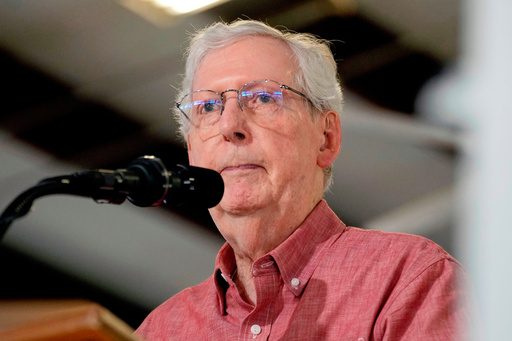
He’s in a rehab center now, he says, not back in the Senate “quite yet,” still working with staff. A smiling picture, almost defiant, circulated with the news. But you have to wonder how much that smile truly reflects, beyond the simple desire to quell another round of, “Is he actually still with us?” Because, for those paying close attention, the cracks are showing—and they’re not just personal, they’re systemic. This isn’t a one-off story; it’s a recurring feature of modern American power. A quiet, unassuming warning, perhaps, for future elections where youth and vitality might just finally trump entrenched, however ailing, influence. Or maybe not. Because old habits, — and old power structures, die incredibly hard.