


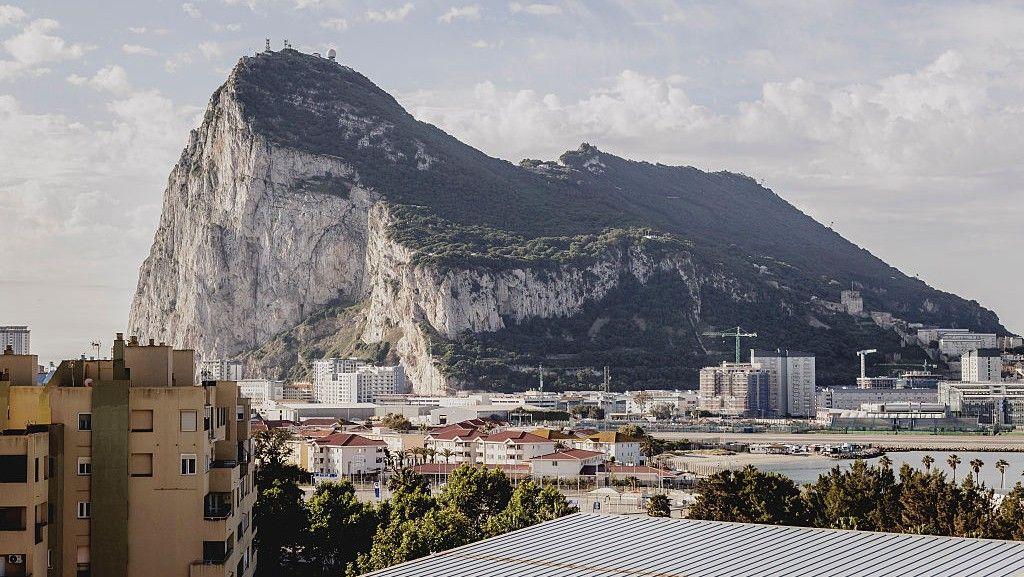
The Iron Curtain Crumbles: Gibraltar Sheds Century of Border Shackles
POLICY WIRE — La Línea de la Concepción, Spain — For generations, a peculiar kind of daily purgatory unfolded on the slender spit of land connecting Spain to the British Overseas Territory of...

POLICY WIRE — La Línea de la Concepción, Spain — For generations, a peculiar kind of daily purgatory unfolded on the slender spit of land connecting Spain to the British Overseas Territory of Gibraltar. A gauntlet of guards, often officious, always watchful, marked an imaginary but oh-so-real line. That particular theater, 118 years in the running, is now officially dark. You wouldn’t think the elimination of border controls—a staple of any sane, integrated economy—could feel like an act of geopolitical audacity. But then, you haven’t dealt much with ‘The Rock.’
It’s not often that a strip of concrete — and barbed wire, steeped in centuries of imperial squabble, simply… vanishes. Not entirely, of course. Spain’s flag won’t be hoisted over the airport, not yet. But the incessant passport checks, the often-infuriating delays that turned a short drive into a monumental test of patience for thousands of daily commuters—they’re slated for the history books. And good riddance, many are quietly thinking.
This isn’t just about frictionless transit for vacationers or the legion of workers who cross for their livelihoods. Oh no. It’s about a symbolic reordering of a particularly prickly post-Brexit landscape, a concession that cuts through the fog of ancient grievances with a surprisingly sharp knife. For ages, that border, with its queues stretching for miles under the scorching Andalusian sun, served as a stark reminder of who held the cards—or who thought they did.
“This agreement is a triumph of pragmatism over outdated notions of sovereignty,” Spain’s Foreign Minister, José Manuel Albares, reportedly declared in private conversations last week. “We’ve recognized that our shared prosperity far outweighs any historical anachronism. It’s time for a 21st-century approach, for everyone’s sake.” His comments, though hushed, suggest a significant shift in Madrid’s stance, a realization that choking its neighbor only ever caused self-inflicted wounds too.
The deal essentially folds Gibraltar into the Schengen Area for goods and people, placing Spanish agents at the port and airport for immigration control, albeit under the watchful eye of Frontex, the EU border agency. Think about it: a little piece of Britain, nominally still under the Crown, suddenly finds itself intimately intertwined with the Schengen zone it decidedly opted out of through Brexit. It’s a beautifully ironic twist, isn’t it?
“We’ve always been a proud, self-governing people, and this deal doesn’t change that fundamental truth,” insisted Fabian Picardo, Gibraltar’s Chief Minister, his usual animated delivery tempered with a dose of sober reflection. “What it does, however, is clear the path for unprecedented economic opportunity, allowing us to connect, truly connect, with our regional partners in a way that’s never been possible. It’s a modern Gibraltar, unafraid to secure its future.”
📄 POLICY WIRE WHITEPAPER PUBLISHED: PAKISTAN'S NATIONAL SECURITY POLICY PRIORITIES
👉 READ BY CLICKING HEREThe benefits could be considerable. Analysts estimated that prior to Brexit, roughly 15,000 cross-border workers, mostly Spanish, powered Gibraltar’s bustling service sector, according to data from various economic think tanks in the region. Their daily commute, sometimes consuming hours, was a drain on both sides. But now, it could be a brisk walk. And trade? Well, imagine the ripple effects on cross-border logistics alone.
But of course, such a historical rapprochement inevitably casts shadows elsewhere. Consider the intractable disputes still gripping parts of the Muslim world or South Asia, where lines drawn on a map by departed empires continue to fester. In Kashmir, for instance, the frozen conflict between India and Pakistan shows few signs of softening, let alone a grand agreement to facilitate frictionless transit across the Line of Control. This Gibraltar outcome, while regional, quietly screams volumes about the differing diplomatic capacities and political wills of nations to untangle such legacies.
What This Means
This isn’t just bureaucratic tidying; it’s a political seismic shift. Economically, Gibraltar stands to gain massively, shedding the ‘island economy’ constraints imposed by the arduous border. Tourism will boom. Daily trade will become seamless. For Spain, it resolves a nagging colonial headache and boosts its Andalusian border region, creating jobs and opportunity where frustration often reigned. And it’s a quiet diplomatic win for the UK, easing some of its post-Brexit continental isolation without directly compromising its perceived sovereignty over the Rock.
Politically, the subtle integration into Schengen, even without official EU membership, suggests a new model for complex post-colonial territories seeking closer economic ties without formal union. But it’s also a delicate balancing act. Gibraltar’s identity, fiercely independent, will now have to navigate a more open border with a nation that still claims it. And that, dear reader, is always a volatile concoction. The question remains: can this new era of cooperation truly transcend centuries of distrust? It’s a grand experiment, and the world—especially those dealing with their own intractable border woes—will be watching.