
Europe Ablaze: A Storied French Forest Melts, Mirroring a World on Edge
POLICY WIRE — Fontainebleau, France — The perfume of pine needles and damp earth usually clings to the air here, an age-old comfort within the storied Fontainebleau forest. Not anymore. Now, it’s a...

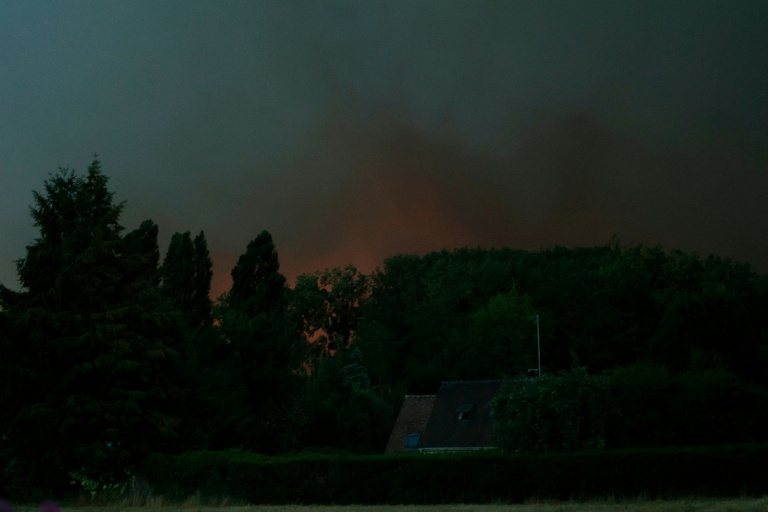
POLICY WIRE — Fontainebleau, France — The perfume of pine needles and damp earth usually clings to the air here, an age-old comfort within the storied Fontainebleau forest. Not anymore. Now, it’s a choking pall of smoke and the acrid stench of burning timber, carried on a breeze that does little to cool the rage. This isn’t just another localized nuisance; it’s a gut punch to Europe’s supposedly temperate zones, a fiery exclamation point on a climate crisis that seems to be screaming its way across the globe, ignoring geopolitical squabbles or historical grandeur.
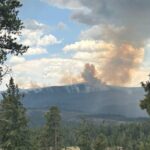
For days, plumes have marred the postcard-perfect skies south of Paris. Firefighters, faces smudged black, work round the clock, battling a monster that’s consuming hectares of ancient woodland – woodland where kings once hunted and Impressionists found their light. It’s a sobering scene. But the true fire, you see, isn’t just on the ground. It’s burning in the uncomfortable conversations now taking hold in European capitals, wondering how a nation like France, with its well-resourced emergency services, finds itself struggling with a blaze this persistent, this ferocious.
And let’s be clear, this isn’t just a bad summer. Agnès Lambert, France’s straight-talking Minister for Ecological Transition, didn’t mince words during a recent, grim-faced press conference near the fire lines. “We’re not just fighting embers, we’re fighting a paradigm shift,” she stated, her voice tight with a frustration that felt real. “The ‘century event’ feels like an annual occurrence now. We don’t have another planet. We don’t have infinite time. And we certainly don’t have an unlimited budget for firefighting.” It’s a sentiment many are starting to grasp – that the era of treating environmental degradation as a distant threat is well and truly over.
Because, honestly, who can still claim ignorance? The science, the data — it’s all there, screaming at us. The European Forest Fire Information System (EFFIS), for instance, clocked an alarming figure: more than 60,000 hectares were incinerated across France in 2022 alone. That’s not just a statistic; it’s vast tracts of charred land, destroyed ecosystems, — and dashed hopes. And it shows things aren’t getting better.
Jean-Luc Moreau, the grizzled Prefect of Seine-et-Marne, spoke of the human toll, the local families on edge, the economic ripple effect that’s already taking hold. “Our primary focus, of course, is human safety — and containing this beast. But don’t imagine for a moment this is without consequence for the thousands who depend on this forest, from tourism to timber,” he mused, wiping soot from his brow. “It’s not just the big city headlines, it’s folks losing their livelihoods.” That’s the messy, granular truth of these events, isn’t it?
But while Fontainebleau smolders, painting a stark picture of a warming Europe, similar – often far worse – narratives play out across the globe. You can’t separate Paris from Karachi, or these burning forests from the devastating floods that have routinely crippled Pakistan, wiping out entire villages and displacing millions. The sheer scale of destruction, whether from drought, fire, or flood, hits harder, faster, and more frequently, disproportionately slamming countries least equipped to handle the blow. It’s a bitter truth, a shared vulnerability that ought to transcend national boundaries, uniting us in this messy, global climate fight. Our challenges might manifest differently – wildfires in France, erratic monsoons in South Asia – but the culprit often whispers the same name: unchecked planetary neglect.
📄 POLICY WIRE WHITEPAPER PUBLISHED: PAKISTAN'S NATIONAL SECURITY POLICY PRIORITIES
👉 READ BY CLICKING HEREAnd let’s be frank, this French inferno is less an isolated incident and more a grim postcard from our shared global future. Governments, regardless of their geopolitical clout, are finding themselves in a peculiar sort of survival class. They’re trying to figure out how to manage, mitigate, and somehow fund the aftermath of increasingly frequent catastrophes. It’s not just a budget line item anymore; it’s a foundational re-evaluation of how societies function.
What This Means
The Fontainebleau fire, even as it rages, isn’t simply a local crisis; it’s a bellwether. Politically, it amps up pressure on President Macron’s administration to deliver concrete, visible climate action, moving beyond Paris Agreement platitudes to tangible, local protections. Economic repercussions are immediate, sure – tourism will suffer, timber industries will feel the pinch, but the long-term cost of regeneration and preventive measures will be staggering, creating a new fiscal burden on state budgets already strained by other global anxieties.
From an international standpoint, this serves as another loud alarm, challenging the illusion of Western invulnerability to extreme weather. When ancient, supposedly resilient ecosystems near a global hub like Paris can burn this fiercely, it strips away the comfortable detachment many developed nations might still harbor. It highlights the stark global inequity in battling climate impacts, even as the impacts themselves know no such boundaries. Expect more vigorous debates around shared climate finance, disaster preparedness aid to vulnerable nations, and — yes — continued hand-wringing about a world that’s literally catching fire, one historic forest at a time. It’s not just French heritage at risk, it’s all of ours, one flickering flame at a time.