

Quebec’s Wilderness: A Political Chessboard Masquerading as Nature’s Sanctuary
POLICY WIRE — Quebec City, Canada — You don’t get much in the way of untouched grandeur anymore. Not really. Most everything, it seems, has an owner, a budget line, or an impending...

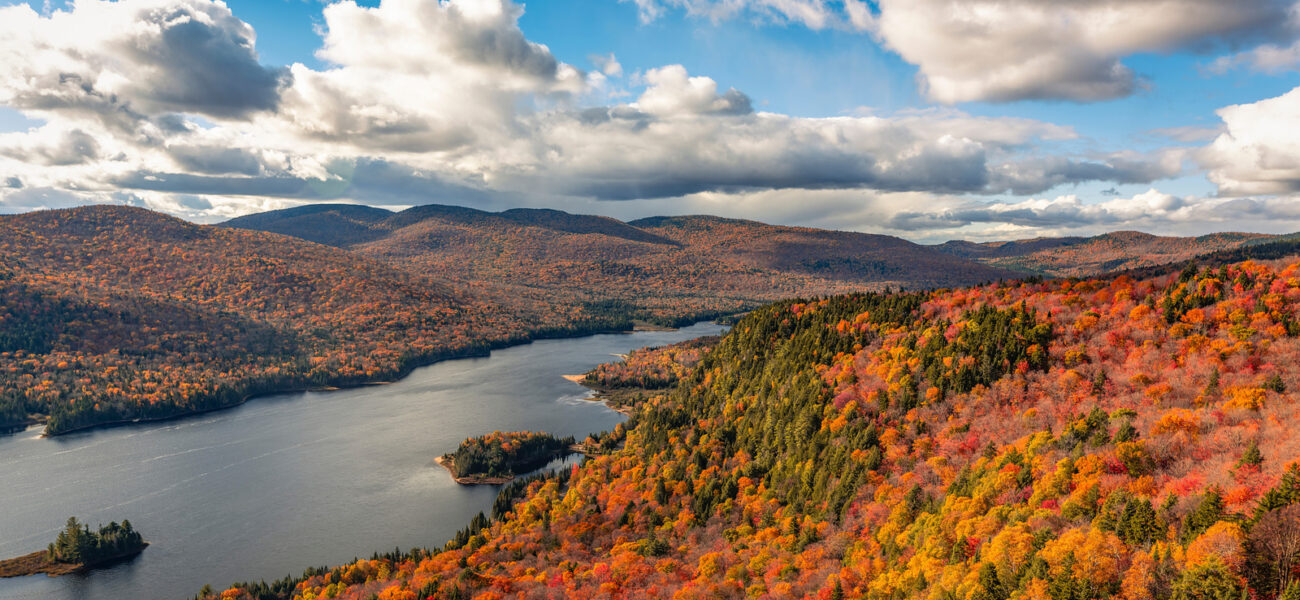
POLICY WIRE — Quebec City, Canada — You don’t get much in the way of untouched grandeur anymore. Not really. Most everything, it seems, has an owner, a budget line, or an impending environmental assessment hanging over its head. Even Quebec’s oldest national park, a sprawling chunk of mountainous territory tucked away from the St. Lawrence’s industrial pulse, isn’t just about glistening lakes — and boreal forests. It’s a remarkably complex proposition, a battleground for political will and economic priorities disguised as a serene getaway.
It’s the quiet disputes that often tell the real story. Last month, a rather obscure amendment concerning access permits for artisanal loggers operating adjacent to the park’s southern buffer zone — a technical change, we were told — sparked a minor diplomatic kerfuffle between federal and provincial departments. An email, leaked anonymously to this wire service, revealed a federal parks official expressing “discomfort” with what they perceived as a provincial land-use creep. The Quebec Environment Minister, Genevieve Allard, waved it off. “We’re talking about responsible resource management here, balancing local economies with preservation. It’s hardly the apocalypse,” she told reporters with a characteristic lack of pretense, dismissing any federal overreach.
But that’s where the dry, technical details start to fray. This isn’t just about a few logging permits. This is about control. It’s about how much jurisdiction Ottawa thinks it can wield over natural resources, even when they abut federally protected lands—which these provincial parks technically don’t directly fall under, yet benefit from proximity. And it’s a debate that plays out not just in this chilly northern wilderness, but in boardrooms and ministries across the globe.
Conservation efforts in places like Quebec’s venerable Parc National des Grands-Jardins often highlight an interesting dynamic: the relatively wealthy West setting aside vast tracts of land, while nations in the developing world grapple with feeding populations against the backdrop of rapidly depleting resources. You see parallels. A politician in Islamabad wrestling with environmental regulations for the Margalla Hills National Park faces different stakes, different pressures. And frankly, they don’t always have the luxury of a leisurely ‘discussion’ over buffer zones. Policy is rarely made in a vacuum, a point frequently lost in the grand declarations about climate action.
Because the park itself, a collection of some 130 lakes and rugged peaks that trace a meteor impact from millennia ago (how’s that for an unexpected origin story?), pulls in a decent amount of cash. The Ministry of Tourism in Quebec estimates park-related revenue and surrounding economic activity directly injects north of C$50 million annually into the regional economy. That’s a sum worth protecting. But it also means it’s a living, breathing commodity. Tourists don’t just visit because it’s pretty; they visit because it’s *managed*. It’s safe. It’s accessible.
Dr. Elias Vance, head of the Canadian Environmental Integrity Coalition, a rather vocal advocacy group, isn’t buying the government’s narrative hook, line, or sinker. “This isn’t some quaint little patch of green they’re preserving,” Vance stated in a recent press release that went light on tact and heavy on alarm. “This park, like so many others, is facing significant ecological stress from changing weather patterns. We’re seeing species migration accelerate, lake levels fluctuate dramatically, — and increased forest fire risks. Playing petty political games over lumber permits while the core ecosystem transforms is just—it’s short-sighted. Criminal, even.”
📄 POLICY WIRE WHITEPAPER PUBLISHED: PAKISTAN'S NATIONAL SECURITY POLICY PRIORITIES
👉 READ BY CLICKING HEREHis words carry weight, but also a hint of the frustration that characterizes most environmental debates. Everyone agrees on the ‘good’ part—who doesn’t love a healthy ecosystem? But the ‘how’ — and the ‘who pays’ are where the polite veneer usually cracks. Take, for instance, the recent international discussion about resource management and biodiversity, especially regarding how global North decisions impact global South capacities. You just need to look at Pakistan’s ‘Operation Shaban’ in Balochistan to understand that the challenges, though contextually different, often boil down to how states balance their perceived security and economic imperatives against long-term ecological stability.
It’s a balancing act that’s becoming increasingly precarious, particularly as global attention shifts towards verifiable environmental metrics and away from mere rhetoric. These aren’t isolated struggles; they’re all part of the same convoluted policy matrix, isn’t it?
What This Means
The seemingly bucolic tranquility of Quebec’s oldest national park is deceptive. It’s a micro-snapshot of larger, often unseen, political — and economic tensions. Firstly, it highlights the enduring federal-provincial power struggle in Canada, where resource management and environmental protection often become bargaining chips. Provincial governments, keen on stimulating local economies through limited resource extraction or tourism development, frequently clash with federal agencies advocating for stricter, often more expensive, conservation mandates. Secondly, climate change isn’t an abstract concept here; it’s a tangible force altering park ecosystems and demanding adaptable policy responses. Failures to adequately fund climate adaptation strategies for natural heritage sites could translate into significant economic losses for local communities that depend on eco-tourism. Lastly, and perhaps most subtly, these discussions in Canada contribute to a global narrative about environmental stewardship, providing models—or cautionary tales—for countries worldwide grappling with similar dilemmas, albeit with vastly different socio-economic constraints. The decisions made about a single park in Quebec carry a surprisingly wide reach.