


September’s Gridiron Requiem: When Collegiate Sport Confronts National Memory
POLICY WIRE — Boston, MA — It ain’t just another game. Before the whistle blows and the helmets clash, there’s this quiet, almost reverent hum that descends on college campuses, particularly...

POLICY WIRE — Boston, MA — It ain’t just another game. Before the whistle blows and the helmets clash, there’s this quiet, almost reverent hum that descends on college campuses, particularly when a date like September 11th rolls around. This year, for Rutgers, it means more than just a road trip to Chestnut Hill. It’s a gridiron stage set for a duel with Boston College, draped in the solemn, heavy cloak of national remembrance. It’s when sport – that glorious, escapist theater – can’t quite escape history.
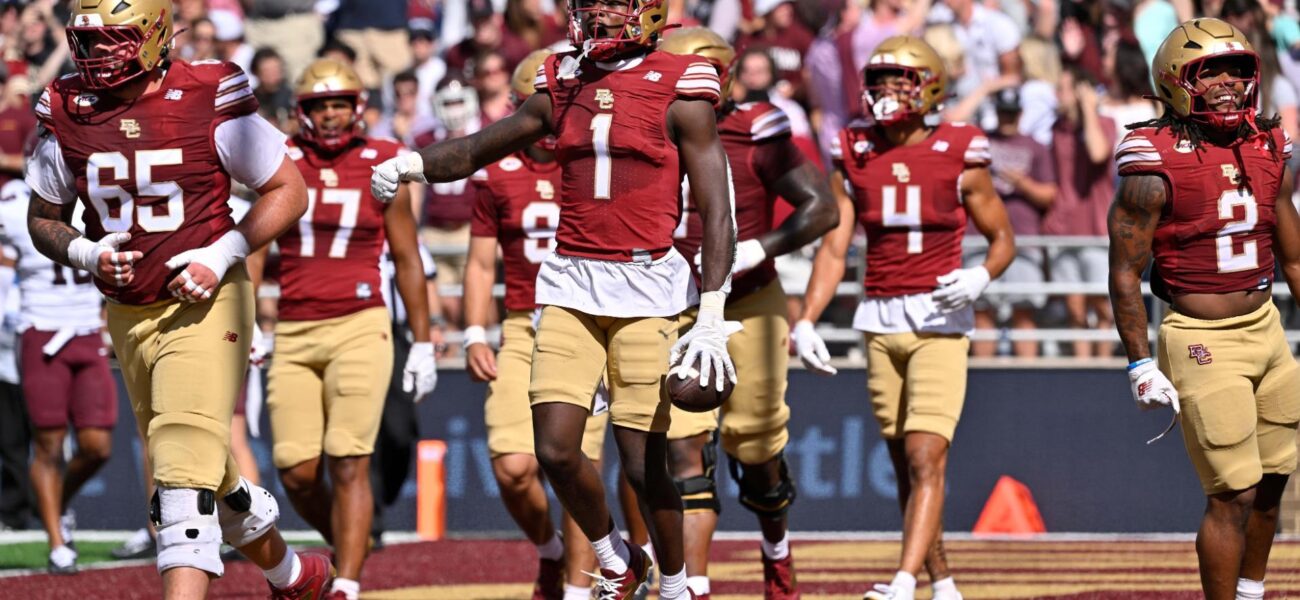
Boston College holds its annual Red Bandanna game for Welles Crowther, a 9/11 hero — and a BC alum. But here’s the kicker: Rutgers, a school that lost 37 alumni in the tragic attacks at the World Trade Center, has also done its own mourning on the field. That’s a powerful undercurrent to what many will see as merely an intriguing nonconference matchup. How do you square athletic aggression with collective grief? You don’t, really. You just play the game, knowing the air carries more than just crowd noise. [QUOTE_PLACEHOLDER]
Rutgers, they’ve been doing alright against ACC teams these past seasons. Remember that 22-21 come-from-behind victory the last time they visited Chestnut Hill? Good stuff. Now, toss in the narrative hook of Dylan Lonergan, a former Alabama and BC signal-caller, switching allegiance to the Scarlet Knights. He’s in a quarterback battle that’s expected to last through training camp. So, will he actually take the field against his old crew? The football gods, or maybe just the coaching staff, have yet to weigh in on that one.
And speaking of storylines, what about Boston College? Their last season was a tough pill to swallow, frankly. They had a 2-10 record. They very well have been the worst Power Four team in all of college football last year, if you ask some folks. After routing FCS Fordham 66-10, things kinda went sideways, losing to a Big Ten bottom-dweller Michigan State in what was a thrilling 42-40 victory for the Spartans in East Lansing. They didn’t win a conference game until the season finale against Syracuse. One bright spot: they nearly pulled off a stunning upset of #22 Georgia Tech. Still, they wrapped up with a 34-12 victory over Syracuse, so there’s that.
But Bill O’Brien’s on the scene now, — and the guy has experience turning teams around. It’s an unenviable task, molding a winning machine out of last season’s rubble. The Eagles are bringing in Saginaw Valley State (DII) transfer Mason McKenzie, a true dual-threat at six-foot-one. The man threw for over 2,000 yards and 17 touchdowns while rushing for 1,000 yards and ten touchdowns, bagging GLIAC Conference Player of the Year honors in the process. He sounds like a one-man wrecking crew. Arkansas transfer Grayson Wilson, a former four-star recruit, lurks behind him—a more traditional passer, but a guy who could push for playing time, you bet.
Skill positions? Oh, they’re getting an overhaul, too. Evan Dickens, from Liberty, steps in. This dude was the nation’s ninth-leading rusher last year, dominating Conference USA with the Flames, averaging 5.6 yards per carry and 121.7 yards per game. Yeah, he carried the ball 229 times, which was good for 14th in the country. And don’t forget Nolan Ray from Maryland; he’s a more physical back, built for goal-line glory and those tough yardage situations. His 22 career receptions mean he’s a reliable pair of hands out of the backfield, an ideal third-down and red zone running back for the Eagles. Their receiving corps? Pretty unproven right now, with fresh faces like UNC transfer Javarius Green, Jaedn Skeete, and Dawson Pough slated to start. But Colgate transfer and NJ native Reed Swanson, who took the top off of Patriot League defenses and measures at six-foot-six, is an intriguing option.
📄 POLICY WIRE WHITEPAPER PUBLISHED: PAKISTAN'S NATIONAL SECURITY POLICY PRIORITIES
👉 READ BY CLICKING HERENow, let’s talk defense. Because the Eagles were not much better than the Knights, finishing 128th in total defense last season. Their secondary returns solid production, and they’ve beefed up the linebacker room with talent from Notre Dame, SMU, and Washington State. Georgia transfer Kris Jones is joining the D-line, trying to stop the bleeding on a run defense that was beyond dreadful last season. This isn’t just about shuffling players; it’s about rebuilding trust — and a system. The coaching staff’s task isn’t simply tactical; it’s practically psychological, bringing belief back to a unit that needs it bad. As we look at these transfers from all corners of the collegiate map, it’s not so different from the global flow of talent, say, from Karachi to Boston—a ceaseless reshuffling driven by opportunity, perceived value, and the relentless pursuit of something better.
What This Means
This match-up on September 11th carries weight beyond ESPN’s score bug. For the American public, particularly in regions still touched by the shadow of 9/11— and certainly in places like New York and New Jersey, where so many Rutgers alumni were lost—these rituals of remembrance, interwoven with the escapism of sport, serve as a kind of civic catharsis. It’s a delicate balance, this fusion of tragedy — and entertainment. Politically, it signals a quiet but constant negotiation of national trauma within public life, a soft power assertion of ‘never forget’ that bypasses legislative halls and lands on a football field. The inclusion of the Red Bandanna game for Welles Crowther, a genuine American hero, isn’t just marketing; it’s an institutional act of memorial, reinforcing specific national narratives. And for Pakistan and other nations in the Muslim world that often bear the complex brunt of post-9/11 geopolitical realities, these televised reminders in American culture serve as a continuous, albeit subtle, underscore of where specific lines are drawn—lines that aren’t always seen or understood in the same way across oceans. It’s a reminder that even in sport, national stories and collective memory don’t just exist; they’re actively performed.
Cincinnati, a team that had a strong start but a subsequent fall-off last year, will be a tough test for Boston College to kick off their season. Then it’s home for this fateful game. Although Rutgers will be the expected road favorites in this contest, nobody’s writing off Boston College. Their home opener, particularly this one, always sees them perform better than their baseline for the Red Bandanna game. Expect them to take the fight to the Scarlet Knights.
But when all is said and done, Policy Wire figures the Scarlet Knights will look to continue their recent dominance in the nonconference and against ACC foes. They’ll aim to bring home their second straight win over a Massachusetts-based team to open the 2026 season. It’s just another piece in the sprawling, sometimes chaotic, world of collegiate sports and the bigger national story it inadvertently helps to tell. It’s never just about the score, is it?