


The Ghost of ’70s Muscle: Detroit Power Meets Tokyo Aesthetic in an Unlikely Global Saga
POLICY WIRE — Washington D.C., USA — Sometimes, the most telling narratives about global trade and cultural interplay don’t unfurl in Geneva conference rooms or bustling port...

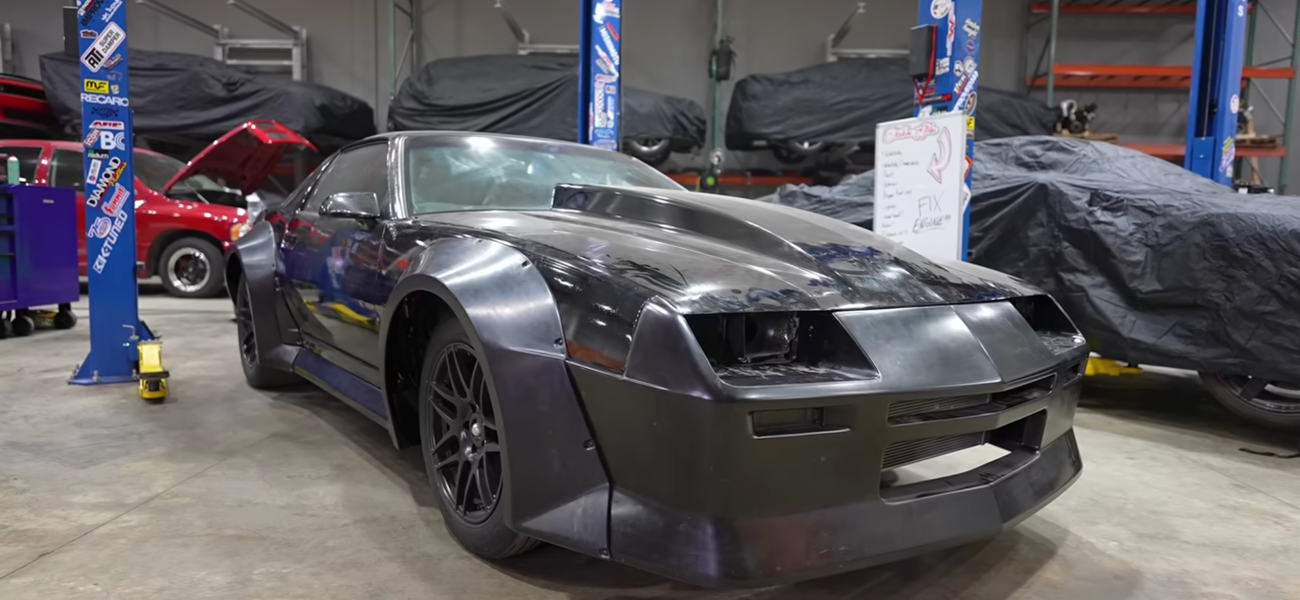
POLICY WIRE — Washington D.C., USA — Sometimes, the most telling narratives about global trade and cultural interplay don’t unfurl in Geneva conference rooms or bustling port cities. No, they whisper from beneath the hood of an obscure, hyper-modified muscle car—a Franken-automotive concoction boasting 1,150 horsepower and a silhouette sculpted by two very different continents. This isn’t just about speed; it’s a statement, a rolling piece of commentary on how national identities melt into something wilder, stranger, and decidedly un-American-as-apple-pie. You see, the beast we’re talking about here is a third-generation Yenko Camaro, an emblem of peak American brute force, now sporting a decidedly Japanese wide body kit. Because why wouldn’t it?
It’s an automotive equivalent of geopolitical détente, a marriage of unlikely partners where Detroit steel and Edo period precision collide with exhilarating force. For a build like this, it’s not enough to simply slap on a turbocharger or repaint a chassis. We’re talking meticulous fabrication, an almost obsessive dedication to engineering that transcends origin. It represents a particular breed of passion, one where the boundaries of what’s supposed to be American, or Japanese, or anything really, just don’t hold up anymore. They simply don’t care for borders, these builders; they chase an ideal, a performance metric, a specific look.
And let’s be blunt: this isn’t just some backyard tinkering. This is significant capital investment. The global automotive aftermarket — covering parts, accessories, and services — was valued at roughly $390 billion in 2023, according to Mordor Intelligence. That’s a staggering figure, demonstrating just how much juice there’s in bespoke auto passions, whether you’re tricking out a classic Chevy or a Honda Civic. It shows us that beneath the sleek lines and roaring engines, there’s a serious economy at play, an intricate web of supply chains stretching across oceans.
But beyond the dollars, there’s the narrative of culture. Imagine the spirited debates—if not outright brawls—that must have occurred, weighing traditional American aesthetics against the sharp, aggressive lines favored by Japanese tuning culture. This sort of blending isn’t confined to car garages. In burgeoning economies like Pakistan, where car enthusiasts often look both to the rugged reliability of Japanese imports and the nostalgic allure of American classics, such fusion builds aren’t entirely alien concepts. You’ve got entire underground scenes there dedicated to taking something familiar and twisting it into an expression of unique identity. The car scene in Karachi, for instance, isn’t afraid of a Frankenstein build if it means standing out.
But is it a symbol of true collaboration or simply consumerism with an exotic twist? “This particular project illustrates how economic globalization isn’t just about mass production anymore,” remarked Ms. Eleanor Vance, Senior Trade Advisor at the U.S. Commerce Department, during a recent panel on manufacturing trends. “It’s about highly specialized markets where demand for unique, often cross-cultural, products fuels innovation and niche export opportunities. It’s America’s entrepreneurial spirit, now with a global passport.” She’s got a point. You couldn’t just order a Yenko with a custom Japanese body kit from GM in ’69. No way.
📄 POLICY WIRE WHITEPAPER PUBLISHED: PAKISTAN'S NATIONAL SECURITY POLICY PRIORITIES
👉 READ BY CLICKING HEREHowever, Mr. Kenji Tanaka, a noted automotive historian and cultural critic from Kyoto University, offered a more philosophical perspective. “What we’re seeing is less about economic policy and more about the innate human desire for self-expression through machinery,” he mused over a video call. “The purity of ‘national design’ often exists more in our heads than in reality. We constantly absorb and adapt. The Japanese aesthetic, after all, has always been about form meeting function with a precise edge. To see it applied to something as inherently powerful and somewhat uncouth as an American muscle car—that’s fascinating. It implies a kind of mutual admiration, or perhaps, a challenge to preconceived notions.”
What This Means
This souped-up, globally infused Camaro is more than just a joyride for someone with deep pockets; it’s a canary in the coal mine for shifting global paradigms. It shows us that national boundaries, especially in taste — and design, are increasingly porous. On an economic front, it signals the resilience and growth of hyper-niche markets, defying conventional wisdom that suggests only scalable, mass-produced goods truly matter. This micro-economy of bespoke modification supports thousands of specialized craftsmen, engineers, and suppliers worldwide, insulating them, to a degree, from larger macroeconomic wobbles. And the interplay here — American brawn, Japanese precision — hints at how cultures increasingly find common ground not just in high-minded diplomacy, but in shared passions for performance and aesthetics.
It challenges purists, absolutely. But it also paints a picture of a world where collaboration — even in the absence of explicit political mandate — drives some pretty astonishing results. Think of it: you’ve got this relic of Cold War-era automotive swagger now wrapped in a cutting-edge kimono, an unexpected harmony in an often discordant world. The larger implications? Maybe a future where trade isn’t just about goods, but about shared global aspirations. This car, loud as it’s, speaks volumes about a new kind of web of cooperation, an anomaly or an aspiration, depending on your view. And, in a roundabout way, it’s a testament to resilience — because when things get tough, as they’re in places like the Mideast — you don’t stop building, you adapt, you fuse, you create something new.